
BCAA Benefits get talked about most when people feel stuck in the same loop: train hard, get sore, and still show up under-recovered. If that sounds familiar, BCAAs might help in specific situations, but they are not a magic shortcut around sleep, calories, and overall protein.
This guide breaks down what BCAAs are, what the research tends to support for muscle recovery, and how to decide if they fit your training and diet. I’ll also point out where people waste money, because that happens a lot with supplements.
Quick heads-up, recovery is personal. What works for a lean athlete in a calorie deficit may not matter much for someone already hitting protein targets daily. If you have a medical condition, take medications, or are pregnant, it’s worth checking with a qualified clinician before adding any supplement.
What BCAAs are, and why they’re linked to recovery
BCAAs are branched-chain amino acids: leucine, isoleucine, and valine. They’re essential amino acids, meaning you must get them from food or supplements, and they’re found naturally in protein-rich foods like meat, dairy, eggs, soy, and legumes.
In muscle physiology terms, leucine gets the spotlight because it helps “switch on” muscle protein synthesis, which is the process of building and repairing muscle tissue. That sounds like instant recovery, but in real life, your body still needs the full set of essential amino acids to rebuild muscle effectively.
According to the International Society of Sports Nutrition (ISSN), total daily protein intake and overall diet quality are primary drivers of adaptation and recovery, while targeted amino acid supplements may be situationally useful.
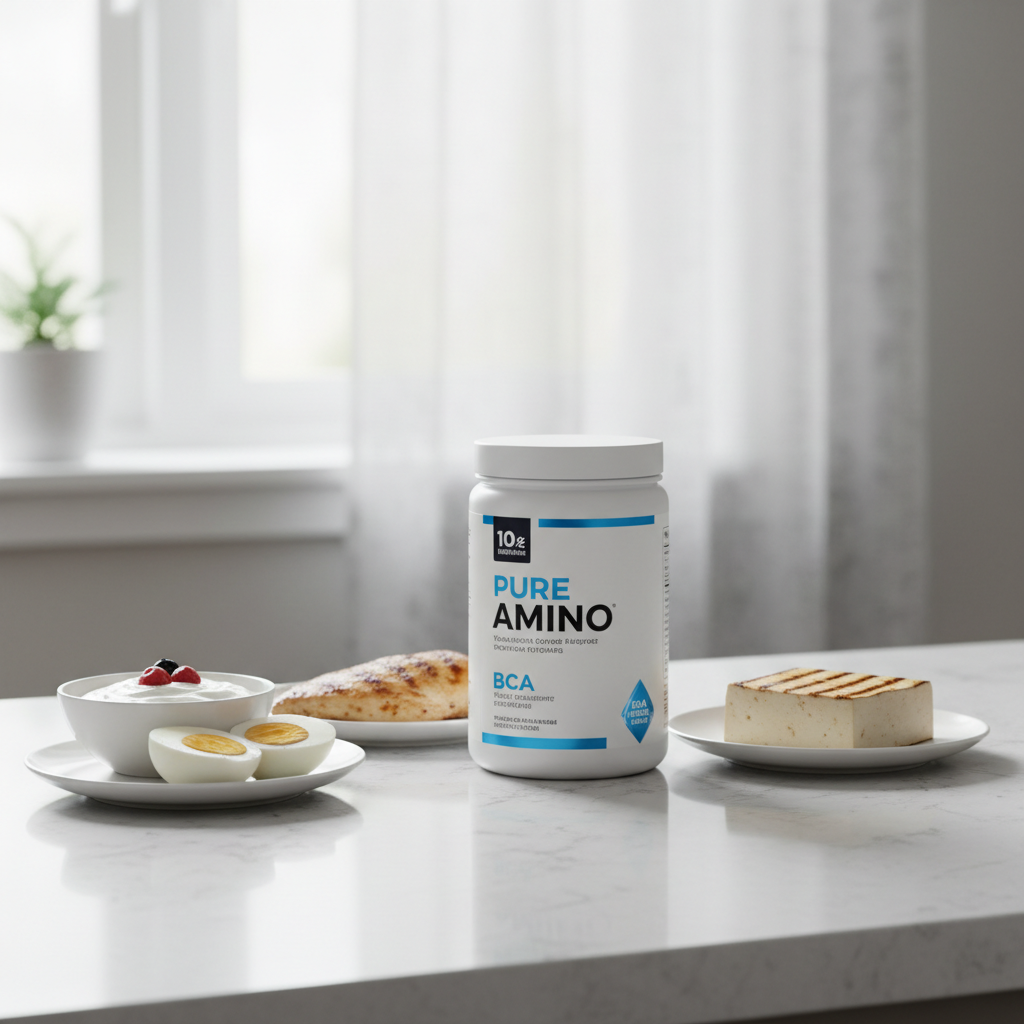
Which “BCAA Benefits” are most realistic for muscle recovery
When people search BCAA Benefits, they usually want fewer sore days and better performance in the next session. Here’s what tends to be most plausible, with the usual caveat that results vary by diet, training volume, and sleep.
1) Less perceived soreness in some lifters
Some studies and athlete reports suggest BCAAs may reduce delayed onset muscle soreness, especially around unfamiliar or high-volume training blocks. The effect is often modest, and it’s more noticeable when overall protein intake is on the low side.
2) Support during calorie cuts or low-protein periods
If you’re dieting hard, traveling, or simply missing protein targets, a BCAA drink can be a “gap filler.” It’s not the same as eating protein, but it may help limit muscle breakdown signals in a pinch.
3) Training while fasted or with long gaps between meals
Many people use BCAAs before early-morning sessions when they don’t want a full meal. In that scenario, BCAAs can be easier on the stomach than a shake. Still, if you can tolerate even a small protein dose, that usually covers more bases.
The big caveat: BCAAs aren’t a full protein replacement
This is where expectations often drift. BCAAs only provide three amino acids, but muscle repair requires all essential amino acids, plus enough total energy. If you’re already eating adequate high-quality protein, adding BCAAs may not move the needle.
According to the U.S. Department of Agriculture (USDA), many common foods provide complete protein patterns across the day, which is one reason supplements can become redundant for some people.
Also worth saying out loud: if your soreness is mainly from too much volume, poor technique, or not enough sleep, BCAAs won’t “out-supplement” that problem.

Self-check: Do you actually need BCAAs for recovery?
If you’re on the fence, this quick checklist usually clarifies things. You don’t need to be perfect, just honest.
- You regularly miss protein targets (common during busy work weeks, travel, or appetite issues).
- You train fasted and prefer not to use whey or food pre-workout.
- You’re in a calorie deficit and trying to protect lean mass while keeping calories tight.
- You follow a plant-heavy diet and struggle with total protein or leucine-rich options.
- You do long endurance sessions and want a flavored, low-calorie amino drink for intra-workout use.
If none of those fit, the more boring move usually wins: raise daily protein, improve sleep consistency, and manage weekly training load.
How to use BCAAs: timing, dosing, and what to look for
Practical use matters more than hype. Most people take BCAAs either before training or during training, mainly for convenience and tolerance.
Timing options that tend to make sense
- Pre-workout: helpful if you train on an empty stomach or your last meal was hours ago.
- Intra-workout: common for long sessions, high heat, or when you want a light drink that feels “easy.”
- Post-workout: less special than marketing suggests, especially if you eat a protein meal soon after.
Typical ratios and labels
Many products emphasize a leucine-forward ratio like 2:1:1 (leucine:isoleucine:valine) or higher leucine blends. Leucine is the signal amino acid, but keep perspective: if you’re under-eating protein overall, no ratio fixes that.
Also check for extras that change the “real” profile: caffeine, electrolytes, and sweeteners can be fine, but they may not be what you want close to bedtime or on sensitive stomach days.
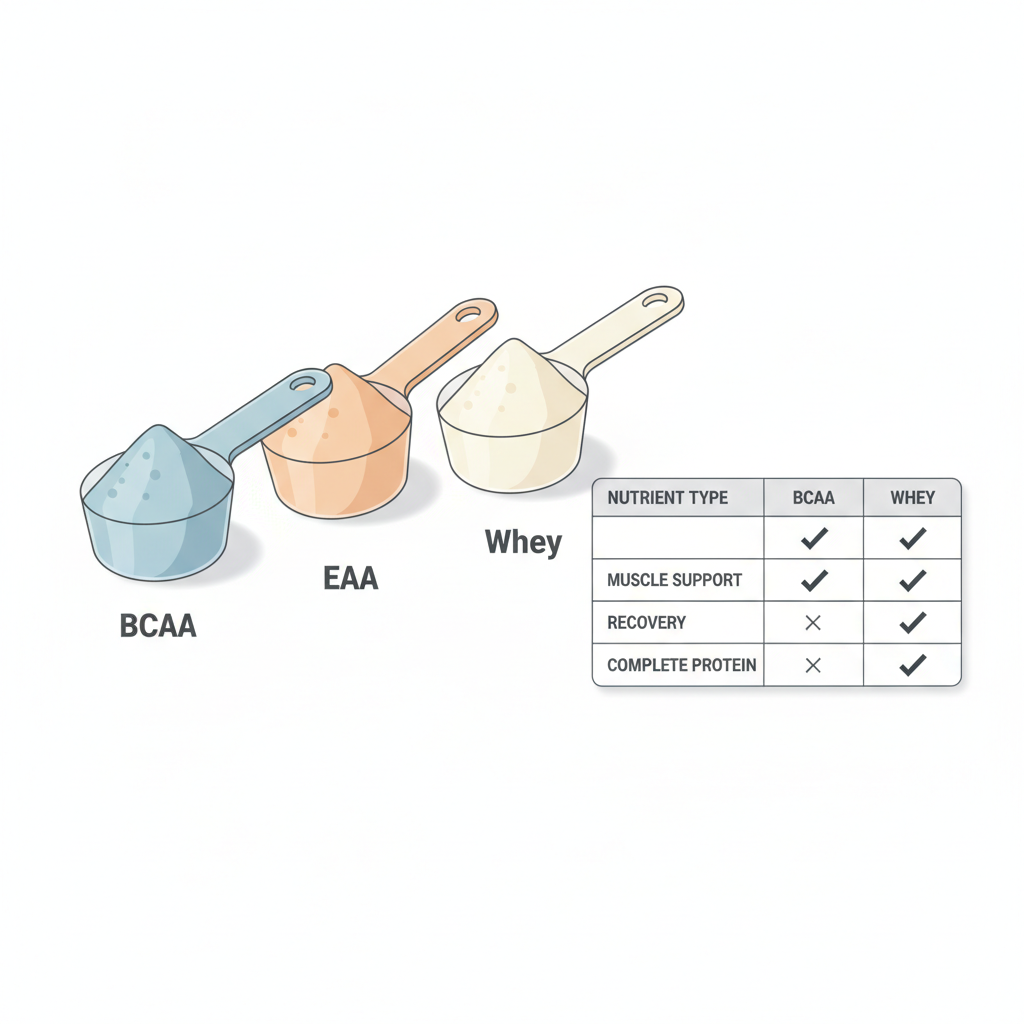
BCAAs vs whey vs EAAs: a quick comparison
People lump these together, but they serve different needs. Here’s the cleanest way to think about it for recovery.
| Option | What it provides | When it’s usually a better pick | Main limitation |
|---|---|---|---|
| BCAAs | 3 amino acids (leucine, isoleucine, valine) | Fasted training, low-calorie intra-workout, protein gaps | Not complete for muscle repair by itself |
| EAAs | All essential amino acids | When you want amino support without a full protein shake | Often pricier, taste varies |
| Whey/complete protein | Complete amino profile plus calories | Most recovery goals, building muscle, hitting protein targets | May be heavy for some people pre-workout |
If your primary goal is muscle recovery and you tolerate it, a complete protein source often gives more return per dollar than isolated BCAAs.
Common mistakes that make BCAAs feel “not working”
Most frustration comes from using the product to solve the wrong problem, or using it inconsistently.
- Expecting BCAAs to replace protein: if meals are low in protein, the foundation stays shaky.
- Ignoring sleep and total calories: recovery is chemistry plus behavior, not one scoop.
- Confusing soreness with progress: less soreness can be good, but it doesn’t automatically mean more growth.
- Underhydrating: some “recovery” issues are plain dehydration or low electrolytes.
- Using BCAAs as a pre-workout stimulant: if the product has caffeine, you might just be feeling the caffeine.
Actionable recovery plan (with or without BCAAs)
If you want a plan you can actually run next week, use this order. Supplements come after the basics, because they tend to amplify good habits, not replace them.
- Hit a consistent daily protein target: spread protein across meals so recovery is not crammed into one window.
- Keep training load sustainable: if soreness stays high for days, pull volume slightly before adding more “recovery” products.
- Sleep like it matters: many athletes notice recovery improve more from sleep consistency than from any amino supplement.
- If you choose BCAAs, match them to a use case: fasted sessions, long workouts, dieting phases, or protein shortfalls.
- Re-check after 2–4 weeks: if nothing changes, stop buying them and spend that budget on food quality.
Key takeaways: BCAA Benefits are most likely when your protein intake is imperfect, your training is demanding, and you need a low-calorie amino option that fits your routine.
When to get professional advice
If muscle soreness comes with unusual weakness, swelling, dark urine, fever, or pain that feels sharp rather than “training sore,” it’s smarter to stop guessing and talk with a healthcare professional. Also consider professional guidance if you have kidney disease, liver disease, or any condition that affects protein metabolism.
For performance planning, a registered dietitian or a certified sports nutrition professional can help you decide whether BCAAs, EAAs, or a full protein approach fits your goals and budget.
Conclusion: where BCAAs fit in a real recovery routine
BCAAs can be a helpful tool, but they work best as a situational add-on, not the center of your recovery strategy. If you’re already eating enough protein, sleeping reasonably well, and managing training load, the extra benefit may feel small.
If you want one simple next step, track protein for a week and notice where you fall short, then decide whether food, whey, or a targeted BCAA drink is the most realistic fix for your schedule.
FAQ
Do BCAAs help muscle recovery if I already drink whey protein?
Sometimes, but often the difference is minor. Whey already contains BCAAs plus the rest of the essential amino acids, so many people don’t notice much extra recovery from adding more.
Are BCAAs better than EAAs for recovery?
For muscle repair, EAAs usually make more sense because they provide the full essential amino profile. BCAAs can still be useful when you mainly want a light intra-workout option with minimal calories.
What are the most practical BCAA Benefits during a calorie deficit?
The main value tends to be convenience: a low-calorie amino drink when you’re hungry, training hard, and trying to keep protein consistent. It’s not a substitute for daily protein, but it can support adherence.
Can BCAAs reduce soreness after leg day?
They might reduce perceived soreness for some people, especially during new training phases. If leg day soreness is extreme every week, it’s also worth reviewing volume, intensity, and recovery sleep.
Should I take BCAAs before or during a workout?
If you’re using them, pre- or intra-workout tends to align best with why people buy them: fasted training, long sessions, and bridging long gaps between meals.
Do BCAAs break a fast?
In many practical definitions, yes, because they are amino acids and can stimulate metabolic responses. If fasting is for religious or medical reasons, ask a professional; if it’s for calorie control, it depends on your approach.
Are there side effects from BCAAs?
Many people tolerate them well, but GI discomfort can happen, and flavored products can irritate sensitive stomachs. If you have a medical condition, it’s safer to consult a clinician before regular use.
If you’re trying to figure out whether BCAAs are worth it for your routine, a simple approach is to map your training schedule against your protein habits, then pick the smallest intervention that solves the real gap. Sometimes that’s BCAAs, and sometimes it’s just a better breakfast.