
Best bike bag for handlebars usually means one thing: it stays put when the road gets rough, it doesn’t steal your cable routing, and you can grab what you need without stopping every five minutes.
In 2026, handlebar bags span everything from tiny “phone-and-keys” pouches to roll-top dry bags you can tour with. The problem is most reviews blur those use cases together, so people buy a bag that’s either too big, too floppy, or just plain annoying.
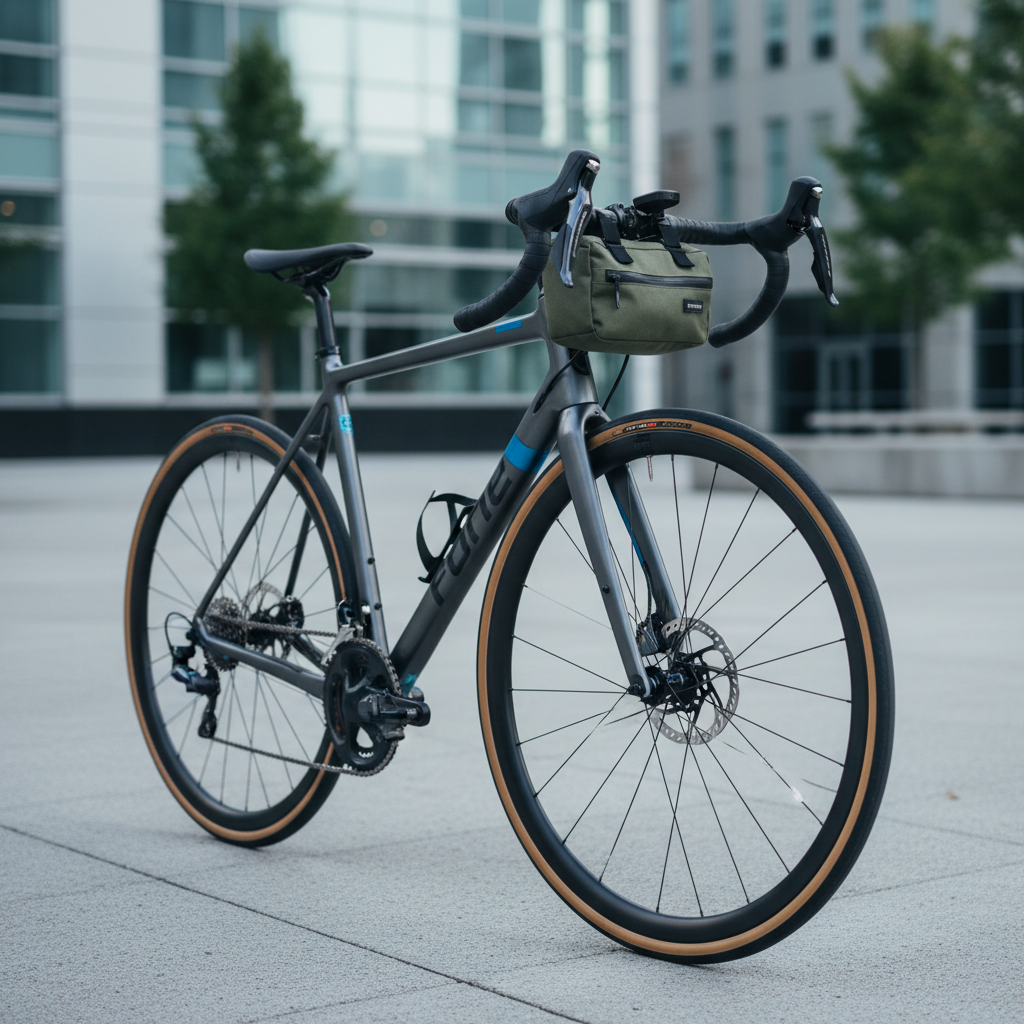
This guide keeps it practical: what matters most, a quick self-check to narrow your options, a comparison table, and a few “don’t learn this the hard way” notes. I’ll also point out when a handlebar bag is the wrong tool and a frame or saddle bag makes more sense.
What actually matters in a handlebar bike bag (not the marketing)
Most handlebar bags look similar in photos, but on a real ride, a few details decide whether it feels seamless or becomes a constant distraction.
- Stability: A stiff mount or well-designed straps reduce sway and bar flop, especially when standing to climb.
- Clearance: Room for brake/shift cables, shifters, lights, and your hands on the tops or drops.
- Access: One-handed zipper pulls and a lid that opens without dumping everything.
- Weather resistance: Water-resistant fabric is common, true waterproofing usually needs welded seams or a roll-top plus good closure.
- Noise: Zippers, buckles, and loose straps can rattle. It sounds minor until mile 30.
According to NHTSA, being able to maintain control and avoid distractions is a meaningful part of roadway safety; in bike terms, a bag that shifts into your cables or forces awkward steering can be more than “just annoying.” Use that as a simple gut check.
Quick self-check: which type of handlebar bag fits your rides?
If you pick the category first, choosing the best bike bag for handlebars gets a lot easier. This checklist is the fast filter.
- Mostly short rides and errands: 1–2L, quick-access, easy on/off, enough for phone, wallet, keys, maybe a snack.
- Road/gravel day rides: 2–4L, stable at speed, minimal sway, easy to access while rolling.
- All-day adventure rides: 4–8L, structured support or harness, layered organization for food, packable layer, tools.
- Bikepacking/touring: 8–15L roll-top or a dry bag in a harness, built to manage weight and keep shape.
Two more “fit” questions that save returns: do you run drop bars vs flat bars, and do you need space for a front light or computer mount?
Handlebar bag styles in 2026: pros, cons, and who they suit
Here’s the reality: there isn’t one universal winner, even if you’re searching for the best bike bag for handlebars. The right choice depends on what you carry and how you ride.
Compact zippered bar bag (1–4L)
- Good for: snacks, phone, mini pump, gloves, sunscreen, small camera.
- Watch for: zipper water entry, strap rub on head tube, cable interference on drop bars.
Roll-top “mini dry bag” (3–8L)
- Good for: layers and bulky items, better rain management than most zippers.
- Watch for: slower access, can sag if not supported, overstuffing creates sway.
Harness + dry bag system (8–15L)
- Good for: bikepacking load, modular packing, strong stability when set up well.
- Watch for: setup time, strap management, tire clearance and fork crown clearance on some bikes.
Front basket bag (varies)
- Good for: commuting and shopping, very easy access.
- Watch for: you need a basket or rack, and weight up front changes handling.
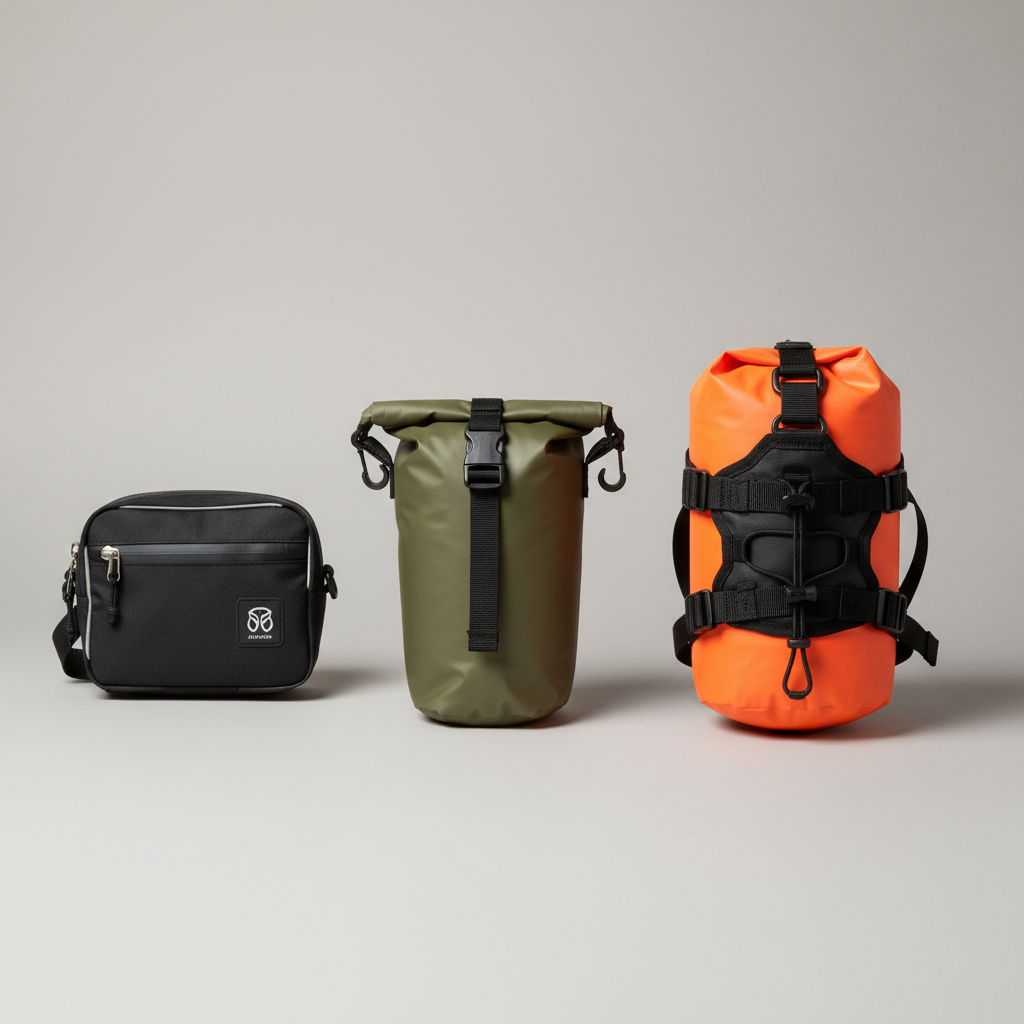
If you ride technical trails, stability tends to matter more than capacity. If you ride pavement and want convenience, access often wins. That tradeoff is normal.
Comparison table: how to choose fast (capacity, mounting, best use)
This table is meant to speed up decisions, not pretend every model is identical. Use it to narrow what you’re shopping for.
| Type | Typical Capacity | Mounting Style | Best For | Main Risk |
|---|---|---|---|---|
| Compact zip bar bag | 1–4L | 2–3 straps to bar + head tube | Day rides, essentials, quick access | Sway if overfilled, cable rub |
| Roll-top bar bag | 3–8L | Straps or semi-rigid mounts | Layers, light touring, rain-prone rides | Slower access, shape collapse |
| Harness + dry bag | 8–15L | Harness fixed to bar, dry bag straps in | Bikepacking, stable bulky loads | Setup complexity, strap management |
| Basket bag | Varies | Basket/rack mount + bag attachment | Commuting, errands, frequent stops | Heavier steering, needs hardware |
How to fit a handlebar bag correctly (so it doesn’t rub, sway, or steal steering)
A lot of “this bag is terrible” complaints are really fit issues. The best bike bag for handlebars can still feel wrong if it’s mounted poorly.
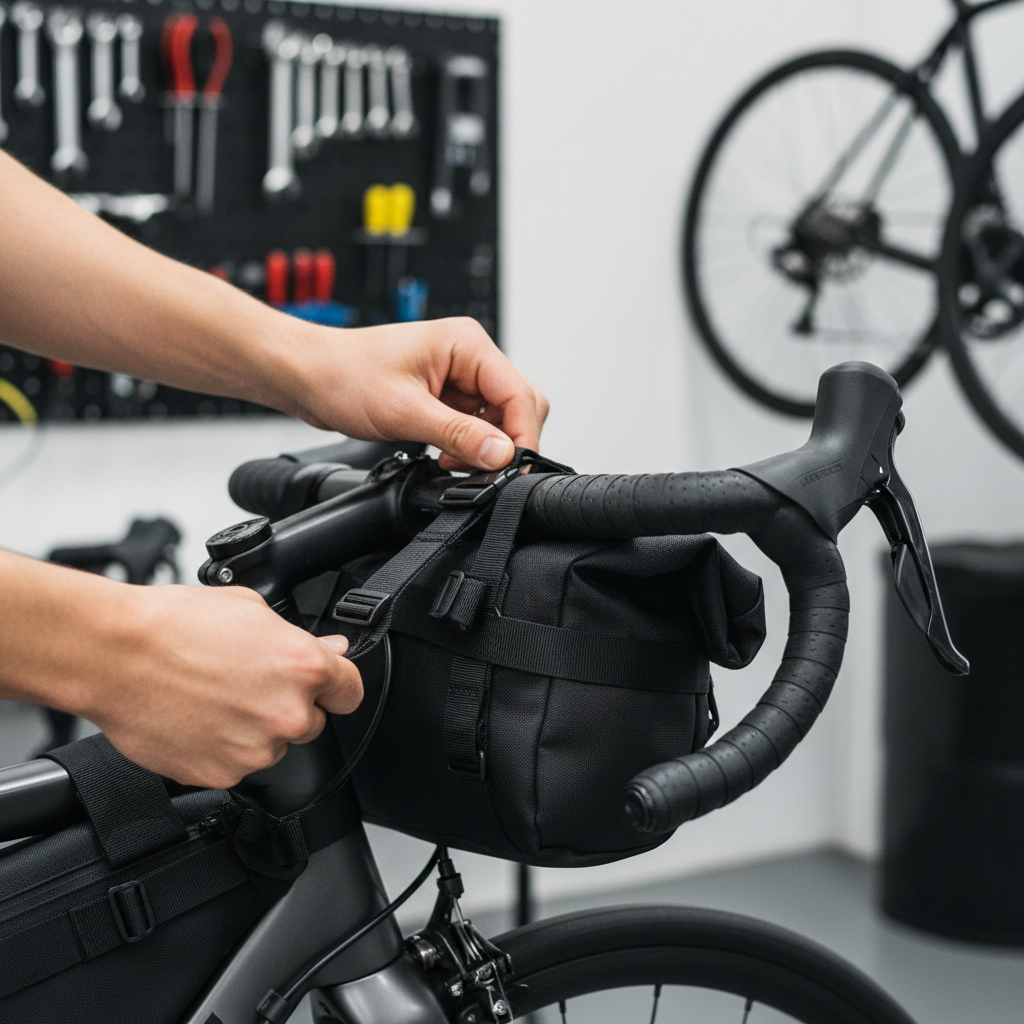
- Check cable path first: turn bars fully left and right, make sure nothing binds. If it does, reposition the bag or choose a smaller profile.
- Protect the frame: add clear frame tape where straps touch head tube or bar to avoid scuffs.
- Keep weight close: pack heavy items (tool, battery) toward the back of the bag, closer to the bar clamp area.
- Stop strap slip: rubberized straps or spacers help, and trimming strap tails reduces flapping.
- Test ride loaded: a parking-lot loop with a few hard stops reveals sway fast.
If you use carbon bars or a carbon steerer, be conservative with strap tension and follow your component maker’s guidance. When in doubt, a bike shop can sanity-check your setup.
Common mistakes shoppers make (and how to avoid wasting money)
People usually don’t pick a “bad bag,” they pick a bag that fights their bike setup.
- Buying too much volume: an 8–15L setup on a day-ride bike feels bulky, catches wind, and invites overpacking.
- Ignoring hand positions: on drop bars, some bags block the tops or crowd the cables near the hoods.
- Chasing waterproof claims: water-resistant fabric helps, but long rain often finds zipper seams. Use a small dry pouch inside if you carry electronics.
- Mounting a light as an afterthought: plan where your front light goes before you commit to a bag depth.
One more: expecting a handlebar bag to replace every other storage option. Many riders end up happier splitting load, snacks up front, tools in a frame bag, spare tube under the saddle.
Practical buying recommendations for 2026 (by rider scenario)
If you want a “no regrets” path, match your most common ride to a category, then shop for fit and mounting quality. That’s usually how you land on the best bike bag for handlebars for your life, not for someone else’s highlight reel.
Commuters and city riders
- Look for easy on/off, internal key clip, and a structure that doesn’t collapse when half full.
- Favor quieter hardware and a shape that won’t bump your knees when standing.
Road and fast gravel
- Prioritize stability and low profile, 2–4L is plenty for most day rides.
- A semi-rigid mount or a third stabilizer strap can matter more than extra pockets.
Adventure rides and endurance events
- Choose quick access: big zipper pulls, lid that opens forward, one-handed operation.
- Plan a dedicated spot for wrappers, otherwise the bag becomes a sticky mess.
Bikepacking and light touring
- Harness + dry bag if you carry bulk, roll-top if you want simpler packing.
- Leave some clearance for tire spray and avoid stacking weight too high above the bar.
Key takeaways + conclusion
Key points: stability beats capacity for most riders, clearance beats aesthetics, and a small bag packed well often feels better than a big bag half-controlled.
If you’re shopping in 2026, start by picking the style that matches your ride type, then verify fit on your bars, cables, and light setup. Once those basics line up, the best bike bag for handlebars stops being mysterious and becomes a straightforward gear decision.
Next step: measure your available handlebar width between controls, list what you truly carry on 80% of rides, then choose a capacity range and mounting style that supports that list without forcing compromises.
FAQ
- What size is best for a handlebar bike bag for day rides?
For many day rides, 2–4L hits a sweet spot for snacks, phone, and a light layer without adding much sway, but it depends on how minimalist you pack. - Will a handlebar bag interfere with brake and shift cables?
It can, especially on drop bars with tight cable loops. Do a full steering turn test after mounting, and don’t ignore even slight binding. - Is a roll-top bag always more waterproof than a zip bag?
Often it handles steady rain better, but “waterproof” depends on seam construction and closure quality. If electronics matter, add an internal dry pouch. - Can I use a handlebar bag with aero bars or a front computer mount?
Sometimes, but space gets tight. Low-profile bags or harness systems usually fit better, and you may need a different mount position for your computer or light. - How do I stop my handlebar bag from bouncing?
Reduce overstuffing, move heavier items closer to the bar, add a stabilizer strap, and consider a more structured mount if you ride rough terrain. - Is the best bike bag for handlebars okay for trail riding?
It can be, but prioritize stability and secure strap routing. If handling feels compromised, a frame bag plus a small top-tube bag might be safer.
If you’re trying to decide between two sizes or you’re not sure your cockpit has enough clearance, it often helps to map your carry list to liters and do a quick fit check with a tape measure, it’s a small step that saves a lot of return-shipping friction.