
Push up variations can absolutely build a fuller-looking chest, but only if you match the variation to what your body can control, then use small form tweaks that keep tension where you want it.
A lot of people “feel” push-ups mostly in shoulders or triceps, then assume push-ups just can’t grow the chest. In practice, it’s usually leverage, range of motion, and scapular control that decide what muscle takes the load.
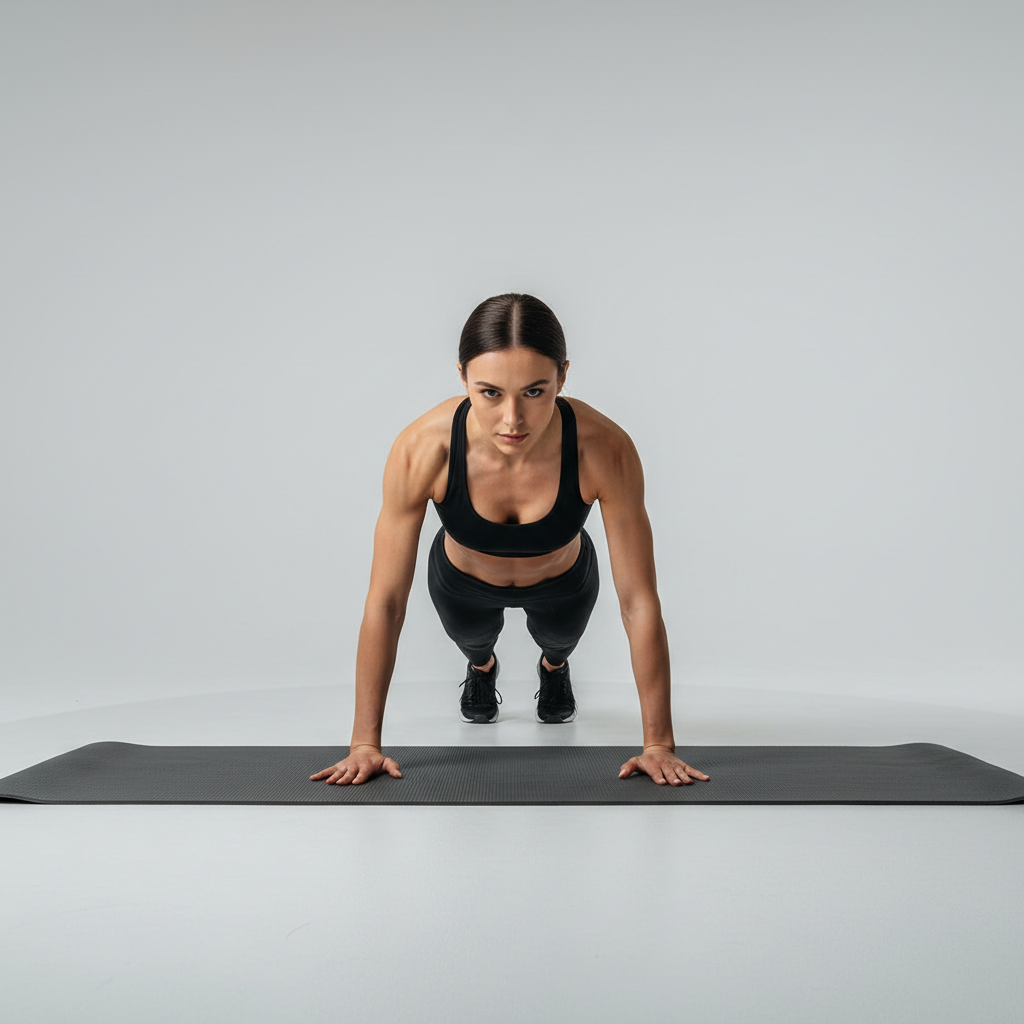
This guide breaks down what “full chest work” really means, how to self-check your mechanics, and which push-up styles bias upper, mid, or lower chest without turning your shoulders into the bottleneck.
What “full chest work” actually means in push-ups
Your chest is mainly the pectoralis major, with fibers that run slightly differently across the upper and lower portion. You can’t isolate every fiber, but you can bias where you feel the work by changing the line of push and shoulder angle.
For push-ups, the big levers are: body angle (incline/decline), hand path, depth, and how your shoulder blades move on your rib cage. If one of those is off, many push up variations turn into a shoulder press with a plank attached.
According to American Council on Exercise (ACE)... proper push-up form includes a rigid trunk, controlled lowering, and shoulder stability, which matters because chest engagement usually drops when the shoulder girdle gets sloppy.
Why you might not feel push-ups in your chest
Chest “activation” is a useful signal, but it’s not the only signal. Still, if you feel almost nothing in pecs, one of these patterns often shows up.
- Hands too far forward, turning the rep into more of a shoulder-dominant press.
- Elbows flaring hard at 90 degrees, which can irritate shoulders and makes many people shorten range.
- Not going deep enough, so the chest never gets a meaningful stretch under load.
- Scapula locked down or “winging,” so the shoulder blades don’t protract at the top and the rep feels unstable.
- Core sag and rib flare, which shifts tension away from the pecs and into low back, shoulders, and arms.
One more that’s sneaky: if your triceps are the weak link, they’ll fail first and your chest never gets a strong stimulus. In that case, smarter push up variations plus accessory triceps work can help.
Quick self-check: which category are you in?
Run this quick checklist before you change your program. It saves time because your “best” variation depends on what breaks first.
- Shoulders feel pinchy in the bottom position: reduce depth temporarily, try neutral elbows, and test incline.
- Lower back feels tired before chest: shorten the set, tighten glutes, and pick a variation you can keep rigid.
- Triceps burn out fast: move hands slightly wider or use a slight lean-forward cue to increase pec demand.
- No chest stretch at the bottom: elevate hands on parallettes or dumbbells to increase range safely.
- Wrists complain: use push-up handles, dumbbells, or knuckle push-ups on a mat.

If more than two bullets describe you, keep the variation simple and fix mechanics first. Harder progressions won’t “force” chest growth if your structure is leaking tension.
Push-up variations for a fuller chest (by emphasis)
Below are reliable options that tend to hit the chest across different regions. You do not need all of them at once. Pick 2–3 and rotate every few weeks.
Mid-chest bias: Standard push-up with chest-forward intent
Think “chest to the floor” instead of “face to the floor,” and keep hands under the chest line, not under the eyes.
- Hands slightly wider than shoulders.
- Elbows about 30–60 degrees from your torso.
- Lower under control for 2–3 seconds, pause 1 second near the bottom.
Upper-chest bias: Decline push-up (feet elevated)
This is the closest push-up cousin to an incline press. It can overload shoulders if you go too steep, so start with a low step.
- Feet on a 6–18 inch box or step.
- Hands slightly wider, keep neck neutral.
- Stop the set if the rep turns into a shrug.
Lower-chest bias: Incline push-up (hands elevated) done deep
Incline is often labeled “easier,” but it’s also a technical tool. Many people finally feel pecs when they can go deeper with clean scapular motion.
- Hands on a bench/counter, lower chest between hands.
- Use a full stretch without collapsing shoulders.
Inner-chest “feel”: Close-grip is not the only option
“Inner chest” is mostly about adduction intent and full-range squeeze. Close-grip push-ups often become triceps-only. A better bet: medium grip with a strong top contraction and slow tempo.
- At the top, actively press the floor away and lightly round upper back.
- Keep shoulders down away from ears.
High stimulus with limited equipment: Ring/TRX push-up (unstable)
Suspension push-ups add instability and allow a deeper stretch. They’re effective, but they expose shoulder control issues fast, so progress carefully.
- Start with straps high (more incline).
- Keep wrists neutral, don’t let elbows drift behind you.
Which variation to choose: a practical comparison table
Use this as a quick filter, then test with two workouts before you decide.
| Variation | Chest Emphasis | Difficulty | Common Mistake | Best For |
|---|---|---|---|---|
| Incline push-up | Lower/mid (with deeper range) | Low–Medium | Short range, hips sag | Learning form, higher volume |
| Standard push-up | Mid | Medium | Hands too far forward | Most people, baseline strength |
| Decline push-up | Upper/mid | Medium–High | Shrugging shoulders | Upper-chest bias, progression |
| Wide-grip push-up | Chest stretch (often more pec feel) | Medium | Elbows flared, shoulder stress | More pec sensation (if pain-free) |
| Ring/TRX push-up | Full chest with deep stretch | High | Losing shoulder control | Advanced control, limited load |
How to get more chest out of any push-up (small cues that matter)
If you only take one thing from this: chest growth tends to follow tension + range + consistency. These cues nudge tension toward pecs without chasing gimmicks.
- Slight forward lean: at the top, shift shoulders a touch forward over hands, then keep that relationship during the rep.
- “Bend the floor” cue: pretend you’re twisting hands outward without moving them, this can help create shoulder stability and chest tension.
- Use a tempo: 2–3 seconds down, brief pause, controlled press up.
- Add range safely: handles or dumbbells can increase depth if shoulders tolerate it.
- Finish with protraction: at the top, press the floor away to fully complete the rep.

If your wrists or shoulders feel sketchy, don’t push through. Swap to incline, reduce depth, or use neutral-grip handles. Many people progress faster once joints feel calm.
Simple programming: sets, reps, and a 3-day chest-focused plan
For most people, better results come from repeatable sessions than from hunting the “perfect” push-up. This template stays simple and makes progression obvious.
Key points before the plan
- Pick 2 push up variations you can perform with consistent depth.
- Stop 1–3 reps before form breaks, especially shoulder position.
- Progress by adding reps first, then sets, then difficulty.
3-day weekly template (15–30 minutes)
- Day 1 (Volume + form): Incline push-up 4x8–15, slow lower, full range.
- Day 2 (Strength bias): Decline or standard push-up 5x5–10, longer rest.
- Day 3 (Pump + control): Wide-ish grip push-up 3x10–20 + 2x max-quality kneeling push-ups.
If recovery feels rough, cut one set from each day or keep only two days. Chest can grow on moderate volume, especially when reps look clean.
Common mistakes and safety notes (so you don’t stall)
- Chasing extreme hand widths: very wide can increase shoulder stress, keep it modest unless you know you tolerate it.
- Half reps forever: if you avoid depth, at least earn it back with incline, handles, or slower eccentrics.
- Random variation switching: rotating daily feels fun, but it blurs progress. Keep one main style for 3–6 weeks.
- Ignoring pain signals: sharp pain, numbness, or lingering joint ache is a sign to adjust and possibly consult a professional.
According to National Strength and Conditioning Association (NSCA)... Resistance Training should be progressed gradually with appropriate technique and recovery, and that advice applies to bodyweight work too.
Conclusion: building a full chest with push-ups is mostly about leverage
Most “full chest” results come from picking push up variations that match your current control, then earning more range and tension over time, not from doing the most exotic version. If you want a clean starting point, run standard plus incline for two weeks, then add a low decline day once your shoulders stay stable.
Your next move: choose two variations from the table, film one set from the side, and adjust depth and elbow angle until the reps look the same from rep 1 to rep 12.
FAQ
- What push-up variation works the upper chest most?
Decline push-ups usually bias upper chest more than flat versions, but only if you keep shoulders from shrugging and maintain controlled depth. - Why do I feel push-ups mostly in my shoulders?
Hands set too far forward, a steep decline, or unstable shoulder blades can shift load forward. An incline push-up with slower tempo often brings chest back into the rep. - Are wide push-ups better for chest growth?
They can increase pec stretch and “feel,” but going too wide often irritates shoulders. Many people do well with just slightly wider than shoulder width. - Do push-ups build the inner chest?
You can’t truly isolate an “inner” section, but you can improve contraction by using full range, controlled tempo, and a strong press-away at the top. - How many push-ups should I do to grow my chest?
It depends on how hard each set is. A practical target is 8–20 controlled reps per set, 8–15 total working sets per week, adjusting based on recovery. - Should I add weight (backpack) or switch variations first?
If your form stays solid and you can hit higher reps easily, light load can help. If your range or shoulder control is inconsistent, switch to a better-fitting variation first. - When should I talk to a coach or clinician?
If you have sharp shoulder pain, repeated wrist issues, or tingling that persists, it’s smart to consult a qualified coach or healthcare professional for an individualized assessment.
If you’re training at home and want a more streamlined approach, it can help to pick a small menu of push up variations, track reps like you would in the gym, and use a simple progression rule so you’re not guessing workout to workout.