
Resistance Training can feel either oddly complicated or too “bro-ish,” especially when you just want a stronger body, less nagging pain, and a plan you can actually follow.
If you’ve ever walked into a gym, stared at the machines, and thought “I’m not sure where to start,” you’re in the right place. The good news is that you don’t need fancy equipment or perfect genetics, you need a few principles, a simple structure, and consistency.

This guide breaks down what matters for beginners, intermediates, and advanced lifters, plus how to pick the right exercises, set reps and weights, and progress without beating up your joints. I’ll also point out common mistakes that waste months.
What Resistance Training really is (and why it works)
Resistance training is any exercise where your muscles work against an external load, like dumbbells, barbells, machines, cables, bands, or even your bodyweight. The “resistance” creates tension, your body adapts, and over time you get stronger and often more resilient in daily life.
According to the Centers for Disease Control and Prevention (CDC), adults benefit from muscle-strengthening activities on 2 or more days per week (alongside aerobic activity). That recommendation is broad on purpose, because “counts” can range from band work at home to heavier lifting.
What most people want from this style of training usually falls into a few buckets:
- Strength (pick up heavier things, feel capable)
- Muscle (more shape, better “tone,” which is really muscle + body fat level)
- Joint support (stronger muscles can help stabilize joints in many cases)
- Metabolic health (often improved when paired with nutrition and movement habits)
One reality check: progress isn’t linear week to week, especially with sleep stress, travel, and inconsistent eating. But the long-term trend can be very reliable if your plan is realistic.
Why people stall or feel “stuck” (common real-world causes)
Most plateaus aren’t mysterious, they’re usually a few predictable issues stacked together. Here are the ones I see most often in programming and coaching content.
You’re not tracking the right variable
If you don’t write down sets, reps, and load, you’ll often repeat the same effort for months. Your body adapts fast, your notebook (or app) keeps you honest.
Form is inconsistent, so the target muscle never gets good work
This is big. If every squat turns into a low-back exercise, your legs never get the stimulus you think they’re getting, and your back gets cranky.
Too much fatigue, not enough recovery
More workouts isn’t always better. If soreness lingers, sleep is short, and performance drops, you may need fewer “hard” sets, not more motivation.
You’re training hard but eating like you’re not
Building muscle usually needs sufficient protein and overall calories. Fat loss usually needs a calorie deficit. Trying to do both aggressively at once often feels like pushing the gas and brake together.
Quick self-check: what level are you, really?
“Beginner” isn’t an insult, it’s a training age. A lot of people live in beginner programming forever because they never build consistent habits.
- Beginner: you’ve trained less than ~6 months consistently, or you still need to learn basic patterns (squat, hinge, press, row)
- Intermediate: you can repeat solid technique under moderate load, progress slows, and you need planned increases
- Advanced: you’ve trained years, progress is incremental, and small programming changes matter
A simple tell: if you can add weight or reps almost every week on the basics, you’re probably still in the beginner-to-early-intermediate zone.
The simplest framework that works for most people
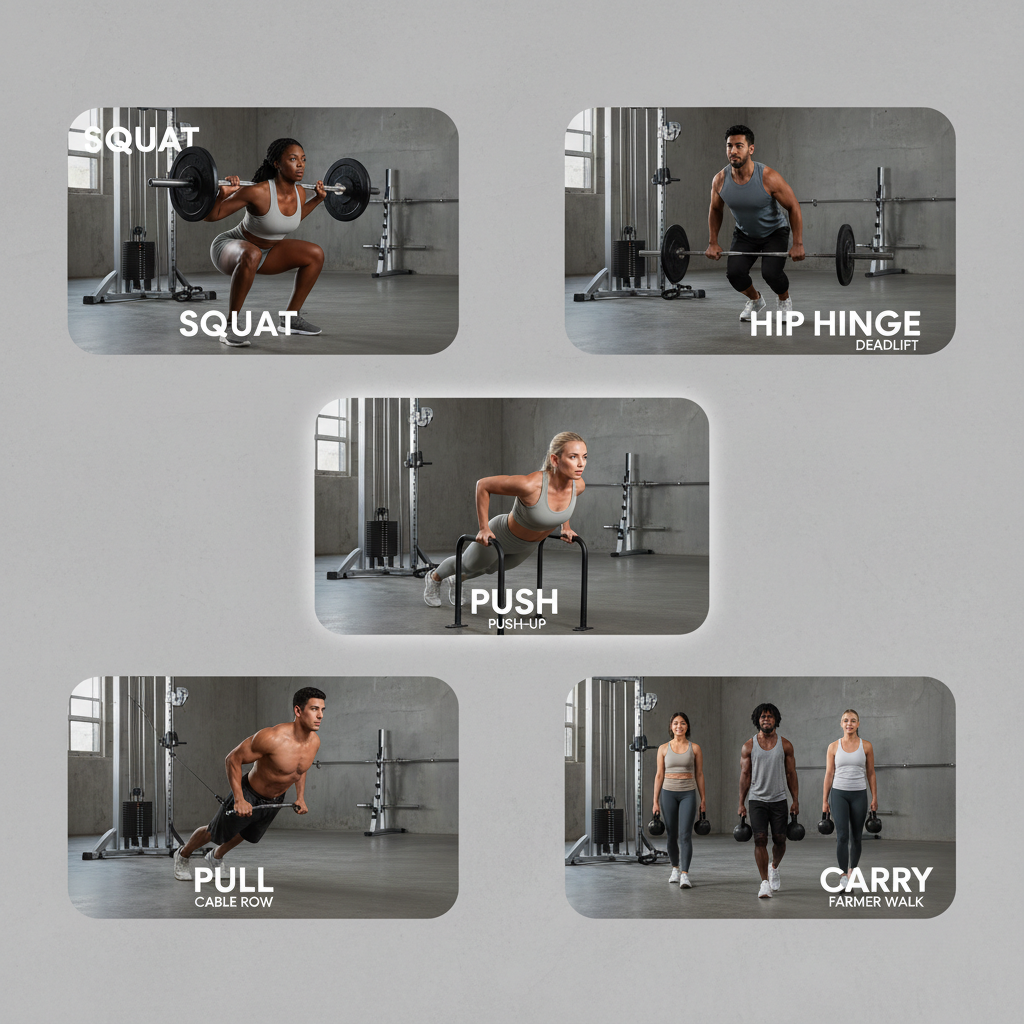
If you want a plan that scales from home workouts to fully equipped gyms, anchor it around movement patterns, not random “arm day” inspiration.
- Squat pattern: goblet squat, back squat, leg press
- Hinge pattern: Romanian deadlift, hip thrust, kettlebell deadlift
- Push: push-ups, dumbbell bench, overhead press
- Pull: rows, lat pulldown, pull-ups
- Carry / core: farmer carries, planks, Pallof press
According to the American College of Sports Medicine (ACSM), resistance exercise programming commonly uses variables like frequency, intensity, sets, reps, rest, and exercise order to match a goal. Translation: you don’t need exotic exercises, you need the right “dose.”
Programs by level: pick one and run it for 6–8 weeks
Below are templates that are intentionally boring in a good way. You’ll get more out of repeating the same core lifts and improving them than constantly switching routines.
Beginner (2–3 days/week, full body)
Goal: learn form, build consistency, leave 1–3 reps “in the tank” most sets. If you have medical concerns or old injuries, it may be smart to consult a qualified professional before pushing load.
- Squat: 2–3 sets of 8–12 reps
- Hinge: 2–3 sets of 8–12 reps
- Push: 2–3 sets of 8–12 reps
- Pull: 2–3 sets of 8–12 reps
- Carry/core: 2–3 sets of 30–60 seconds
Intermediate (3–4 days/week, upper/lower or full body)
Goal: progress with a plan, manage fatigue, keep technique steady as weight climbs.
- Main lift (squat/hinge/press): 3–5 sets of 4–8 reps
- Secondary lift: 3–4 sets of 6–10 reps
- Accessories (shoulders, arms, calves): 2–4 sets of 10–15 reps
- Core: 2–4 sets
Advanced (4–6 days/week, specialization blocks)
Goal: focus on a small number of outcomes at a time, rotate volume and intensity, avoid “always maxing.” Many advanced lifters benefit from coaching feedback because the margins are smaller.
- Use planned phases (strength block, hypertrophy block, technique block)
- Track weekly hard sets per muscle group and performance trends
- Schedule lighter weeks when performance or joints start to complain
How to progress safely (without guessing every workout)
Progression is where most resistance routines either shine or fall apart. You’re aiming for small wins, repeated.
Use a simple double-progression rule
- Pick a rep range, like 8–12.
- When you can hit 12 reps on all sets with solid form, increase weight next time.
- Drop back toward 8 reps, build up again.
Keep “hard” sets hard, but not sloppy
If technique breaks in the last two reps, that set might be too heavy for today. A useful guideline is stopping with 1–2 reps in reserve on most sets, then occasionally pushing closer to the limit if you recover well.
Rest times matter more than people admit
- Big lifts: often 2–3 minutes helps performance
- Accessory work: 60–90 seconds is commonly enough
Practical comparison table: choose what fits your life
If you’re torn between dumbbells, machines, bands, or barbells, you’re not alone. Here’s a quick way to decide.
| Option | Best for | Watch-outs |
|---|---|---|
| Dumbbells | Home or gym, balanced strength, easy learning curve | Can get limited if you outgrow your heaviest pair |
| Machines | Beginners, rehab-like training, stable setup | Fit varies by body size, can encourage “mindless reps” |
| Barbells | Max strength, clear progression, big compound lifts | Technique demands more attention, spotting may be needed |
| Bands | Travel, joint-friendly resistance, assistance work | Harder to quantify load, can snap if worn |
Mistakes that waste time (and how to avoid them)
- Doing random workouts: variety feels productive, but repetition is how you measure progress.
- Chasing soreness: soreness can happen, but it’s not a scoreboard. Better markers are reps, load, and cleaner form.
- Ignoring warm-ups: you don’t need a 20-minute routine, but a few ramp-up sets and joint prep often improves performance.
- Copying an advanced split: if you train four muscle groups per day but miss workouts, weekly volume gets messy fast.
- Training through sharp pain: muscle burn is normal, sharp joint pain isn’t. When in doubt, scale or stop and get guidance.
When it’s worth getting professional help
There’s no prize for guessing. Consider a qualified trainer, physical therapist, or clinician if you notice any of the following:
- Recurring joint pain that returns when you load a movement
- Numbness, tingling, or symptoms that radiate down an arm or leg
- Major asymmetry you can’t self-correct with lighter work
- Medical conditions, pregnancy, or post-surgery situations where modifications matter
Even one or two sessions to clean up technique and build a plan can remove a lot of friction.
Key takeaways and a simple next step
If you want resistance training to work, keep it simple and measurable. Pick a level-appropriate template, repeat core movements, and progress with small, planned changes while protecting form.
- Train 2–4 days/week consistently before adding complexity
- Track sets, reps, and load so you can actually progress
- Prioritize technique, especially on squat, hinge, push, and pull patterns
Your action step: choose one program above, schedule it on your calendar for the next 6 weeks, and write down every working set. That alone puts you ahead of most people.
FAQ
How long should a resistance training workout take?
Many people do well with 35–60 minutes, depending on rest times and how many exercises you include. If you’re consistently going past 75 minutes, volume or rest may be drifting up without a clear benefit.
Can I do resistance training at home with minimal equipment?
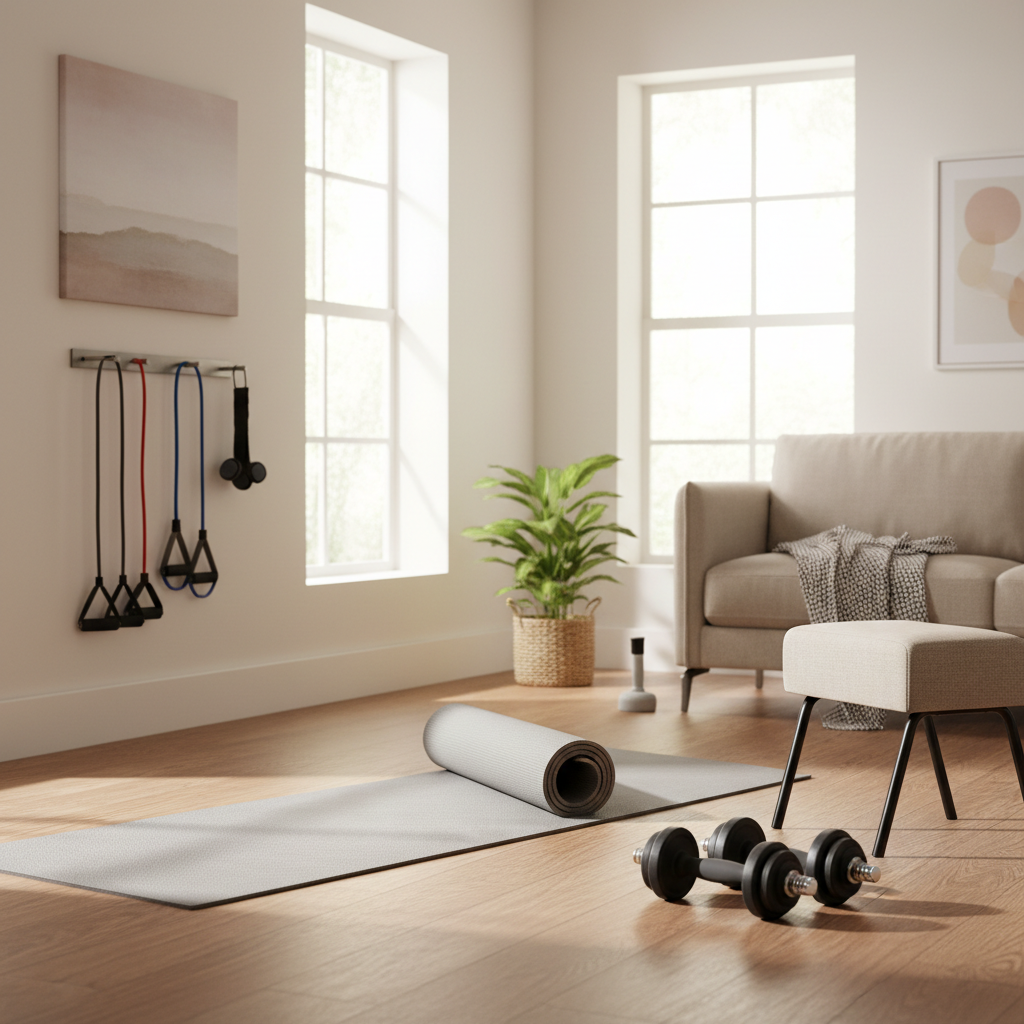
Yes in many cases. Adjustable dumbbells, a few bands, and a way to do rows can cover a lot. The main limitation is long-term loading, so you may need creative progressions or heavier gear over time.
Is resistance training safe for older adults?
Often it can be, with smart exercise selection and conservative progression. Because health history varies a lot, it’s reasonable to consult a clinician or qualified coach if you have osteoporosis, balance concerns, or chronic pain.
How do I know if I’m lifting too heavy?
If your range of motion shrinks, you lose control, or joint discomfort shows up during the set, the load may be too high for that day. A small reduction can keep progress moving without turning every workout into a grind.
Should I do cardio on the same day as resistance training?
You can, and many people prefer it for scheduling. If strength is your priority, consider lifting first and keeping cardio moderate, or separating sessions when possible.
How much protein do I need for strength training results?
Needs vary by body size, goals, and medical context. According to the Academy of Nutrition and Dietetics, protein is an important macronutrient for maintaining and building muscle, and a registered dietitian can help personalize targets if you’re unsure.
What’s better: machines or free weights?
Neither is automatically “better.” Machines can be great for stability and targeting, while free weights build coordination and are easy to progress in standard increments. Many solid programs use both.
If you’re trying to make resistance training feel straightforward, a simple plan, a basic equipment list, and a progression rule is usually the fastest path. If you want a more hands-off approach, bringing your goals, schedule, and injury history to a qualified coach can help you avoid trial-and-error and stay consistent.