
Professional Sports training looks glamorous from the outside, but most performance gains come from unglamorous basics done with real consistency: smart programming, recovery that matches workload, and honest feedback loops.
If you’re trying to train like a pro (or support someone who is), the hard part is not finding another workout online, it’s knowing what to prioritize so you don’t waste weeks on the wrong emphasis, or worse, train into an avoidable injury.

This guide focuses on decisions that usually move the needle: building a durable base, choosing the right intensity, matching fuel and sleep to the season, and using simple metrics to steer training. It’s friendly on purpose, but it won’t pretend every tip fits every sport.
What Pro-Level Fitness Really Means (and What It Doesn’t)
In Professional Sports, fitness is rarely just “being in shape.” It’s more like a tailored set of capacities that support your role: repeat sprint ability, contact tolerance, shoulder resilience, rotational power, or endurance under fatigue.
Also, pro training is not “more, always.” Many athletes improve when they remove junk volume, tighten recovery habits, and train the right qualities at the right time.
- Sport-specific: a midfielder and a pitcher can both be elite, but their fitness priorities differ a lot.
- Role-specific: starters vs. bench players often need different weekly loads.
- Season-specific: off-season builds, in-season maintains, playoffs manages fatigue.
According to NSCA (National Strength and Conditioning Association), training should be based on sound program design principles and appropriate progression, which in plain English means the plan should match the goal and the body should be allowed to adapt.
Why Most People Stall: Common Training Bottlenecks
When people try to borrow Professional Sports routines, progress often stalls for predictable reasons, not lack of effort. A lot of the time it’s a mismatch between what they do and what their body can recover from.
- Intensity confusion: too many medium-hard sessions, not enough true easy or true hard.
- Poor sequencing: heavy legs the day before speed work, or high-impact plyometrics stacked on fatigue.
- Recovery debt: sleep and food don’t support the workload, so you’re always “almost recovered.”
- Hidden pain: nagging tendon or joint issues quietly change mechanics and cap power.
- No feedback: you train hard, but never measure whether outputs improve.

If you recognize yourself here, that’s not a character flaw. It just means you need a clearer structure and a few guardrails.
Quick Self-Check: Which Training Profile Are You In?
Use this to decide what to fix first. Don’t overthink it, pick the closest match.
- Profile A: You’re fit but inconsistent → schedule and simple programming beat fancy workouts.
- Profile B: You train hard, feel flat → recovery, deloading, and better intensity distribution.
- Profile C: Strong but slow → power, sprint mechanics, and lighter, faster intent.
- Profile D: Fast but break down → tissue capacity, strength base, and progressive plyometrics.
- Profile E: Endurance-heavy sport, but gassing late → repeatability, fuel timing, and pacing strategy.
Key point: the fix is usually not more volume, it’s better targeting plus enough recovery to adapt.
The Core Pillars: Strength, Power, Speed, and Conditioning
Most Professional Sports performance programs revolve around four physical pillars. Your sport decides the mix, but skipping one entirely tends to show up later as a performance ceiling or an injury pattern.
Strength (foundation and armor)
Strength isn’t just for contact sports. Done well, it can improve force production and help protect joints. Focus on high-quality patterns: squat/hinge, push/pull, single-leg work, trunk control.
- 2–4 main lifts weekly is often enough for non-powerlifters
- Keep 1–3 reps “in the tank” on most sets during heavy sport weeks
Power (turn strength into sport output)
Power is strength expressed quickly: jumps, throws, Olympic-lift derivatives, or explosive med-ball work. The intent matters more than the exercise name.
- Low reps, crisp execution, long rests
- Stop when speed drops noticeably
Speed (skill + exposure)
Speed is partly coordination. Short, high-quality exposures usually beat grinding “sprint workouts” while tired.
- Short sprints (10–30m) with full recovery
- Technique cues kept simple, one focus per session
Conditioning (repeatability, not punishment)
Conditioning should match the sport’s demands: intervals for repeat sprint sports, aerobic base for endurance sports, mixed models for many team sports.
According to American College of Sports Medicine (ACSM), training adaptations depend on appropriate intensity and recovery, which is a good reminder that conditioning shouldn’t automatically mean “max effort every time.”
Practical Weekly Structure (with a Simple Table)
A clean structure prevents the most common conflict: stacking too many high-intensity stressors. Here’s a practical template many athletes can adapt, but the exact days should match your practice schedule and game calendar.
| Day | Main Focus | Notes |
|---|---|---|
| Mon | Strength + short power | Keep volume moderate if practice is hard |
| Tue | Speed + skill | Short sprints, full rest, clean technique |
| Wed | Recovery / mobility + easy aerobic | Should feel better after than before |
| Thu | Strength (lighter) + plyometrics | Low contacts, prioritize landing quality |
| Fri | Conditioning (sport-specific) | Intervals that reflect game demands |
| Sat | Competition / scrimmage | Let performance drive the load |
| Sun | Rest | Sleep, light walking, prep for week |
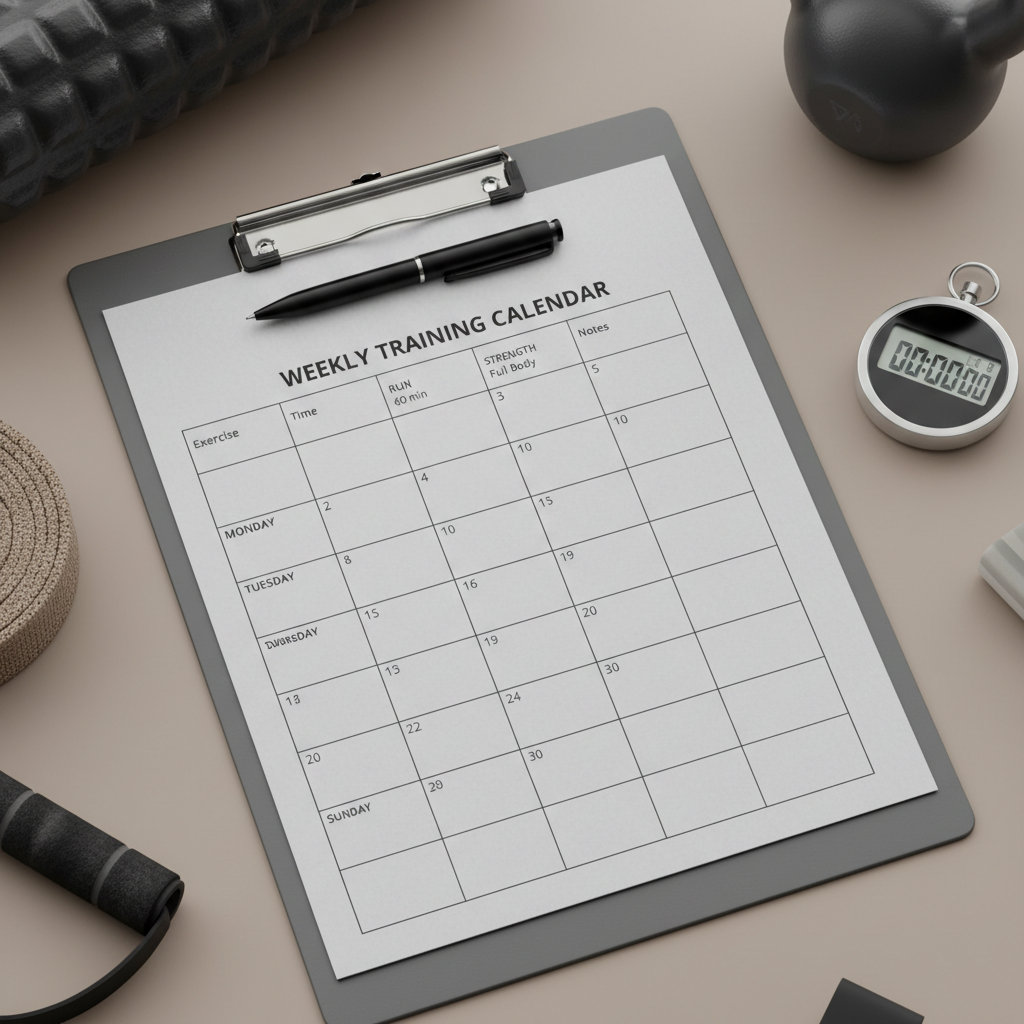
If you’re already practicing 4–6 days a week, your extra training should often be support work, not more exhaustion.
Recovery and Nutrition: The Unsexy Stuff That Makes Training Work
In Professional Sports, recovery is a performance skill. Many athletes can handle a hard week, fewer can stack hard weeks without letting sleep, fueling, and stress management fall apart.
Sleep (your simplest performance enhancer)
- Keep a consistent wake time most days
- Limit heavy training very late at night if it disrupts sleep
- If sleep is chronically poor, consider discussing it with a healthcare professional
Fueling (enough energy to adapt)
Under-eating is a quiet progress killer, especially with high training loads. If energy crashes, mood dips, or performance drops, it may be a fueling issue, though other factors can also contribute.
- Prioritize protein across the day, not only at dinner
- Carbs often matter more for high-intensity sports than people expect
- Hydration and electrolytes can affect repeat performance, especially in heat
According to U.S. Anti-Doping Agency (USADA), supplement risk can include contamination and labeling issues, so if you choose supplements, it’s wise to be cautious and consider third-party tested products. For individualized guidance, a sports dietitian can help.
Mistakes to Avoid (So You Don’t Train Busy)
These are the patterns that look “serious” but tend to waste time.
- Testing too often: maxing out every week turns training into constant fatigue management.
- Copying a pro’s exact plan: their history, schedule, and medical support differ from yours.
- Ignoring pain signals: discomfort that changes movement patterns deserves attention.
- All conditioning, no strength: common in field sports, often leads to durability issues.
- Chasing soreness: soreness is not a reliable sign of effective training.
Quick rule: if a session makes tomorrow’s key work worse, it’s probably not placed well, even if it feels productive in the moment.
When to Get Professional Help (Coach, PT, Sports RD)
Some situations are hard to solve with self-programming, and it’s smart to bring in help early rather than after a setback.
- Recurring injuries or pain lasting more than a couple weeks
- Big asymmetries, like one side consistently weaker or painful
- Plateaus that persist after you adjust sleep, food, and training load
- Return-to-play decisions after concussion, surgery, or major injury
A qualified strength and conditioning coach can clean up programming and technique, a physical therapist can assess pain and movement limitations, and a sports dietitian can align intake with training. If you’re unsure where to start, ask your team or primary care provider for referrals.
Key Takeaways and Next Steps
If you want results that feel closer to Professional Sports standards, focus less on finding secret workouts and more on building a repeatable system: a few targeted sessions, clear recovery habits, and basic tracking that shows whether you’re actually improving.
- This week: pick one primary goal (speed, strength, conditioning) and protect it with smart scheduling.
- Next 14 days: track sleep, session intensity, and one performance metric, then adjust based on trends.
If you do only one thing, make it this: stop treating fatigue like proof of progress, and start treating consistent outputs like the real scoreboard.
FAQ
How many days a week should I train for professional sports performance?
It depends on your practice and competition schedule. Many athletes do well with 2–4 focused gym sessions plus sport practice, but the total load matters more than the number of sessions.
Should professional sports training include heavy lifting year-round?
Often yes, but the dose changes. In-season lifting commonly shifts toward lower volume to maintain strength without piling on soreness, while off-season blocks can build more aggressively.
What’s the fastest way to improve speed for field and court sports?
Frequent, high-quality sprint exposures with full rest usually beat exhausted sprint workouts. Pair that with strength and power work, because speed benefits from both skill and force capacity.
Is conditioning more important than strength in professional sports?
For many sports, you need both. Conditioning helps you repeat efforts late in games, while strength supports power output and durability; the right balance depends on your position and injury history.
How do I know if I’m overtraining or just tired?
A single tough week can feel rough, but persistent performance drops, sleep disruption, mood changes, and nagging pain can be warning signs. If symptoms linger, consider talking with a qualified clinician or coach.
Do I need supplements to train like a pro?
Usually not to get meaningful progress. Food, sleep, and well-structured training are the main drivers; supplements can be situational and worth discussing with a sports dietitian, especially due to quality and safety concerns.
What metrics should I track without getting obsessive?
Keep it simple: sleep hours, session difficulty (a 1–10 rating), and one sport-relevant output like sprint time, vertical jump, or a repeat-effort test. If tracking adds stress, scale it back.
If you’re trying to build a more pro-style routine but want fewer guesses, it can help to have a coach map your week around your sport schedule, equipment, and injury history, even a short consult can clarify priorities and save you from training in circles.