
Basketball Training for beginners usually breaks down for one simple reason: you try to do “everything” at game speed before you own the basics at slow speed. The good news is that beginner progress often comes fast when you practice the right drills with clear targets.
If you feel awkward dribbling, your shot comes and goes, or you get tired quickly, you’re not alone. Most new players don’t need complicated workouts, they need repeatable reps, simple structure, and a way to track improvement without guessing.
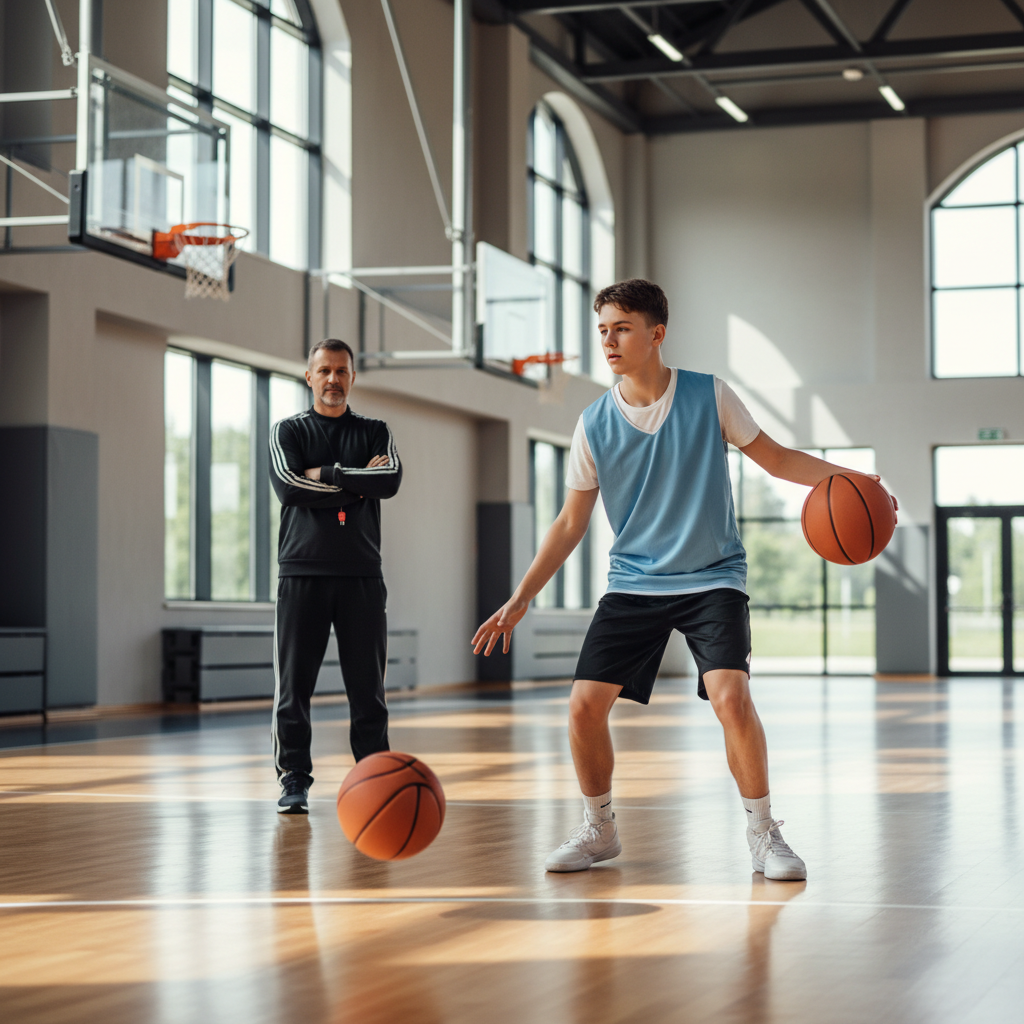
This guide gives you a practical set of drills, a short weekly plan, and a few “stop doing this” tips that save months. Nothing fancy, just what tends to work in real gyms and driveways.
What Beginners Should Fix First (So Practice Actually Works)
Before you add more drills, it helps to name what usually holds beginners back. Many players practice a lot, but they practice in a way that hides weaknesses.
- Rushing the reps: speed covers sloppy footwork and loose handles, until a defender shows up.
- Random workouts: you shoot “a bit,” dribble “a bit,” then leave, progress stays unclear.
- Only practicing strengths: everyone loves their dominant hand and favorite shot spot.
- No constraints: if a drill has no rules, you can accidentally do it wrong for weeks.
According to USA Basketball, skill development improves when players focus on fundamentals like balance, footwork, and proper technique before adding complexity and speed.
A Quick Self-Check: What Kind of Beginner Are You?
Not all “beginners” struggle in the same place. Pick the 2–3 statements that sound most like you, then emphasize the matching drill sections.
- Ball control is the problem: I lose the ball when I change direction, especially with my weak hand.
- Shooting is inconsistent: my shot feels different every day, I miss short or drift sideways.
- Footwork feels clumsy: I travel, my pivot feels slow, I can’t stop fast.
- Conditioning blocks skill: my form falls apart when I’m tired.
- I freeze in games: I look okay alone, then panic with defenders.
If you only remember one thing, remember this: early Basketball Training should be simple enough that you can repeat it perfectly, then hard enough that you can’t do it mindlessly.
Ball-Handling Drills (10–15 Minutes That Pay Off)
You don’t need circus dribbling. You need control, posture, and a dribble you can protect. Use a timer, not a rep count, it keeps you honest.
1) Stationary Pound Series (3 minutes)
- Right-hand pounds: 30 seconds
- Left-hand pounds: 30 seconds
- Low pounds (below knee): 30 seconds each hand
- High-control pounds (around waist): 30 seconds each hand
Key point: keep your chest up and eyes forward. If you must look down, slow down.
2) Cross-Body Control (2 minutes)
- Slow crossovers with wide stance, focus on clean catches
- Then quick but controlled crossovers, stay low
Beginners often slap the ball. Aim for a firm push across your body, then a soft catch.
3) Cone (or Shoe) Change-of-Direction (5–8 minutes)
Place 3–5 “cones” in a line (shoes work). Dribble to each marker and change direction with one move: crossover, between-the-legs, or simple pull-back.
- Round 1: walking pace, perfect footwork
- Round 2: jog, keep dribble under control
- Round 3: add a stop at each cone (balance check)
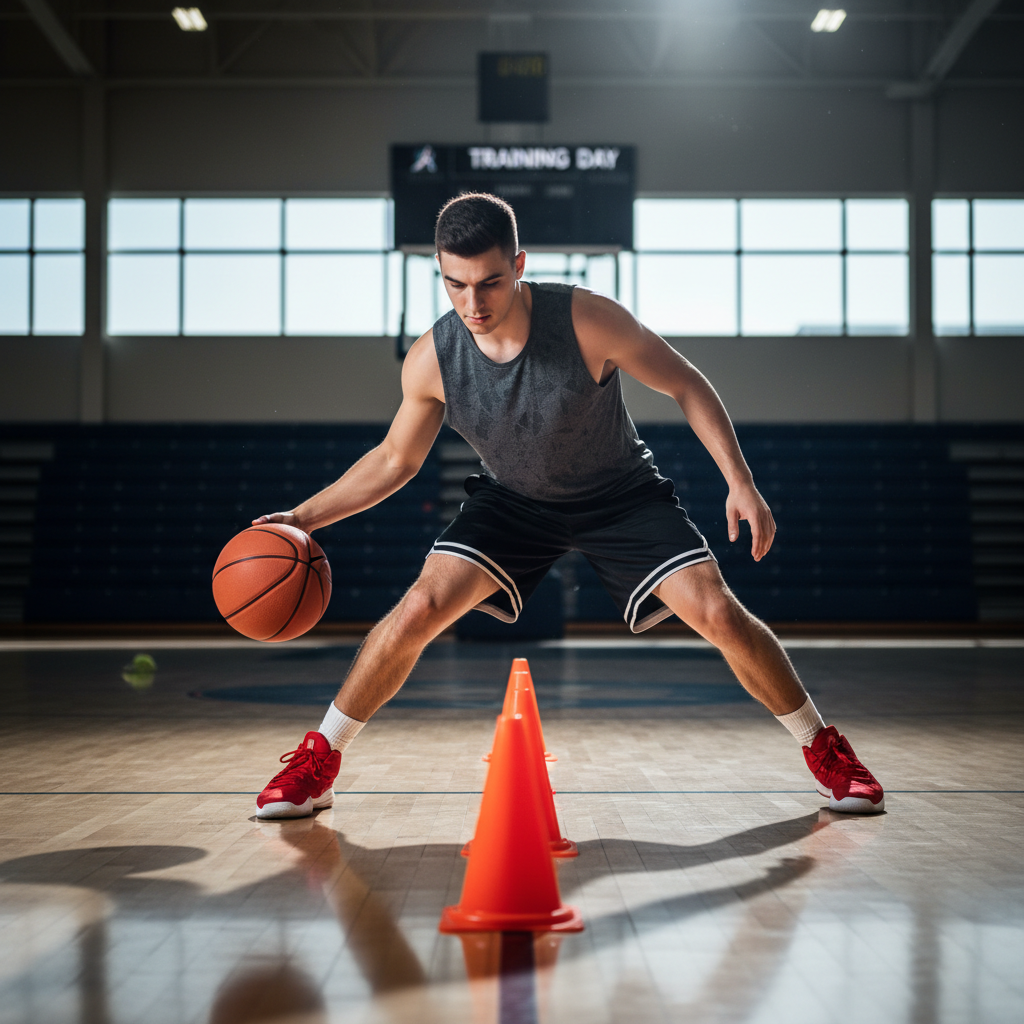
If your weak hand feels “behind,” that’s normal. In many cases, the fix is boring: more time under control, not more fancy moves.
Shooting Drills That Build Real Consistency
Beginner shooters usually miss because of one of three issues: inconsistent base, inconsistent release, or rushing. Keep your volume reasonable and your makes measurable.
1) Form Shooting Close to the Rim (6–8 minutes)
- Stand 3–6 feet from the basket
- Focus on balanced feet, smooth release, and high follow-through
- Goal: 25 makes (not attempts)
Don’t “guide” the ball with your off hand. It’s there for balance, then it gets out of the way.
2) One-Dribble Pull-Up (8–10 minutes)
Pick two spots (right elbow, left elbow is simple). From each spot:
- One hard dribble into a stop
- Go straight up, no fade
- Goal: 10 makes each side
Key point: the stop matters as much as the shot. If your feet land messy, your release usually follows.
3) “5-in-a-Row” Challenge (5 minutes)
Choose a comfortable mid-range spot. Try to hit 5 makes in a row. If you miss, restart the count. This adds pressure without needing a defender.
According to the NCAA’s sports science resources and many coaching clinics, repeating quality mechanics under mild pressure helps skills transfer to games, especially for developing athletes.
Footwork and Finishing: The Part Beginners Skip (Then Regret)
Many new players practice handles and shots, then blow layups in games because their steps fall apart near the rim. A little footwork work makes everything feel calmer.
1) Jump Stop + Pivot Series (5 minutes)
- Jog from the wing, catch (or imagine a catch), land a jump stop
- Pivot strong-side and reverse pivot, keep balance
- Add one dribble, then stop again
If you travel a lot, slow the drill down and exaggerate the stop. Control first, speed later.
2) Mikan Drill (6 minutes)
Classic for a reason. Alternate right/left layups under the rim, staying on balance.
- Goal: 30 makes total
- Focus: soft touch, eyes up, quick feet
3) Finishing Through Contact (Optional)
If you train alone, simulate contact by finishing after a hard two-foot stop, or finishing with the ball held “tight” to your body. If you train with a partner, light pad contact can help, but keep it safe.
If you have knee, ankle, or back pain, this is a moment to scale down and consider guidance from a qualified coach or medical professional.
A Simple 30–45 Minute Beginner Workout (With a Progress Table)
If you want structure without overthinking, this layout works well 3 days per week. Add a 4th day only when recovery feels solid and your form stays stable.
| Block | Time | What to Do | Track This |
|---|---|---|---|
| Warm-up | 5 min | Light jog, dynamic leg swings, easy dribbles | Body feels loose (yes/no) |
| Ball-handling | 10–15 min | Pound series + cone changes | Weak-hand drops per set |
| Shooting | 15–20 min | Form makes + one-dribble pull-ups | Makes (not attempts) |
| Finishing/footwork | 8–10 min | Mikan + jump stop pivots | Clean stops in a row |
| Cool down | 2–3 min | Easy walking, breathing reset | Notes: what felt off |
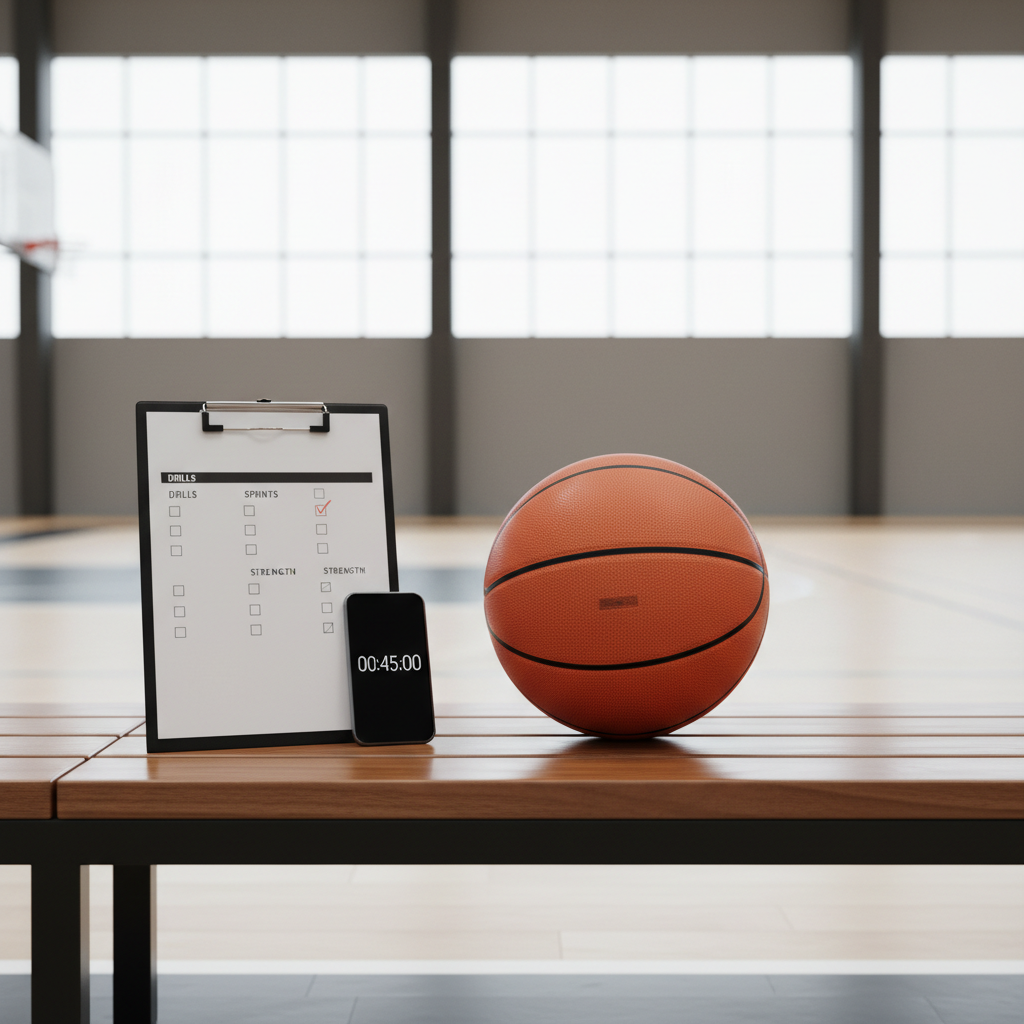
Key takeaway: tracking one simple metric per block keeps your Basketball Training honest, and it makes improvement visible even when you “feel stuck.”
Common Mistakes That Waste Practice Time (And What to Do Instead)
- Mistake: shooting 3s all session.
Instead: earn distance by hitting a make target close-in first, then step back. - Mistake: dribbling high because it feels easier.
Instead: mix low-control pounds with eyes-up pace changes. - Mistake: practicing only “fresh.”
Instead: add a short fatigue finisher (like 60 seconds of continuous layups) while keeping form safe. - Mistake: copying advanced workout clips.
Instead: use constraints: one move, one read, one finish.
Also, if you’re new to high-frequency jumping, increase volume gradually. Shin splints and sore knees happen in many cases when workload jumps too quickly.
When to Get Help From a Coach (Or Another Pro)
Some plateaus are normal, others mean you need eyes on your movement. Consider getting a coach, a clinic, or a skills trainer if:
- You practice consistently for 4–6 weeks and your shot mechanics still feel random
- You keep getting the same minor injury flare-ups, especially ankles or knees
- You freeze in games even though solo workouts look fine
- You want position-specific skills and decision training, not just drills
For pain, dizziness, or repeated injury, it’s smart to consult a qualified medical professional. Training through sharp pain tends to create longer setbacks.
Practical Closing: What to Do This Week
You don’t need a massive routine to get better, you need a repeatable one. Pick 6–8 drills from this article, run them three times this week, and track makes plus weak-hand mistakes.
If you want momentum, keep your Basketball Training sessions short enough that you can finish with focus. The fastest improvement often comes from clean reps, not heroic workouts.
FAQ
How long should Basketball Training be for a beginner?
Many beginners do well with 30–45 minutes, 3 days per week. Longer sessions can work, but only if your technique stays stable and you recover well.
How many shots should a beginner take per workout?
A make-based goal usually works better than counting attempts. For example, 25 form-shot makes plus 20 mid-range makes gives enough volume without turning into rushed chucking.
What are the best basketball drills for beginners at home?
If you have limited space, prioritize stationary pounds, crossovers, and footwork stops. If you have a hoop, add form shooting and the Mikan drill for easy, repeatable finishing reps.
How do I improve my weak-hand dribbling fast?
Go slower than you want, and give it daily minutes. A simple rule that helps: spend at least half your dribble time on the weak hand until control catches up.
Why does my shot feel different every day?
Usually it’s base and balance. Beginners often change foot position and timing without noticing, so the upper-body release has to “save” the shot. Film 10 shots and look for repeated differences in feet and landing.
Should beginners lift weights for basketball?
Often yes, but keep it basic: core stability, hip strength, and general strength work can help performance and resilience. If you’re unsure how to lift safely, a certified coach or trainer can reduce risk.
How do I know if I’m overtraining?
If your legs feel heavy every session, sleep quality drops, or your form gets worse week to week, you might need more rest or less volume. Backing off for a few days is usually smarter than forcing it.
Do I need a trainer to get good at basketball?
Not always. Many players build solid fundamentals alone, but coaching can speed up fixes to mechanics and decision-making, especially when you feel stuck or keep repeating the same errors.
If you’re trying to build a routine but keep drifting into random workouts, it can help to use a simple plan with clear make targets and a weekly progression, or work with a coach who can adjust drills to your current level and space.