
Baseball Drills are what turn a messy practice into steady improvement, especially with youth players and true beginners who still mix up footwork, grips, and where the play goes.
If you coach or parent a new player, you probably see the same pain points: kids get bored fast, lines get long, throws sail high, and everyone wants to hit even though the basics still need work. The fix usually is not “harder” practice, it’s smarter reps and clearer constraints.
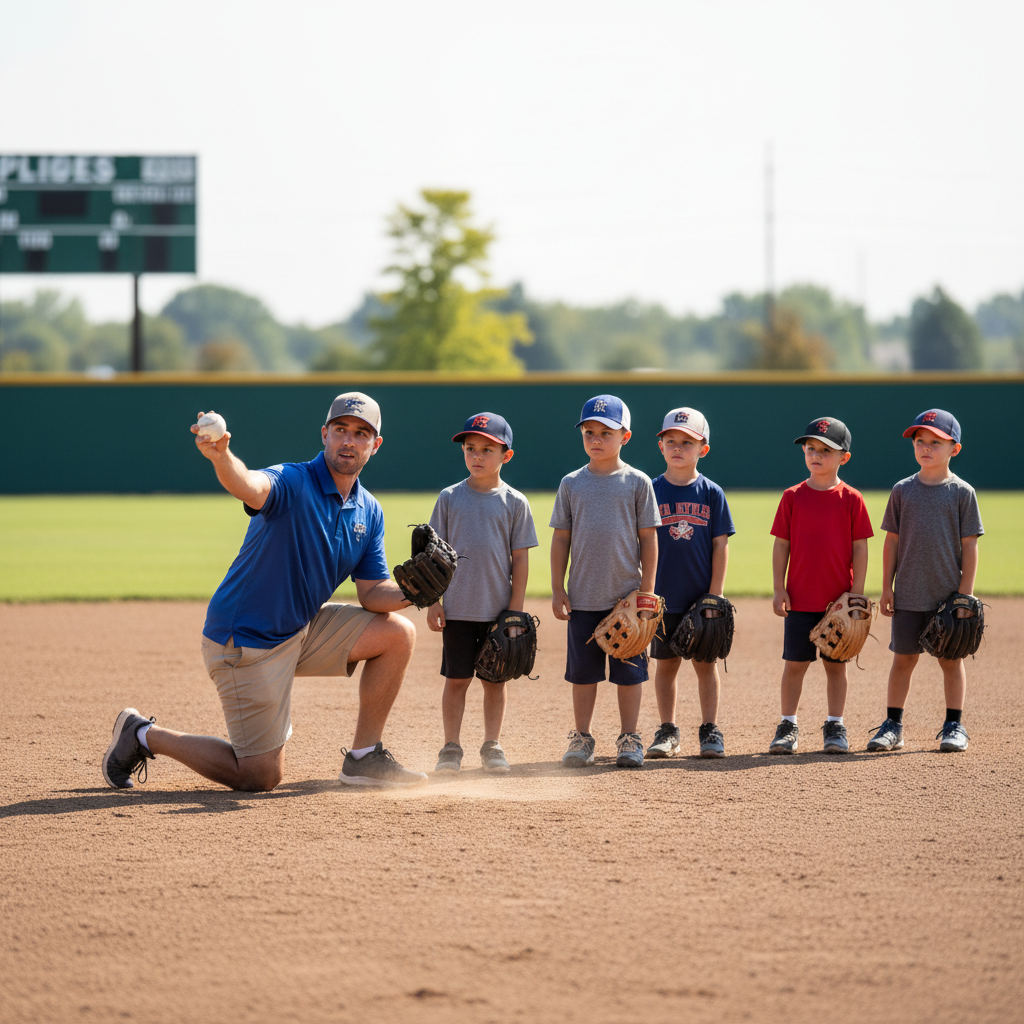
This guide gives you a practical menu of drills, quick ways to choose the right ones, and a sample practice flow you can copy. You’ll also see common coaching mistakes that quietly waste time, and how to keep practices safer and more fun.
What beginners actually need from drills (and what they don’t)
Most beginners don’t need complicated “game-speed” sets right away. They need a few core movement patterns repeated often, with feedback that stays simple.
- Short, high-rep rotations: 6–10 minutes per station keeps focus up and lines down.
- One goal per drill: “Step to target” beats “step, load, separate, rotate, extend…” for most kids.
- Constraints that force the skill: cones for footwork, a tape line for stride direction, smaller targets for accuracy.
- Lots of ball touches: Two balls, multiple stations, partner work, and soft balls for indoor or tight spaces.
What they usually don’t need yet: advanced pitch movement talk, perfect launch-angle discussions, or long lectures. If you want one coaching shortcut, it’s this: correct the biggest thing that changes the outcome, then let them repeat.
Quick self-check: which skills should you prioritize?
Before picking Baseball Drills for the day, run this fast checklist during warmups. You’ll know where practice should go within five minutes.
- Throwing: Can the player step toward the target and hit a partner’s chest from 30 feet?
- Catching: Do they watch the ball into the glove, or “stab” and turn away?
- Fielding: Do ground balls go through their legs, or do they get the glove down early?
- Hitting: Are they afraid of the ball, or can they swing hard without falling over?
- Attention/energy: Do they stay engaged in lines, or do you need more stations?
If two or more kids struggle in the same area, build your practice around that skill and let other work be “maintenance” for the day.
Throwing & catching drills that fix the basics fast
Throwing improves quickest when kids feel the sequence: grip, point the front shoulder, step, and follow-through. Keep distance short until accuracy shows up.
1) Partner “Step-and-Point” throws
Set pairs at 20–40 feet based on age and strength. The cue is simple: point the glove at the target, step, throw, finish with the throwing hand down by the opposite knee.
- Make it easier: Use a softer ball, shorten distance, allow one hop to partner.
- Make it harder: Put a small target on the chest, count “clean catches.”
2) Quick hands: tennis ball catch series
Use tennis balls to lower fear and speed up reps. Toss underhand at chest height, then mix in gentle side tosses. This helps glove presentation and tracking.
3) Four-corners accuracy (small groups)
Create a square with four players, 15–25 feet apart. Throw clockwise for one minute, then reverse. You’re training rhythm, footwork, and “ready position” between throws.
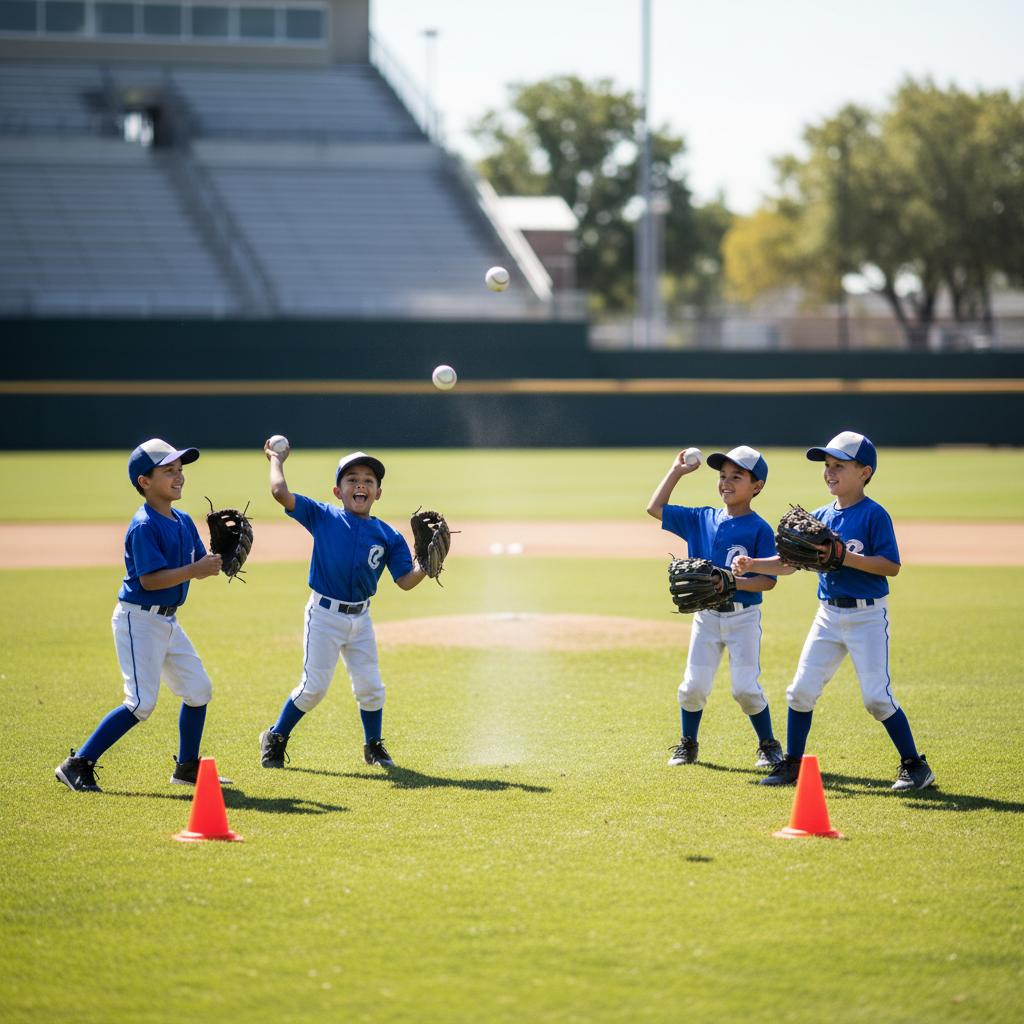
Safety notes for throwing
Arm soreness in youth players can come from too many high-effort throws, poor warmups, or mechanics that force the arm to do all the work. According to USA Baseball, youth pitching and throwing programs commonly emphasize age-appropriate workloads and rest; if a player reports pain (not just tiredness), it’s usually smarter to stop throwing and consider guidance from a qualified coach or medical professional.
Fielding drills for ground balls and confidence
For beginners, ground balls are less about diving and more about getting in front, lowering the glove early, and moving the feet. If you only fix one thing, fix positioning.
1) “Alligator” grounders (glove + bare hand)
Roll easy grounders. Teach glove down, fingers to the ground, bare hand on top like an alligator closing. It reduces bobbles and teaches secure transfers.
2) Cone lane footwork
Place two cones 4–6 feet apart to form a lane. Roll the ball through the lane so the fielder learns to beat the hop, stay centered, and avoid drifting.
3) Ready-break-and-field (game-like without chaos)
Players start in an athletic stance. On “go,” they take one quick prep step, then you roll the ball. The drill teaches that tiny “first move” many kids skip in games.
- Coach cue that works: “Small step, then go.”
- Common fix: If they reach, make them move their feet first, even if it feels slower.
Hitting drills for youth: contact first, power later
Most youth hitters miss because their eyes, timing, and barrel path aren’t organized yet. Big swings come after consistent contact. Keep sessions short so fatigue doesn’t teach bad patterns.
1) Tee work with targets (the simplest upgrade)
Set a tee and aim at a target: a cone in the outfield, a net zone, or a taped square. Focus on one contact point per round.
- Round A: hit hard up the middle
- Round B: hit to the pull side
- Round C: hit to the opposite field
2) Soft toss with a “take” rule
Many beginners swing at everything. Mix in a take: for example, every third toss they must track and say “yes/no.” It builds decision-making without turning into a lecture.
3) Two-strike battle (short and positive)
Choke up slightly, widen stance, and focus on putting the ball in play. Limit it to a few reps per player so it stays energetic.
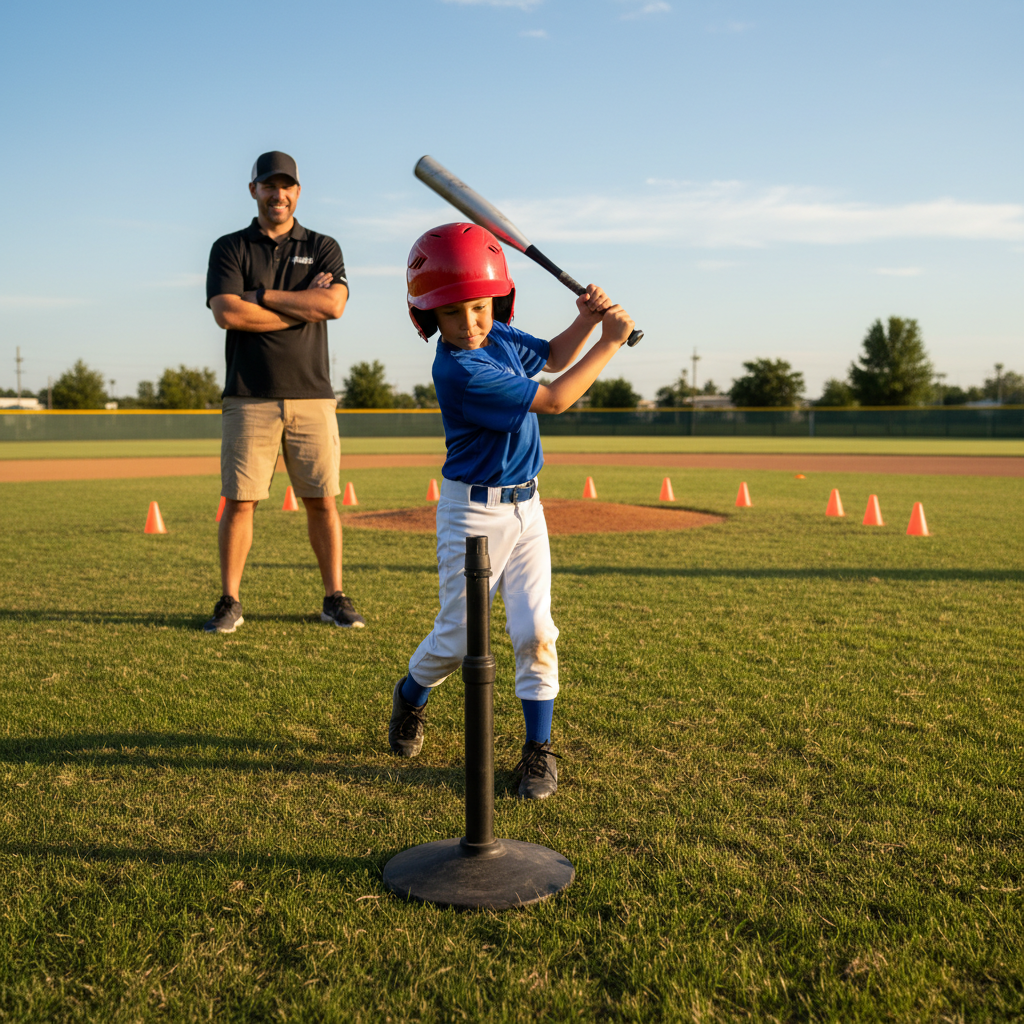
Key point: If a player looks scared of the ball, start with softer balls, a larger bat, and more tee reps. Confidence often comes before mechanics in this age group.
Base running and agility: keep it simple, keep it moving
Speed work for beginners doesn’t need ladders and complex patterns. It needs clean starts, controlled stops, and turning skills that prevent rolled ankles and bad slides.
1) Home-to-first “run-through” starts
Teach players to sprint through the bag in foul territory, eyes forward. Add a coach clap for the first step to train reaction.
2) First-base turn drill (no ball at first)
Place a cone three steps past first base in foul territory. Players hit the inside corner of the bag, then angle to the cone. This builds the habit of an efficient turn.
3) Shuttle relays (team energy without chaos)
Use short shuttles, 10–20 yards, with a ball handoff or high-five. Keep rest short, stop the drill if form gets sloppy.
Put it together: a 60-minute practice plan (with a drill table)
If you want practices to feel calmer, plan for stations and time boxes. Most teams improve faster when everyone moves and nobody waits long.
- 0–10 min: Dynamic warmup + easy catch
- 10–30 min: 2–3 stations (throw/catch, fielding, hitting)
- 30–45 min: Team defense situation (force at second, first-and-third basics)
- 45–55 min: Base running focus
- 55–60 min: Fun competitive finisher (short, not a marathon)
| Goal | Drill | Group Size | Time | Coach Focus |
|---|---|---|---|---|
| Accuracy | Step-and-Point Partners | 2 | 6–8 min | Step to target, finish balanced |
| Clean fielding | Alligator Grounders | 3–6 | 6–10 min | Glove down early, secure transfer |
| Contact | Tee Targets | 1–3 | 8–10 min | Same swing, different direction goals |
| Game readiness | Ready-Break-and-Field | 5–10 | 6–8 min | First step, stay in front |
Common mistakes that waste reps (and easy fixes)
You can run “good” Baseball Drills and still get mediocre results if practice structure fights you. These are the problems I see most often in youth settings.
- Too many kids in one line: Add stations, add partners, or run two balls. Standing kills focus.
- Coaching every rep: Give one cue, then let them try 4–6 times before correcting again.
- Distance too long: Beginners overthrow and learn bad patterns. Move in, then earn distance.
- Mixing goals: A drill meant for footwork turns into an arm-strength contest. Keep the target skill obvious.
- Competitive games that reward chaos: If the “fun” part is mostly errors, kids remember the stress, not the skill.
According to Little League, safety and age-appropriate instruction matter across practices and games; when in doubt, simplify the drill and prioritize controlled reps over intensity.
Practical coaching tips for the next practice
If you only change a few things, change these. They make almost any drill work better.
- Use clear success rules: “Hit the chest” or “field it in front” beats vague encouragement.
- Rotate fast: Set a timer, don’t negotiate with the clock.
- Give kids jobs: Ball shagger, cone setter, scorekeeper. Idle time creates noise.
- End on a win: One short challenge where most players succeed, then wrap.
Conclusion: keep the drills simple and the reps honest
Good Baseball Drills for youth and beginners are usually the ones that feel almost too basic, but they create clean reps, clear feedback, and small wins that stack up over a season. Pick two core skills per practice, keep lines short, and protect confidence while you build fundamentals.
Action ideas: choose three go-to drills (throwing, fielding, hitting) and run them for four practices in a row, then adjust one detail at a time based on what you see.
FAQ
What are the best Baseball Drills for a 7–9 year old beginner?
Usually partner throwing at short distance, alligator grounders, and tee work with simple targets. At that age, comfort and consistency beat complexity.
How long should youth baseball practice be?
Many teams land in the 60–90 minute range, but attention span matters more than the number. If effort drops hard at minute 55, shorten and increase station pace.
How do I stop kids from throwing wild and high?
Move them closer, slow the drill down, and coach the step toward the target. Wild throws often come from rushing and trying to throw “far” instead of “through.”
Should beginners use machine pitching in practice?
It can help with timing, but it also overwhelms some new hitters. Many situations call for tee work and soft toss first, then gradual speed increases.
How many reps should a player get during batting practice?
Enough to learn, not enough to get tired and sloppy. For many kids, 20–40 quality swings spread across tee and soft toss works better than a long bucket all at once.
What equipment makes drills easier for youth teams?
Cones, tennis balls, a few soft training balls, a tee, and a portable net cover most needs. Those items reduce fear and increase reps without needing a full field.
When should I worry about arm pain in a young player?
If pain shows up during throwing, lingers after practice, or changes mechanics, it’s worth stopping throws and considering evaluation by a qualified medical professional. “Sore” and “pain” aren’t the same, and kids don’t always describe them well.
If you’re trying to build a simple practice plan but keep getting stuck on what to run, how long to run it, and how to keep everyone moving, a pre-built station rotation and a short drill library can save time and reduce the guesswork.