
College Sports fitness and training often breaks down in the same two places: athletes try to train like it’s the offseason all year, or they under-train because practice already feels like “enough.” The sweet spot is a plan that matches your sport calendar, your role on the roster, and your recovery budget (sleep, food, stress).
If you’re a college athlete, you’re juggling classes, travel, lifting sessions, practice, film, and sometimes a part-time job, which means the “perfect” program rarely survives week three. A workable system, with a few non-negotiables and flexible pieces, usually beats a fancy spreadsheet.
This guide walks through how strength and conditioning typically fits in a college setting, how to self-check what you actually need, and what to do week by week without burning out. It also flags common mistakes that look “hardcore” but tend to backfire.

What “College Sports training” really includes (and why it feels messy)
Most people hear “training” and think lifting and running. In reality, performance in College Sports usually sits on five buckets, and the hard part is deciding which bucket gets attention this week.
- Strength & power: force production, rate of force development, sprint and jump qualities.
- Energy systems: conditioning matched to your sport, position, and time of year.
- Movement quality: mobility, stability, tissue capacity, landing and cutting mechanics.
- Skill practice: your sport training, tactical work, and team sessions.
- Recovery: sleep, nutrition, load management, and stress control.
According to the National Strength and Conditioning Association (NSCA), training plans should align with the sport’s demands and the athlete’s training age, which sounds obvious, but it’s exactly where many college programs (and DIY plans) drift.
Why athletes plateau or get banged up: common real-world causes
When College Sports performance stalls, it’s rarely “not enough grit.” It’s usually a mismatch between stress and recovery, or a plan that ignores the season.
- Too much high-intensity work stacked together: heavy lower body + max sprints + hard practice in a 24–48 hour window.
- No true deload weeks: volume creeps up, soreness becomes normal, speed quietly drops.
- Conditioning that fights your practices: extra intervals on top of already intense sessions, especially in-season.
- “Prehab” without purpose: lots of random bands and balance work, but the main lifts stay sloppy.
- Sleep and fueling gaps: late nights, low protein, under-eating around travel days.
According to the Centers for Disease Control and Prevention (CDC), sleep is a key driver of health and day-to-day function, and for athletes it often shows up as coordination, reaction time, and mood. Not glamorous, but it moves the needle.
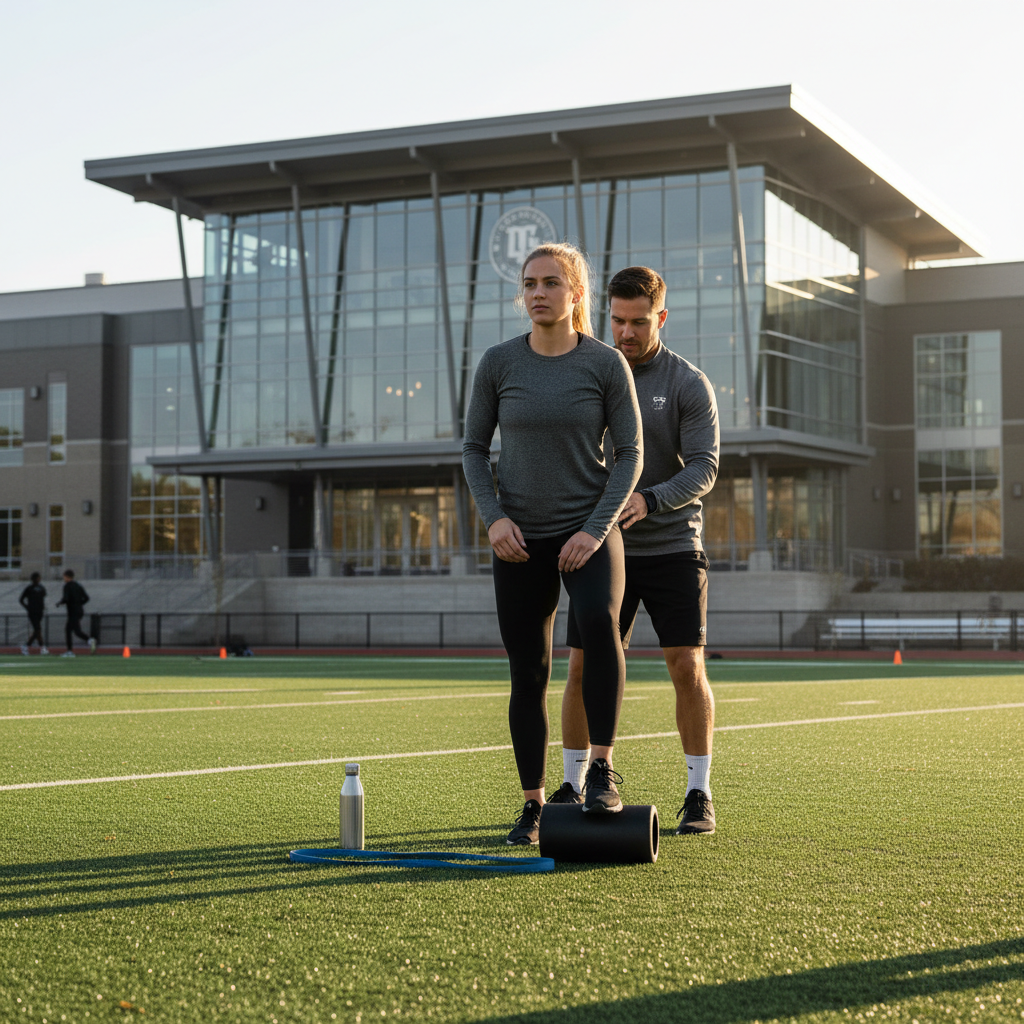
Quick self-check: what should you focus on right now?
Before you add more work, get clear on what kind of “need” you have. This is the part many athletes skip because it feels too simple.
A simple decision checklist
- If you feel slower (not just tired): you likely need less volume, more recovery, and small doses of speed/power.
- If you gas out early but your sport has repeated bursts: you may need repeat-sprint or tempo work, not long slow mileage.
- If aches keep rotating (knees one week, back the next): look at load spikes, technique, and sleep before adding “correctives.”
- If you’re strong in the weight room but not on the field: power, sprint mechanics, and sport-specific conditioning may be the limiter.
- If you’re new to lifting: consistency and good patterns beat advanced variations.
Red flags that suggest you’re doing too much
- Persistent soreness that doesn’t resolve between sessions
- Declining jump height/sprint times (even informally)
- Sleep gets worse as training “gets serious”
- Irritability, low motivation, appetite swings
If several red flags show up, scaling back for 7–14 days is often smarter than pushing harder. When in doubt, ask your strength coach or athletic trainer, especially if pain changes your mechanics.
Training priorities by season: offseason vs. in-season vs. postseason
College Sports programming changes with the calendar. What works in June can be a bad idea in October.
| Phase | Main goal | What lifting looks like | Conditioning emphasis |
|---|---|---|---|
| Offseason | Build capacity, strength, power | 2–4 days/week, higher volume, progressive overload | Base + targeted intervals (sport/position-specific) |
| Preseason | Convert to sport speed, tolerate practice load | 2–3 days/week, moderate volume, more power/speed | High specificity, repeat efforts, practice-integrated |
| In-season | Maintain strength/power, stay healthy | 1–2 days/week, low volume, high quality | Mostly from practice/games, small “top-ups” as needed |
| Postseason / transition | Recover, restore, re-balance | Light full-body, movement quality | Easy aerobic work, return-to-train progression |
In-season is where many athletes get stubborn. Maintenance work can feel “too easy,” but it’s often the difference between keeping speed late in the year and limping into the playoffs.
Practical training templates you can actually run
Below are realistic week structures that fit most college schedules. Adjust based on your sport, travel, and what your team requires. If your strength coach has a plan, use these as a way to understand the “why,” not as a reason to freelance.
In-season (2 lifts/week) maintenance template
- Day A (Lower emphasis, 35–55 min): squat or trap-bar deadlift 3–5 sets of 2–5 reps, single-leg accessory 2–3 sets, core/bracing, short mobility
- Day B (Upper + power, 35–55 min): jump/med-ball throws 3–5 sets, bench or weighted pull-ups 3–5 sets of 2–6 reps, rows/shoulder health, neck or trunk work if relevant
Keep reps crisp, stop 1–3 reps shy of failure most weeks. If games stack up, reduce accessories before cutting the main lifts.
Offseason (3 lifts/week) build template
- Day 1: lower strength + posterior chain
- Day 2: upper strength + scapular control
- Day 3: full-body power + unilateral work
Conditioning adds in 2–3 days/week depending on sport demands. If you play a high-volume running sport, you may need more careful load tracking so lifting doesn’t crush legs before quality field work.
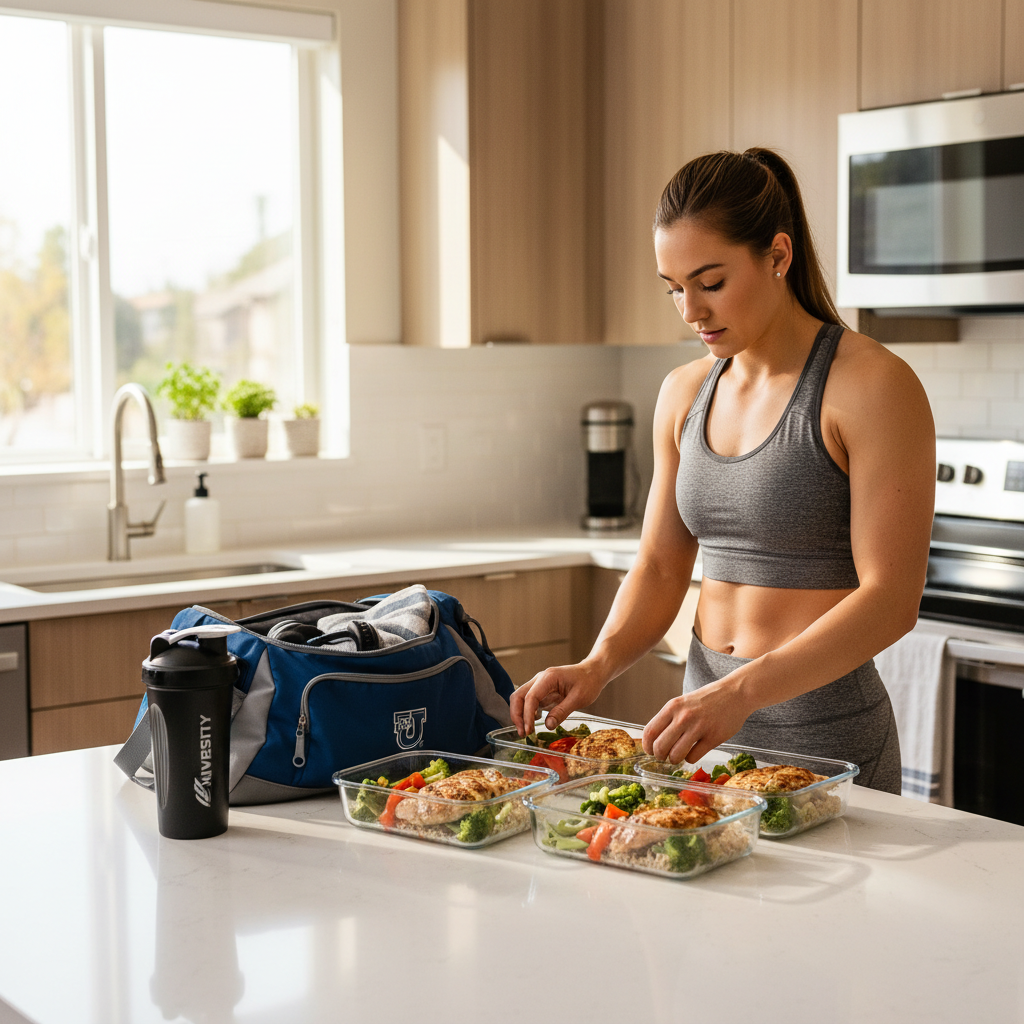
Recovery and nutrition: the “unsexy” stuff that decides your season
College Sports training adapts when your body gets a clear signal and enough resources to rebuild. If recovery stays underfunded, more training just becomes more fatigue.
Three recovery levers that matter most
- Sleep consistency: a stable schedule often beats occasional “catch-up” nights.
- Protein distribution: many athletes do fine when they spread protein across meals rather than cramming it at dinner.
- Carbs around hard sessions: for many sports, carbs support intensity and help you show up again the next day.
According to the U.S. Department of Agriculture (USDA), balanced eating patterns support overall health; athletes may need sport-specific adjustments, so it’s reasonable to consult a registered dietitian, especially if you struggle with appetite, weight changes, or GI issues during travel.
Key takeaways (pin these somewhere)
- Match training to the season, don’t chase offseason numbers in-season.
- Performance is a signal: if speed drops, treat it like a check-engine light.
- Cut volume before intensity when schedules get tight.
- Recovery is training, not an optional bonus.
Common mistakes that waste effort (or raise risk)
A few patterns show up every year, across sports. They’re understandable, but they cost time.
- Copying pro workouts from social media: pros have different recovery support, different seasons, and years of training base.
- Turning every lift into a max test: testing has a place, but living there tends to stall progress.
- Ignoring pain signals: discomfort from effort is normal, sharp or escalating pain deserves a check.
- “Extra conditioning” as punishment: it can quietly erode speed and power when you need them most.
If you’re unsure whether a symptom is normal soreness or something else, it’s safer to get input from your athletic trainer or a qualified clinician. Online advice can’t see your movement or your medical history.
When to involve a strength coach, athletic trainer, or clinician
There’s a point where DIY adjustments stop being smart. In College Sports settings, asking for help early usually saves you weeks.
- Persistent pain lasting more than a few sessions, or pain that changes your gait or mechanics
- Repeated soft-tissue issues like hamstring or groin strains
- Big performance drop with normal effort, especially paired with sleep or mood changes
- Nutrition concerns such as frequent dizziness, extreme weight swings, or suspected disordered eating patterns
According to the National Athletic Trainers’ Association (NATA), athletic trainers play a central role in injury prevention and care coordination, which makes them a solid first stop when something feels off.
Conclusion: a simpler way to train through the semester
College Sports training works best when you treat it like a system: a few heavy-hitters you protect every week, plus small adjustments based on travel, practice intensity, and how your body responds. You don’t need more complexity, you need better timing.
If you want one practical next step, pick a season-appropriate lifting schedule (1–2 days in-season, 3 days offseason for many athletes) and track two signals for two weeks: sleep consistency and performance markers like jump height, sprint feel, or bar speed. If both improve, you’re likely moving in the right direction.
FAQ
- How many days a week should I lift during the season in college sports?
Many athletes do well with 1–2 concise sessions focused on maintaining strength and power, but game load, travel, and your role affect the answer. - Should college athletes do cardio on top of practice?
Sometimes, but it depends on what practice already covers. If practices are intense, extra conditioning may just add fatigue; targeted “top-up” work is often a better fit. - What are the best lifts for College Sports performance?
Common staples include squat patterns, hinge patterns (like trap-bar deadlift or RDL), presses, pulls, and power work like jumps or med-ball throws, chosen around your sport and injury history. - How do I know if I’m overtraining in college?
Look for persistent soreness, declining speed/power, sleep disruption, and mood changes. If multiple signs show up, reducing volume and talking with staff is a sensible move. - Is it okay to lift heavy when I have games every week?
Often yes, but “heavy” usually means low reps with high quality, not high volume to failure. Timing matters, so coordinate with your coach when possible. - What should I eat on travel days for college sports?
Aim for familiar foods, protein at meals, and carbs around competition. If GI issues are common, planning simple snacks can help, and a sports dietitian can personalize it. - Do I need supplements to perform well in College Sports?
Many athletes don’t. If you consider supplements, it’s wise to check safety and compliance rules with your school staff, and consult a qualified professional.
If you’re trying to balance lifting, practice, and recovery without guessing, a simple weekly plan plus a quick check-in routine can make the whole process calmer. If you’d rather not build it from scratch, consider working with your school’s strength staff or a qualified coach who can tailor loads to your season and schedule.