
how to keep knees warm when cycling comes down to two things most riders miss: blocking wind on the front of the joint, and keeping steady heat in the muscles that support it.
If your knees feel cold, stiff, or a little “cranky” early in a winter ride, you’re not alone, and it’s not just about comfort. Cold joints can change how you pedal, encourage you to ride “protective,” and that often shows up as pain later.
This guide breaks down why knees get cold on the bike, how to tell whether you need more insulation or simply better wind management, and what to do when the temperature swings mid-ride. I’ll also call out a few common mistakes that sound logical but backfire in real-world conditions.
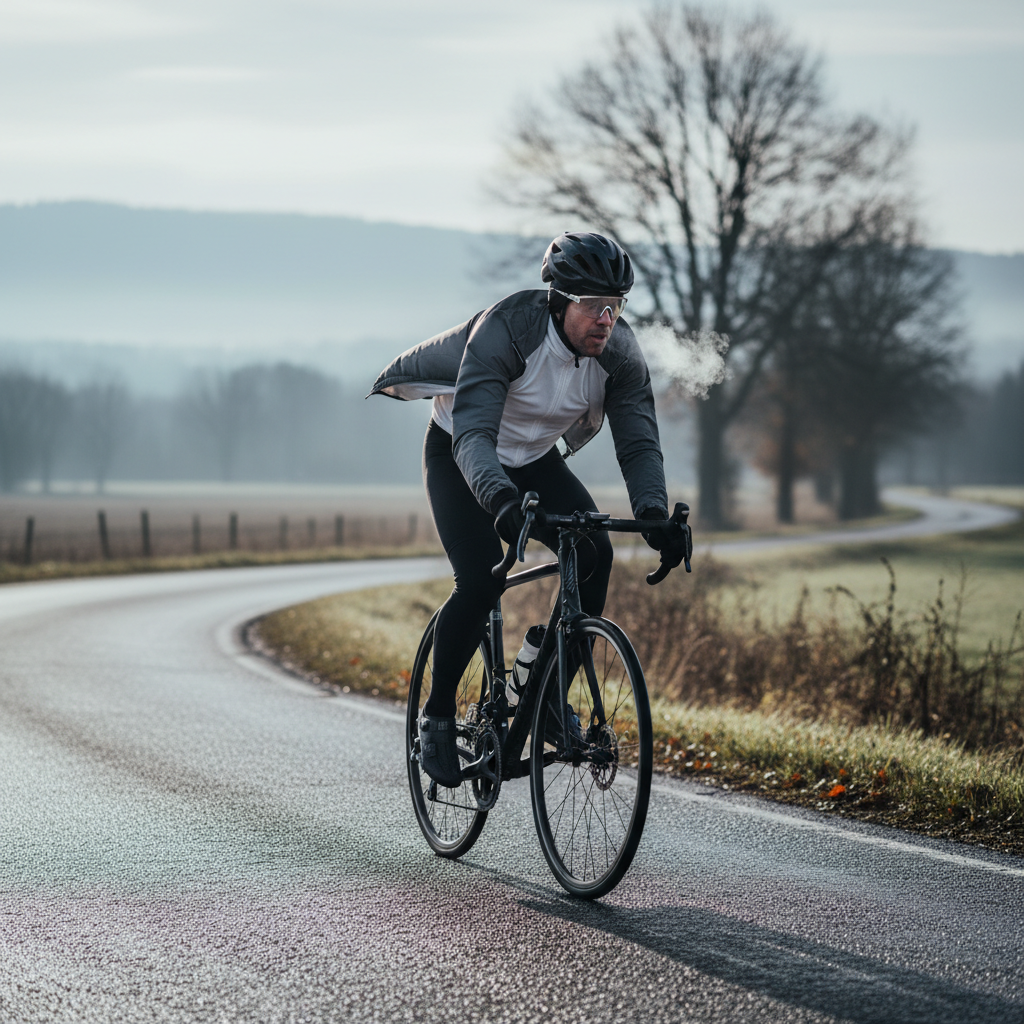
Why your knees get cold while cycling (even if your core feels fine)
Knees cool off fast because they sit in the direct wind stream and don’t generate heat the way big muscles do. Your quads and hamstrings act like a furnace, but the knee joint itself relies on nearby tissues to stay warm.
- Wind chill on the front of the knee hits harder than most people expect, especially at 15–20 mph.
- Sweat, then chill happens when you overdress early, dampen your layers, and then descend or ease off.
- Low cadence, high torque pedaling can make knees feel tight; cold amplifies that sensation.
- Thin summer bib tights often insulate the thigh but leave the patella area exposed to airflow.
According to CDC guidance on cold stress, wind and moisture increase heat loss and raise the risk of cold-related problems, which is exactly the combo cyclists create through speed and sweat.
Quick self-check: what kind of “cold knee” problem do you have?
Before buying gear, take 30 seconds to diagnose. Different causes need different fixes, and guessing usually means carrying too much clothing or still ending up cold.
Use this checklist
- Cold only on descents? You likely need better wind blocking more than more insulation.
- Cold within the first 10–15 minutes? You may be starting too fast, under-layered, or skipping a warm-up.
- One knee colder than the other? Often a fit or coverage issue (knee warmer slipping, cuff gap, shoe cover leak).
- Cold plus aching around the kneecap? Can be load/cadence related; warmth helps, but technique matters too.
- Cold feet and hands too? It may be overall underdressing or poor circulation; fix the whole system, not just the knee.
If you’re unsure, err toward wind management first. Extra thickness without wind protection can still feel cold at speed, and it tends to create sweat issues later.
Gear that works: layering for warm knees without overheating
For most riders, the most reliable answer to how to keep knees warm when cycling is a simple, adjustable layering setup that you can fine-tune as the ride evolves.
Knee warmers vs tights vs pants
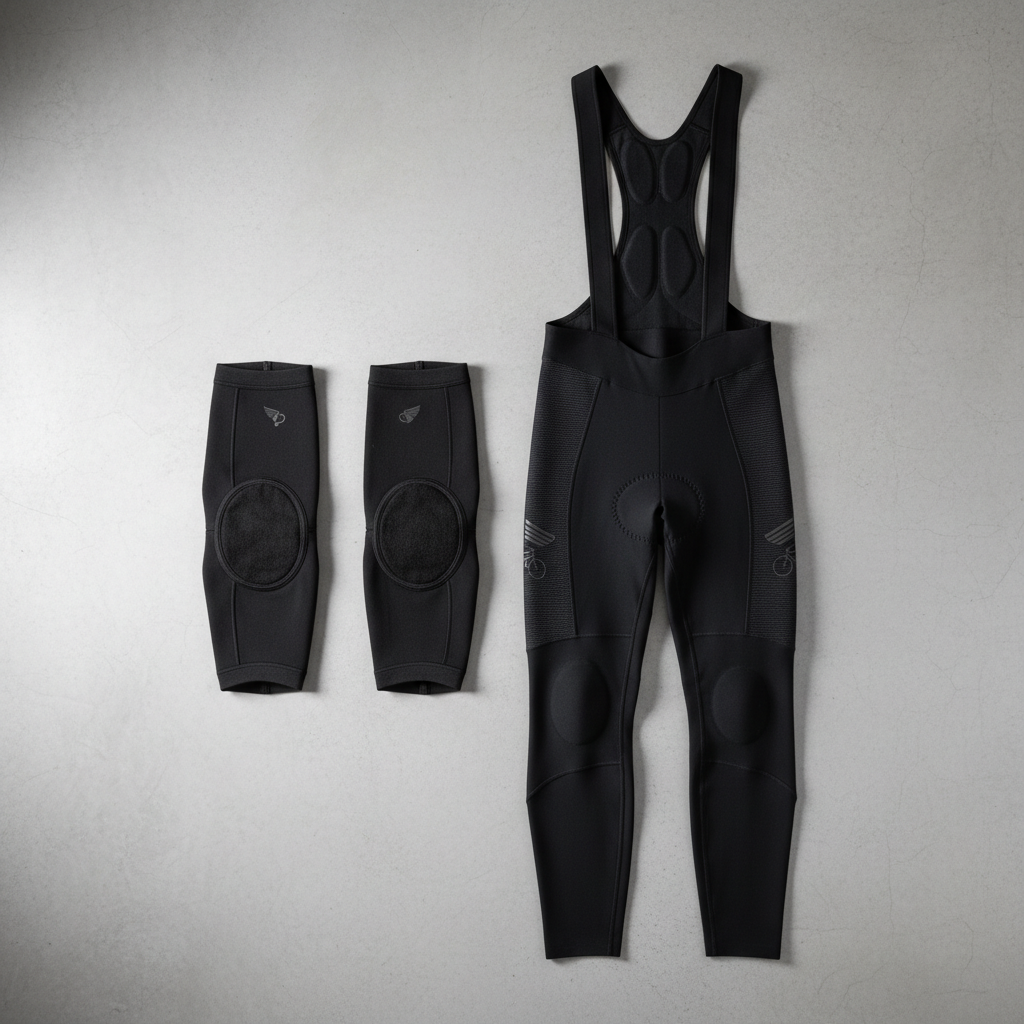
- Knee warmers: Great for shoulder seasons and variable rides. Easy to remove and stash, but they must stay put.
- Thermal bib tights: Best for consistent cold. Look for a wind-resistant panel or denser fabric over the front knee area.
- Softshell cycling pants: Best for very cold, windy days. They block wind well, but ventilation becomes the main challenge.
What to look for (practical, not marketing)
- Wind-facing coverage: A slightly denser front panel helps more than extra fleece everywhere.
- Grippers that don’t bite: Too tight can feel warmer for 10 minutes, then start feeling worse.
- No gap at the hem: Even a small gap between warmer and shorts becomes a wind tunnel.
- Water resistance for spray: Road spray cools fabric fast; a DWR finish often helps in damp cold.
One small but real tip: if your knee warmers slide, they’re rarely “bad warmers,” they’re usually the wrong size or fighting slick leg lotion/sunscreen residue. Clean skin or a thin base layer can improve grip.
Warmth strategy in one table: match conditions to a knee setup
Use this as a starting point, then adjust for your own cold tolerance and ride intensity. Most people run too warm on climbs and too cold on descents, so prioritize options that vent or pack down.
| Ride conditions | Common knee problem | What usually works | Watch out for |
|---|---|---|---|
| 50–60°F, light wind | Early-ride chill | Knee warmers + light leg coverage | Overheating after 30 min |
| 40–50°F, moderate wind | Wind chill on kneecap | Thermal tights or warmers with wind panel | Sweat buildup on climbs |
| 30–40°F, long descents | Cold on descents, stiffness | Windproof front + consider knee/leg sleeves under tights | Bulky layers that restrict knee bend |
| Damp cold, road spray | Wet fabric = fast cooling | DWR-treated tights or softshell pants | Non-breathable rain layers trapping sweat |
On-bike habits that keep knees warm (and feel better later)
Gear matters, but habits matter more than riders like to admit. You can be dressed perfectly and still end up cold if pacing and cadence create a stop-start heat output.
Start easier than you want to
The first 10 minutes should feel almost “too easy,” especially in the cold. Your goal is to bring blood flow up before you ask the knee to handle bigger loads.
Keep cadence a bit higher
Many cyclists default to grinding bigger gears when it’s cold because it feels controlled. The knee often prefers smoother circles with less peak force, and that also keeps muscles warmer.
- Shift earlier than usual
- Spin up small rises instead of stomping
- On descents, keep light pressure on the pedals if safe to do so
Plan for descents
If a long descent is coming, zip up, cover vents, and consider a short harder effort before the drop to build a heat buffer. It’s a simple trick that can prevent that sudden knee chill.
According to ACSM (American College of Sports Medicine) general exercise guidance, warming up supports performance and reduces injury risk; in cold weather, that warm-up has even more practical value because tissues cool quickly when you back off.
Step-by-step: a reliable pre-ride and mid-ride routine
If you want something you can repeat without overthinking, this is it. Adjust the temperature ranges for your personal tolerance, but keep the logic.
Pre-ride (5–10 minutes)
- Warm indoors if possible: start the ride already comfortable, not shivering.
- Pick one wind layer for knees: warmers with a wind-facing panel, tights with denser front, or softshell pants.
- Avoid heavy lotions under grippers: helps prevent sliding and cold gaps.
- Do 2 minutes of easy spinning before you push pace, even if you feel fresh.
Mid-ride adjustments
- If you sweat early: vent your torso first; knee insulation often works better when the rest of you stays dry.
- If knees go cold on descents: add wind protection where the air hits, not just more thickness.
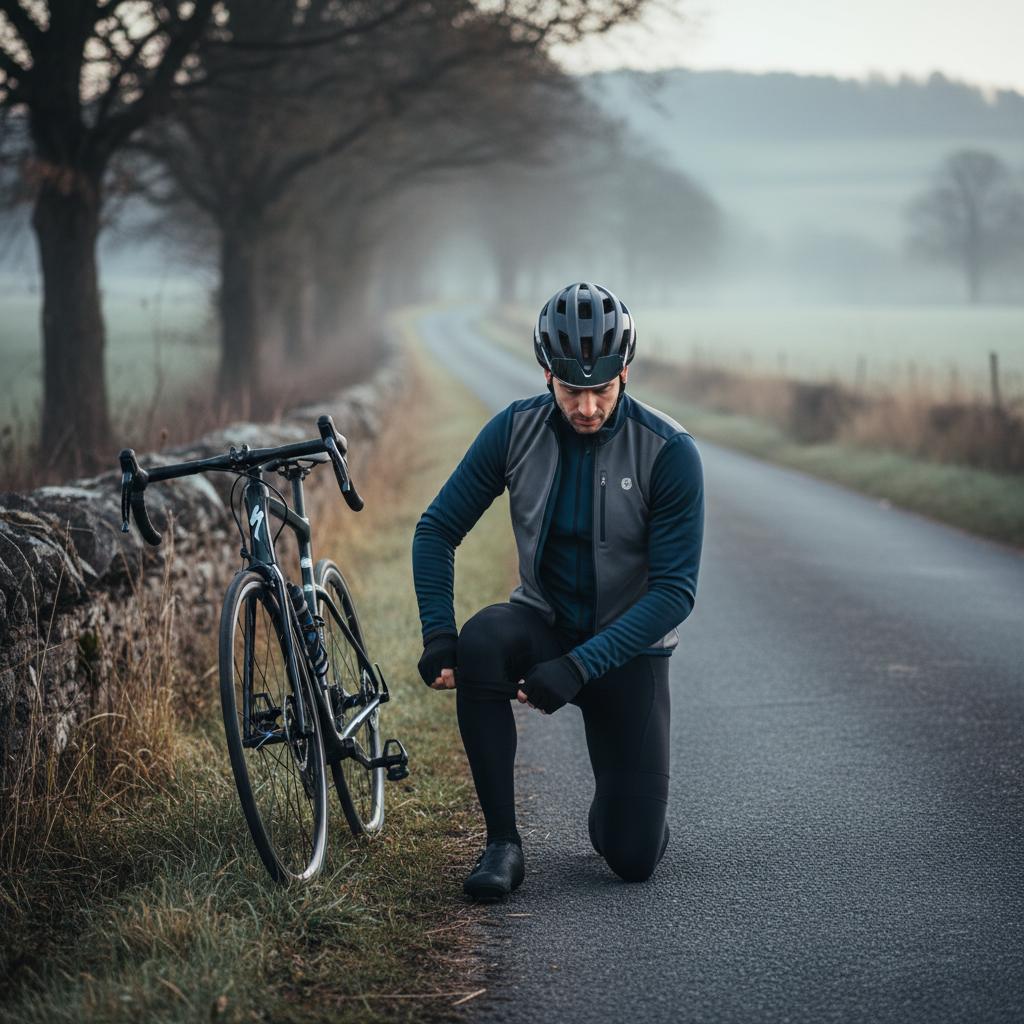
- If warmers creep down: stop once, fix it properly; riding with a gap rarely “sorts itself out.”
If you carry one extra item, make it a packable wind shell. It indirectly helps knee warmth by reducing the urge to overdress legs in the first place.
Mistakes that make knees colder (or make pain more likely)
These show up a lot, especially with newer winter riders who assume “more layers” equals “more warmth.”
- Using non-breathable rain pants as warmth: you might feel warm briefly, then sweat soaks layers and cooling gets worse.
- Leaving a gap between warmers and shorts: tiny gap, big wind chill.
- Starting hard to “warm up faster”: it warms you up, but it also spikes knee load before tissues feel ready.
- Ignoring bike fit clues: if one knee always gets colder or achier, it may be tracking or reach issues, not just weather.
And a small truth: if your feet are ice blocks, your body often prioritizes core temperature and reduces peripheral blood flow. Sometimes the knee fix starts at the shoe cover, not the leg warmer.
When to get professional help (and what to ask)
Cold sensation alone is usually manageable with clothing and pacing, but pain, swelling, or instability deserves a closer look. If symptoms persist, consider speaking with a clinician or a qualified bike fitter, and be clear about when it happens.
- Seek medical advice if knee pain is sharp, swelling appears, or you feel locking/giving way, especially after a fall or twist.
- Consider a bike fit if one knee is consistently worse, your saddle height recently changed, or pain correlates with higher gears.
- Ask specific questions: cleat position, saddle height, knee tracking, and whether your winter footwear changes foot angle.
According to AAOS (American Academy of Orthopaedic Surgeons) general guidance, persistent joint pain or swelling is a reason to seek evaluation rather than pushing through.
Key takeaways and a simple next ride plan
how to keep knees warm when cycling usually isn’t about buying the thickest tights. It’s about wind control, consistent heat output, and avoiding damp layers.
- Block wind on the front of the knee before you add bulk.
- Warm up gently, then build effort, your knees tend to cooperate more in the cold.
- Adjust for descents and keep sweat under control with smarter venting.
Pick one change for your next ride, knee warmers that actually seal, a calmer first 10 minutes, or a wind layer you can deploy before long descents, then reassess after two or three outings.