
Beginner pilates can feel oddly intimidating, not because the moves look hard, but because small form details seem easy to miss, and you worry you might do it “wrong.”
This guide gives you a clear, repeatable routine you can do at home, plus the cues that matter most, what to modify when something feels off, and a simple weekly plan so you actually stick with it.
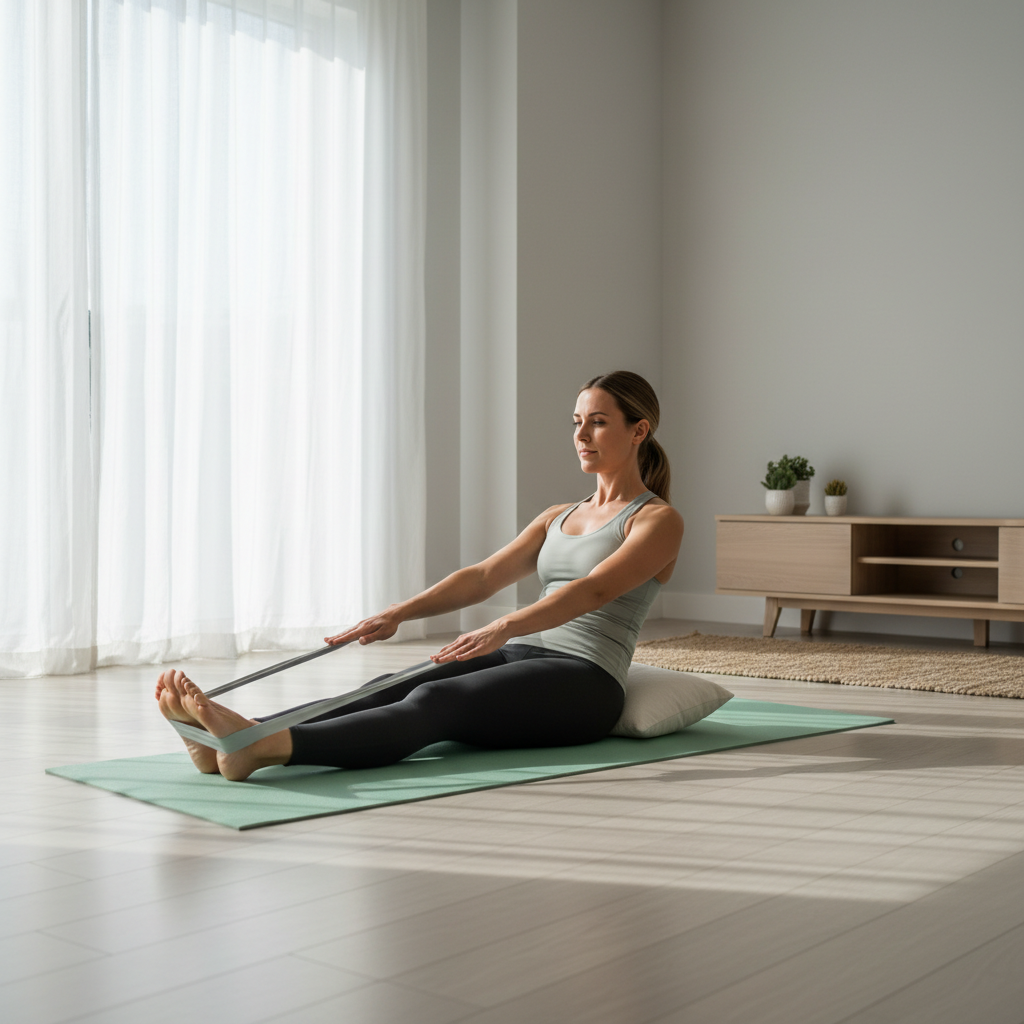
One quick expectation reset: Pilates often feels “easy” until it doesn’t. The work comes from control, breathing, and alignment, not speed or big reps, so the goal here is consistency and clean movement.
What makes Pilates “beginner-friendly” (and what doesn’t)
Beginner-friendly Pilates usually means a slower pace, fewer transitions, and exercises that teach positioning before intensity. A routine that jumps straight into long planks, advanced roll-ups, or fast flows often frustrates new learners more than it helps.
According to the American Council on Exercise (ACE), proper technique and progressive overload matter for building strength and reducing injury risk, and Pilates fits best when you keep progress gradual rather than forcing range of motion.
- Good beginner signals: clear breathing cues, options for tight hips/hamstrings, time to reset posture.
- Common “not yet” signals: neck strain during core work, lower back pinching, holding breath to “get through.”
Quick self-check: are you ready for this routine today?
This is not a fitness test, more like a reality check. If you feel stiff, tired, or stressed, Pilates can still work, but you may need the easier options.
- You can breathe through your nose and talk in short sentences while moving.
- Your neck stays relaxed when you lift your head slightly off the mat.
- Your lower back feels supported, no sharp pain or “catching” sensation.
- You can bend knees when needed without feeling like you “failed.”
If you are pregnant, recovering from surgery, have osteoporosis, disc issues, or persistent pain, it’s smart to check with a qualified clinician or certified Pilates instructor for personalized modifications.
Key points to remember before you start
These cues are the difference between “I did some moves” and “I felt Pilates working.” Keep them simple, you can refine later.
- Breath: inhale to prepare, exhale on effort. If you hold your breath, scale down.
- Rib position: think “ribs stacked over pelvis,” not flaring open.
- Pelvis: neutral is usually the default, gentle imprint is an option if your back feels better that way.
- Shoulders: heavy and wide, neck long. If traps burn, reset.
- Slow reps: control beats quantity, especially in beginner pilates sessions.
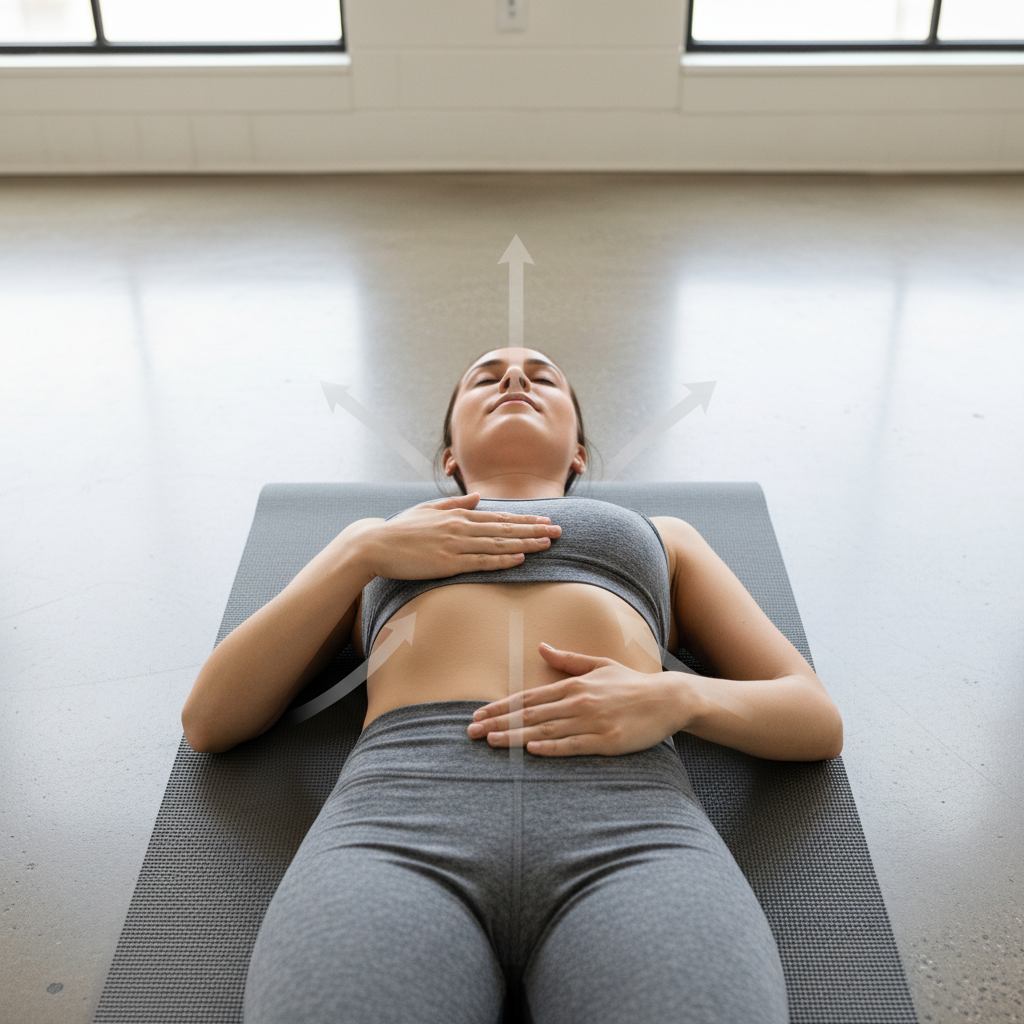
Safety note: mild muscle effort and gentle shaking can be normal, sharp pain, numbness, or dizziness is not. Stop and seek professional advice if symptoms persist.
The 20–25 minute beginner Pilates routine (mat, no equipment)
Do this 2–4 times per week. Keep a calm pace, rest whenever form slips, and choose the “Option” that lets you keep breathing.
1) Centering breath (1 minute)
Lie on your back, knees bent, feet hip-width. Inhale into the sides/back of the ribs, exhale and feel your waist gently narrow.
- Cue: jaw soft, shoulders heavy.
- Option: feet on a chair if your back feels tense.
2) Pelvic clock or pelvic tilt (1–2 minutes)
Small pelvis movements to find neutral. Think “tiny range,” not big rocking.
- Cue: move from pelvis, not from pushing feet.
- Option: keep movement minimal if you feel back sensitivity.
3) Knee folds (marching) (8–10 reps each side)
From neutral, exhale and lift one knee to tabletop, inhale lower with control, alternate.
- Cue: pelvis stays steady, like a bowl you don’t spill.
- Option: slide heel instead of lifting knee.
4) Toe taps (6–10 reps each side)
Bring one or both legs to tabletop. Tap toes to mat lightly, return.
- Cue: exhale as toes lower, keep ribs from popping up.
- Option: do single-leg taps only.
5) Glute bridge (8–12 reps)
Exhale, peel hips up to a comfortable height, inhale at top, exhale lower slowly.
- Cue: weight through heels, knees track over second toes.
- Option: hold a static bridge for 20–30 seconds instead of reps.
6) Side-lying leg lifts (8–12 reps each side)
Lie on your side, bottom knee bent if needed. Lift top leg to hip height, lower with control.
- Cue: hips stacked, waist gently lifted off mat.
- Option: smaller range if hip flexors dominate.
7) Bird dog (6–8 reps each side)
On hands and knees, extend opposite arm and leg, pause, return. Slow.
- Cue: press floor away, neck long, ribs pulled in.
- Option: extend leg only, or arm only.
8) Modified side plank (20–30 seconds each side)
Forearm down, knees bent, lift hips. You should feel side body working, not neck strain.
- Cue: shoulder stays away from ear.
- Option: hold shorter sets, repeat twice.
9) Spine stretch forward (6–8 slow reps)
Sit tall, knees bent if hamstrings pull. Exhale, nod chin slightly and round forward, inhale stack back up.
- Cue: think “curve over a beach ball,” not collapsing.
10) Cooldown: supine twist (30–45 seconds each side)
On your back, knees together, drop side to side gently, breathe into ribcage.
Simple weekly plan (so beginner Pilates turns into a habit)
Most people do better with a plan that feels almost too easy at the start. Your joints, tendons, and coordination usually need time even if your cardio fitness is strong.
| Week | Frequency | Focus | Progress idea |
|---|---|---|---|
| 1 | 2x/week | Breath, alignment | Shorten holds, take more breaks |
| 2 | 3x/week | Control, smoother transitions | Add 2 reps per move if form stays clean |
| 3 | 3–4x/week | Core endurance | Increase holds by 5–10 seconds |
| 4 | 3–4x/week | Strength balance | Add a light band for side-lying work |
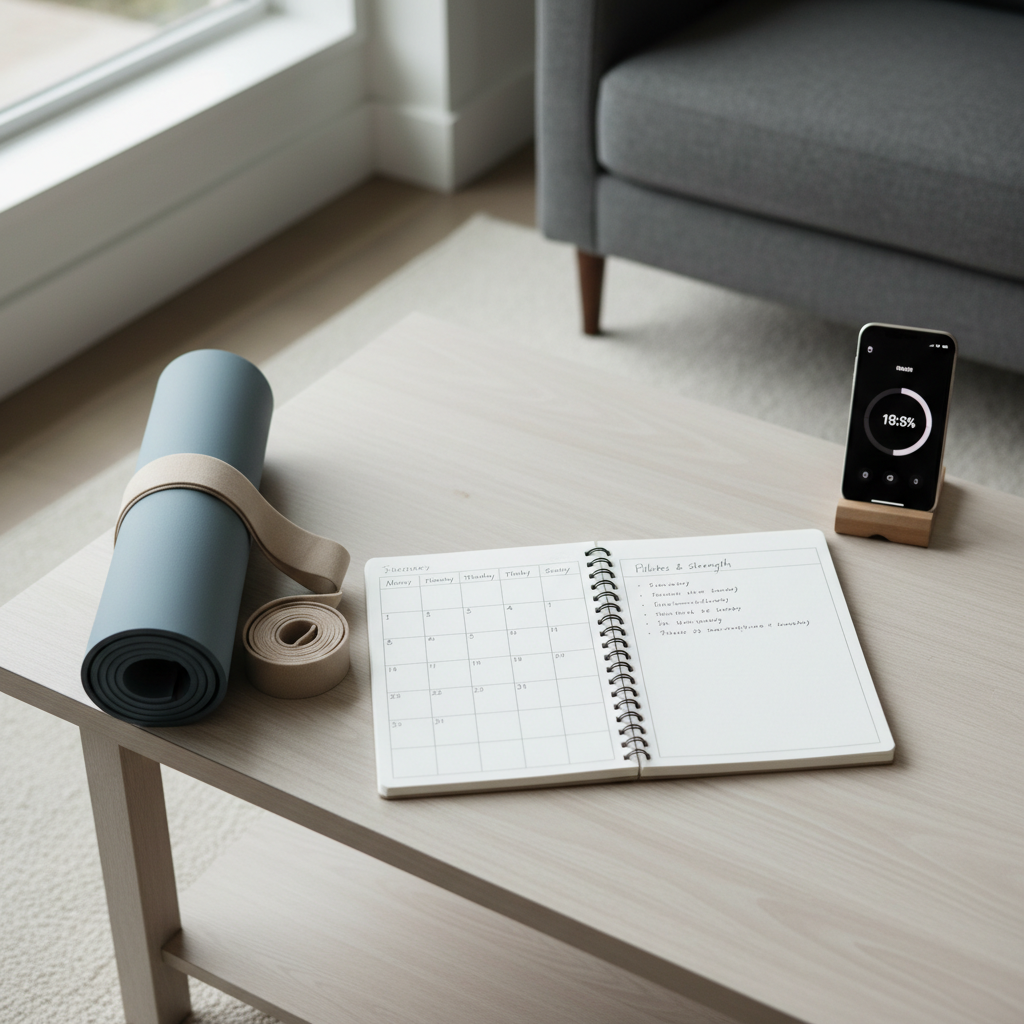
Key takeaway: if you feel better posture and steadier core control, you are progressing, even if the routine still feels “basic.” That’s beginner pilates working as intended.
Common form problems (and quick fixes that usually help)
- Neck feels strained during core work: keep head down more often, support head with one hand, reduce range, prioritize exhale.
- Hip flexors take over: bend knees, lower legs closer to vertical, shorten lever arm, slow down.
- Lower back pinches in toe taps/bridges: go smaller, keep ribs stacked, try a gentle pelvic imprint, or place feet on a chair.
- Wrists hurt in quadruped: fists instead of flat palms, hands on yoga blocks, or do bird dog on forearms.
If pain feels sharp, radiates, or lingers into daily activities, it’s worth pausing and asking a medical professional or physical therapist, especially if you suspect an underlying issue.
When to level up, and when to get professional help
You can usually level up once you can keep the same rib and pelvis position while breathing steadily. If you’re wobbling but can correct yourself, that’s normal. If you cannot find a position that feels stable, don’t brute-force it.
- Signs you can progress: toe taps stay controlled, bridges feel even in both glutes, side plank feels like side waist not shoulder.
- Good reasons to get coaching: ongoing back/neck discomfort, postpartum changes, hypermobility, uncertainty about core engagement.
According to the National Academy of Sports Medicine (NASM), individualized assessment can be important when pain or compensation patterns show up, because the “right” modification depends on your body and history.
Conclusion: keep it simple, keep it consistent
Beginner pilates works best when you repeat a small set of movements long enough to feel control improve, then add difficulty in tiny steps. If you do this routine a few times per week, focus on breath and alignment, and choose modifications without ego, you usually notice better posture and steadier core support before you notice anything dramatic in a mirror.
Your next step: schedule two sessions this week, and write down one cue that helped most, ribs stacked, slow exhale, or smaller range. That single note tends to make the next workout smoother.
FAQ
How many days a week should I do beginner Pilates?
Many beginners do well with 2–4 days per week, enough to learn the patterns without getting overly sore. If you feel beat up, drop to 2 days and keep walks or gentle mobility on the other days.
Is it normal to shake during Pilates?
Light shaking often happens when muscles work in a new way or you slow the tempo. If shaking comes with pain, cramping, or you lose control, scale down the range or take longer breaks.
Do I need equipment for beginner Pilates at home?
No, a mat routine can be plenty. A pillow for head support and a light resistance band can help later, but they’re not required to start building skill.
What if I feel Pilates mostly in my hip flexors?
That’s common. Bend knees more, shorten the lever, and use a longer exhale to help the deep core engage. If the sensation stays sharp in the front of the hip, pause and reassess form.
Can beginner Pilates help with back pain?
It might, especially if your pain relates to poor trunk control or sitting posture, but back pain has many causes. If symptoms are persistent, worsening, or radiate down the leg, consult a qualified professional before pushing through.
How long until I see results with beginner Pilates?
Many people notice better body awareness and posture within a few weeks of consistent practice. Visible changes vary a lot based on sleep, nutrition, training history, and how often you practice.
Should I do Pilates or strength training first?
You can do either. Some people like Pilates on “lighter” days to reinforce alignment and core control, while strength training covers heavier loading. If you’re new to both, start with what you’ll stick with, then add the other gradually.
If you’re trying beginner pilates at home and you want a more personalized path, it can be helpful to work with a certified instructor for a session or two, even virtually, to confirm your form and choose progressions that match your body and goals.