
Home gym setup on a budget is less about buying “cheap equipment” and more about buying the right few pieces, in the right order, for the way you actually train.
If you’ve ever filled an online cart with random bands, a bargain bench, and a treadmill you’re not sure will fit, you already know the problem, the spending feels urgent, but the plan feels fuzzy.
This guide keeps it practical, how to choose priorities, what to buy first, where people waste money, and how to make a small space feel like a real training spot without turning your home into a storage unit.
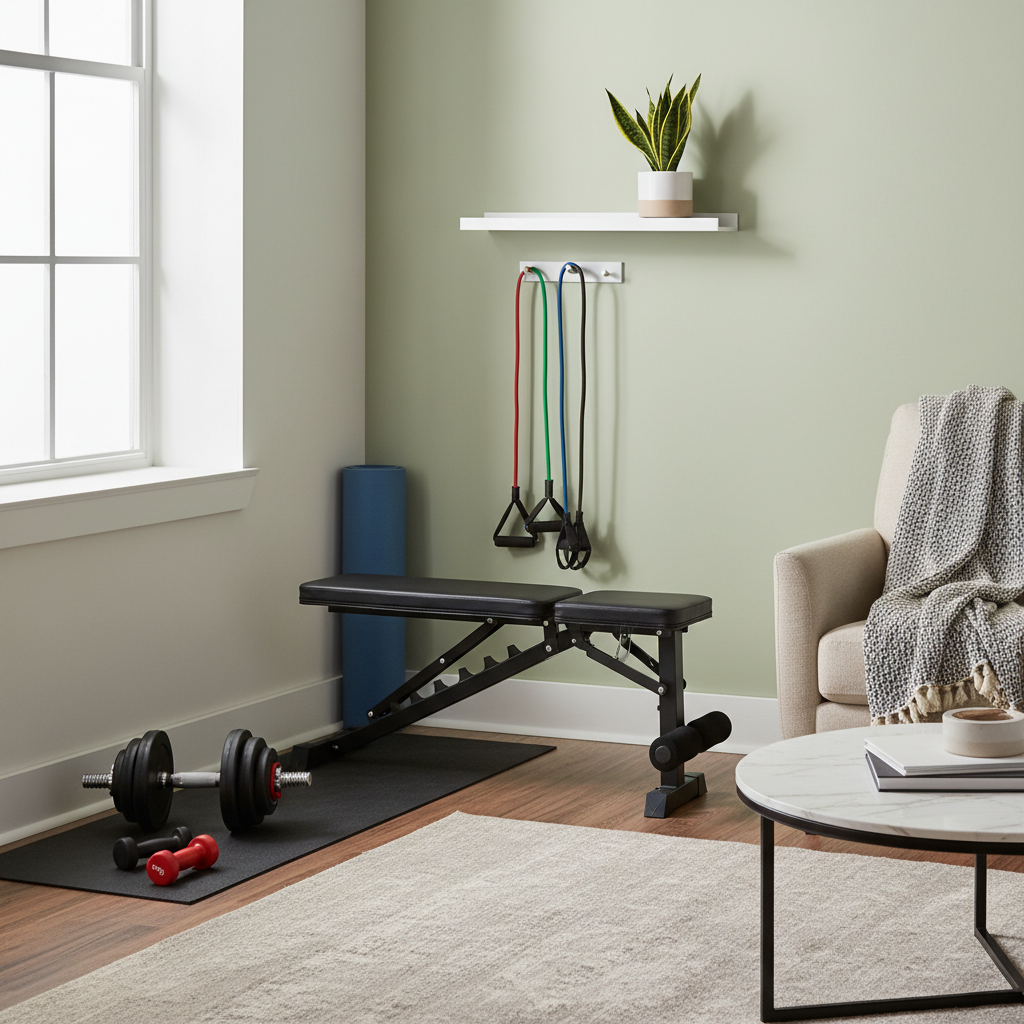
Start with a clear goal (so you don’t buy twice)
The fastest way to blow your budget is shopping before you decide what “success” looks like. A budget setup works when it matches your training goal and your tolerance for setup time.
Pick one primary goal for the next 8–12 weeks, you can always expand later.
- Strength + muscle: adjustable dumbbells, a bench, a pull-up option, maybe a barbell later.
- Fat loss + conditioning: jump rope, kettlebell, bands, or a compact cardio choice you won’t hate.
- Mobility + “feel better” training: mat, bands, light weights, and a simple progression plan.
One more reality check, if your plan requires moving furniture every time, you may train less. In many homes, “easy to start” beats “perfect.”
Budget math that makes sense (and a simple spending plan)
Before gear, decide your ceiling and your timeline. Many people do better splitting purchases into two phases: a “train now” phase and an “upgrade” phase once the habit sticks.
A practical two-phase approach
- Phase 1 (Weeks 1–2): buy the minimum to cover full-body training.
- Phase 2 (Weeks 3–12): add one piece that removes your biggest limitation.
If you’re using a credit card because the deal ends tonight, that’s usually a sign the plan isn’t solid yet. Fitness progress rarely depends on a 24-hour sale window.
What to buy first: the “minimum effective” home gym setup
A budget-friendly home gym setup usually needs just enough load, just enough variety, and just enough comfort that you’ll keep using it.
| Priority | Item | Why it earns a spot | Budget tip |
|---|---|---|---|
| 1 | Adjustable dumbbells (or 2–3 fixed pairs) | Covers presses, rows, squats, hinges, carries | Used markets often have good deals, check locking mechanism and handles |
| 2 | Resistance bands (loop + long bands) | Pulling patterns, rehab work, warm-ups, travel-friendly | Buy a small set, skip ultra-cheap bands that fray quickly |
| 3 | Training mat | Makes floor work tolerable, protects surfaces | Thicker is not always better, too soft can feel unstable |
| 4 | Bench (optional early, valuable later) | Expands pressing, split squats, step-ups | Prioritize stability and weight rating over “features” |
| 5 | Pull-up bar or rings (space-dependent) | Upper back strength without big machines | Confirm door frame fit and mounting method before buying |
Key takeaway: If you can squat, hinge, push, pull, and carry at home, you can make real progress without a garage full of machines.
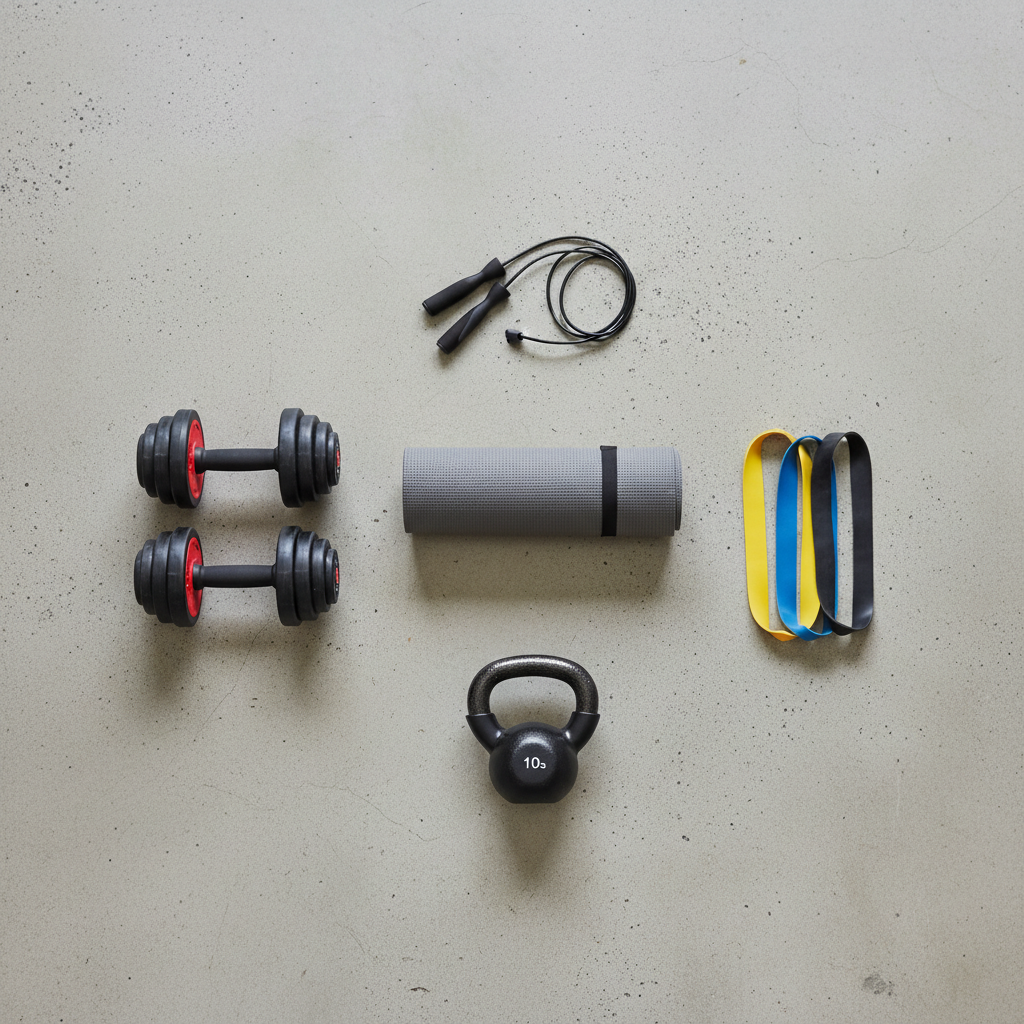
Space and safety: set it up like you plan to use it
Most budget gyms fail for boring reasons, no space to move, annoying setup, and equipment that feels sketchy. Fix those and your consistency improves.
Quick layout rules (small homes included)
- Claim a “home base” area: even a 5x7 ft zone can work if it stays mostly clear.
- Keep the most-used items visible: dumbbells and bands within reach beats a perfect storage closet.
- Protect floors and reduce noise: a mat or rubber tiles help, especially for apartments.
- Test your range of motion: overhead presses, swings, and band anchors need clearance.
For safety, follow manufacturer instructions for any mounted gear, and if you have joint pain, prior injuries, or dizziness during exercise, it’s smart to check with a qualified healthcare professional before pushing intensity.
According to CDC, adults benefit from both aerobic activity and muscle-strengthening activity each week, which is helpful because you can build a balanced routine at home without specialty machines.
How to save money without buying junk (used gear, bundles, and timing)
There’s “budget” and then there’s “I’ll replace this in a month.” The sweet spot is durable basics bought patiently.
Where budget shoppers usually win
- Used marketplaces: dumbbells, kettlebells, plates, benches, racks can be great if inspected well.
- Local sporting goods resale: less selection, but often cleaner and easier returns.
- Bundles: band sets and basic mats often cost less together, but still check quality.
A quick inspection checklist for used equipment
- Dumbbells: no rattling, no cracks, knurling not sharp or chewed up
- Adjustables: locking system clicks cleanly, plates sit flush
- Benches: no wobble, bolts intact, pad not separating
- Bands: no tears, thinning, or powdery breakdown
One caution, if a deal seems too good, it can be damaged gear or a sketchy brand with inflated weight ratings. In many cases, paying a bit more for stability is the cheaper move long-term.
Budget training plan: simple, repeatable, and not time-wasting
Once your home gym setup exists, the next problem is “What do I do with it?” A basic plan keeps you from drifting and buying more gear to compensate.
3-day full-body template (dumbbells + bands)
- Day A: squat pattern, horizontal press, row, core carry or anti-rotation
- Day B: hinge pattern, overhead press, pull variation (bands/rings/pull-up), single-leg work
- Day C: squat or lunge, incline press or push-ups, row variation, conditioning finisher
Keep reps in a moderate range (often 6–12 for strength/hypertrophy work), stop a couple reps before form breaks, and increase load gradually. If you’re unsure about form, consider a session with a certified trainer, even one good coaching session can save weeks of trial and error.
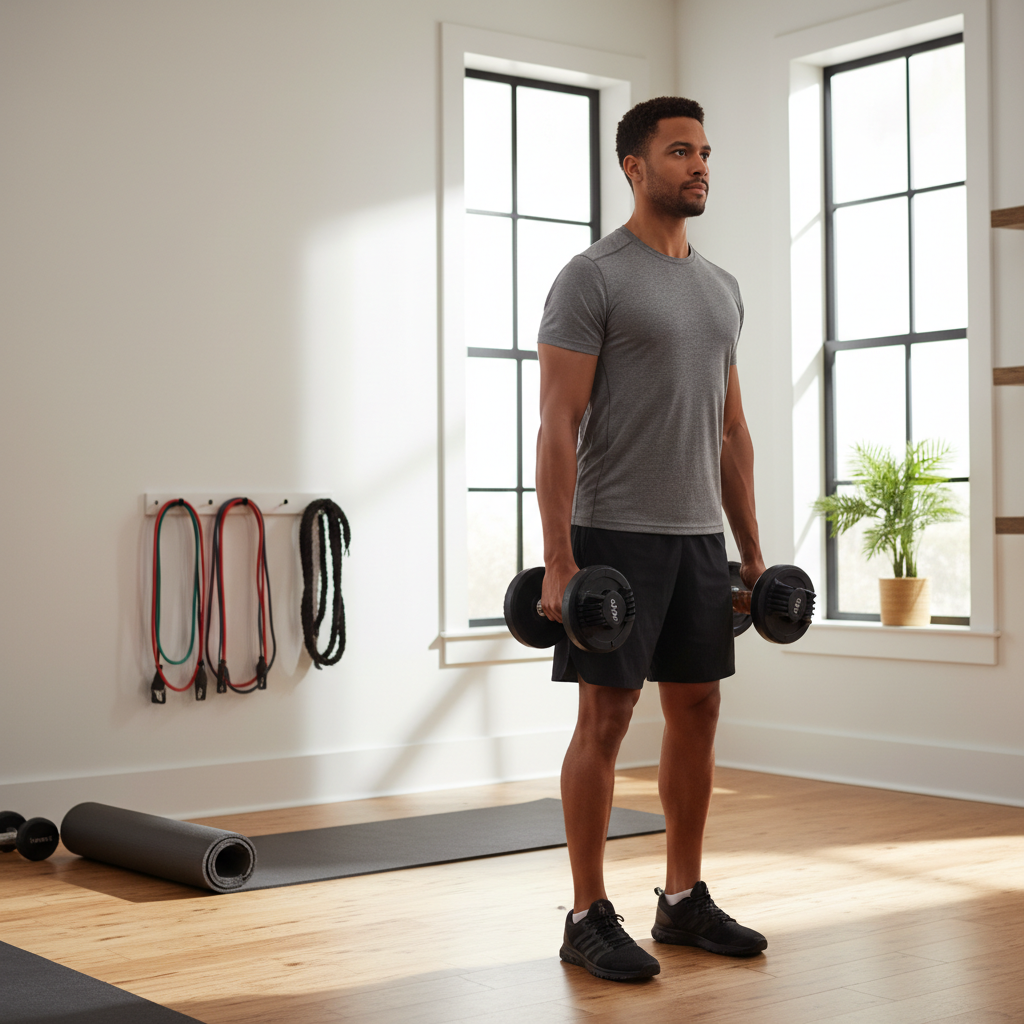
Common mistakes that quietly waste your money
Most overspending is emotional, not logical, you buy for the “future you” who trains six days a week, not the current schedule you can keep.
- Buying cardio machines first: many people stop using them, consider whether you truly enjoy that modality.
- Ignoring progression: if weights don’t go heavy enough, you’ll stall and rebuy.
- Chasing “all-in-one” gadgets: often bulky, awkward, and limited for real strength work.
- Skipping safety checks: unstable benches and poorly mounted pull-up bars cause injuries.
- No storage plan: clutter increases friction, and friction kills consistency.
If you feel tempted by a big-ticket item, wait a week, and ask one question, “Will this remove a real training limit I hit at least twice a week?” If not, it’s probably a want, not a need.
Wrap-up: a budget home gym that you actually use
A good budget setup feels almost boring, a few reliable tools, a clear training plan, and a space that stays ready. When those click, results tend to follow because you show up more often.
If you want a clean next step, choose your Phase 1 items today, set up a dedicated corner, and run the same three workouts for three weeks before you buy anything else.
FAQ
What’s the cheapest home gym setup that still works?
Usually it’s a mat, a set of resistance bands, and a pair of dumbbells heavy enough to challenge you. It works if you follow a progression plan instead of random workouts.
Are adjustable dumbbells worth it for a small space?
In many homes, yes, they replace a rack of fixed weights. Just prioritize a reputable locking system and comfort in your hands, because that’s what affects daily use.
How much space do I need for a home gym setup?
Many people can train in a 5x7 ft area if they choose compact tools and keep overhead clearance in mind. Larger equipment like racks and treadmills changes the equation quickly.
Is it safe to buy used home gym equipment?
It can be, especially for simple items like dumbbells and kettlebells. For benches, racks, and anything mounted, inspect stability and hardware carefully, and skip gear with unclear weight ratings.
What should I buy first for strength training at home?
Dumbbells (adjustable if possible) plus a way to pull, like bands, a doorframe pull-up bar, or rings if your space allows. That pairing covers most foundational movement patterns.
Do I need a bench to start?
Not always. You can do floor presses, push-ups, split squats, and rows without a bench, then add one once you notice it’s limiting your exercise options.
How do I avoid injury when training at home?
Keep technique clean, progress gradually, and don’t train through sharp pain. If you have prior injuries or medical conditions, getting guidance from a qualified professional is a sensible move.
If you’re building a home gym setup and want a more “no guesswork” path, it may help to start with a short equipment checklist matched to your goal and space, then build a simple 3-day plan before you shop for upgrades.