
Beginner weight training works best when you keep it simple: learn a few key movement patterns, train 2–3 days a week, and add small amounts of weight only after your form looks steady. If you feel lost in the gym, you’re not alone—most “beginner programs” fail because they’re either too complicated or too aggressive.
This guide is built for real beginners: the person who wants to get stronger, look more athletic, or support fat loss, but also wants to avoid injury and burnout. You’ll get a practical setup, a short exercise list, and a clear way to progress even if you’ve never touched a barbell.
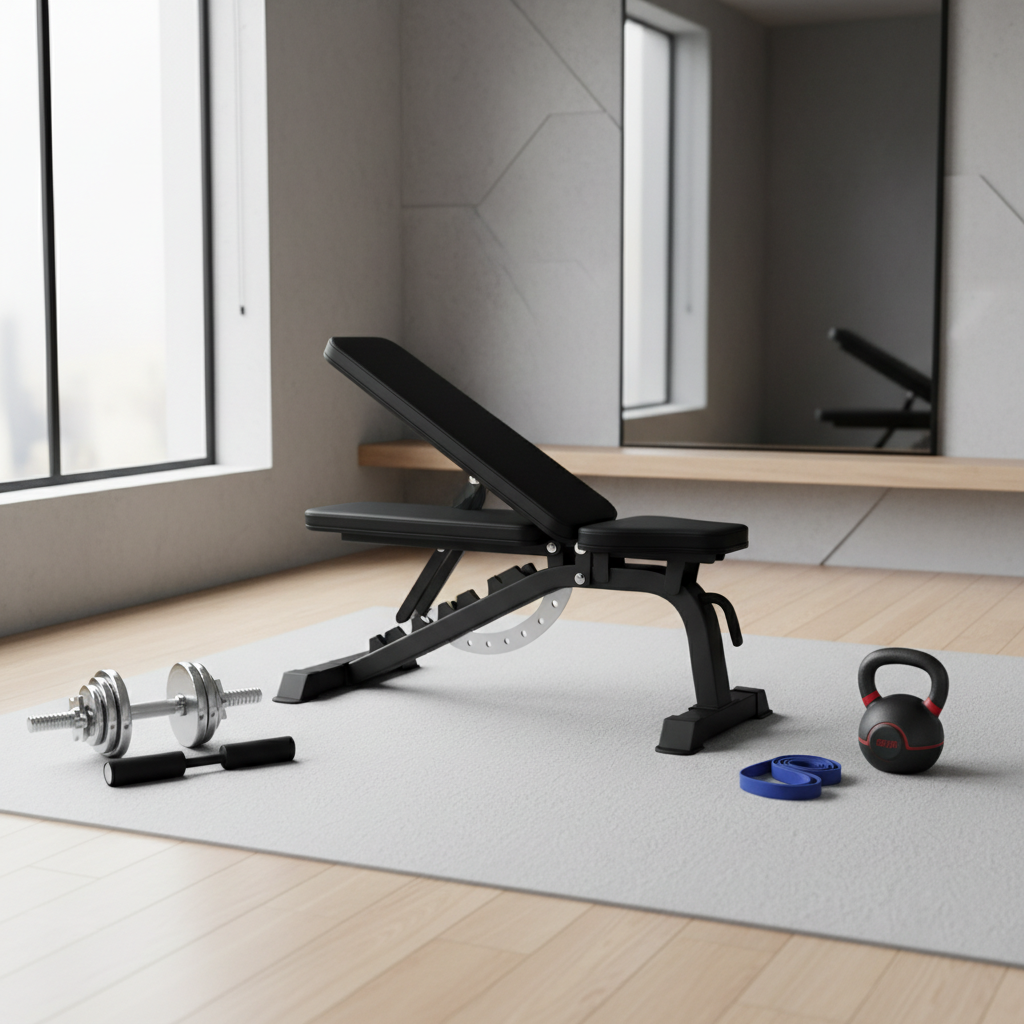
One quick promise and one boundary: you can make noticeable progress with basic lifts and consistency, but if you have sharp pain, a recent injury, or a medical condition, it’s smart to check with a qualified clinician or coach before pushing intensity. According to CDC guidance, adults benefit from muscle-strengthening activities at least two days per week, and that’s a realistic target for most beginners.
What “Beginner Weight Training” Should Look Like (Not What Social Media Shows)
The best beginner plan looks almost boring. That’s a good thing. You’re building coordination, joint tolerance, and confidence—stuff that doesn’t photograph well but matters a lot.
- Low exercise variety: a short list you repeat, so you actually learn it.
- Moderate effort: you finish most sets with 1–3 reps still “in the tank.”
- Clear progression: small weight jumps, or extra reps, not random “go harder.”
- Enough recovery: at least one day between full-body sessions in most cases.
According to ACSM position stands on resistance training, beginners typically respond well to training that emphasizes fundamental multi-joint movements, controlled technique, and gradual progression. Translation: master the basics, then earn the fancy stuff.
Why Beginners Get Stuck: Common Real-World Problems
If beginner weight training has felt discouraging before, it often comes down to one of these issues. None of them mean you “aren’t built for lifting.”
- Too much, too soon: copying advanced splits, training to failure every set, or doing 6–8 exercises per muscle group.
- No repeatable plan: new workouts daily makes it hard to track progress.
- Form anxiety: you avoid free weights, so loads stay too light to progress, or you rush reps and feel beat up.
- Recovery mismatch: sleep, stress, and nutrition don’t match training demands, so soreness stays high and motivation drops.

Also, many people underestimate how “skill-based” lifting is. A squat or a dumbbell row is closer to learning a golf swing than doing a treadmill jog. You don’t need perfection, but you do need repetition with intention.
Quick Self-Check: Which Beginner Are You Right Now?
Pick the description that fits best. This makes the next steps way clearer.
- True first-timer: you’re learning exercise names, unsure how to set up machines, and you want a simple routine.
- Restarting after a long break: you “used to lift,” but your joints and conditioning feel behind your memory.
- Cardio-first beginner: you’re active, but weights feel awkward and you don’t know how hard to push.
- At-home beginner: you have dumbbells or bands, limited load options, and need smart progression.
If you’re in sharp pain, have numbness/tingling, or pain worsens each session, that’s not the normal “new stimulus” soreness. In that case, it’s reasonable to pause and consult a licensed professional.
The 6 Movement Patterns Every Beginner Should Train
Instead of memorizing dozens of exercises, focus on patterns. Most beginner weight training programs that “work” cover these consistently.
- Squat pattern: goblet squat, bodyweight box squat, leg press
- Hip hinge: Romanian deadlift, kettlebell deadlift, hip thrust
- Horizontal push: push-up, dumbbell bench press, machine press
- Horizontal pull: one-arm dumbbell row, seated cable row
- Vertical push: dumbbell overhead press, machine shoulder press
- Vertical pull: lat pulldown, assisted pull-up
Core training still matters, but think “anti-movement” for beginners: planks, dead bugs, farmer carries. They teach bracing without twisting your spine under fatigue.
Your 4-Week Beginner Plan (2–3 Days/Week)
This is intentionally repeatable. You’ll rotate two full-body workouts. Most people can run this for 4 weeks before needing much change, and many can keep it longer.
How hard should sets feel?
Aim for a controlled effort where you could do 1–3 more reps with good form. That’s challenging enough to improve, without turning every session into a grind.
Workout A
- Goblet squat or leg press: 3 sets x 8–10 reps
- Dumbbell bench press or push-ups: 3 x 8–10
- One-arm dumbbell row or seated row: 3 x 10–12
- Romanian deadlift (light to moderate): 2–3 x 8–10
- Plank: 2 x 20–45 seconds
Workout B
- Hip thrust or kettlebell deadlift: 3 x 8–10
- Overhead press (dumbbells or machine): 3 x 8–10
- Lat pulldown or assisted pull-up: 3 x 8–12
- Split squat or step-up: 2–3 x 8–10 each side
- Dead bug: 2 x 6–10 each side
Weekly schedule options
- 2 days/week: Week 1 A/B, Week 2 A/B (alternate and repeat)
- 3 days/week: Week 1 A/B/A, Week 2 B/A/B
Progression rules (simple, but effective)
- Double progression: keep the same weight until you hit the top of the rep range for all sets, then add a small amount next time.
- Small jumps: for dumbbells, often 5 lb total is enough; for machines, the next pin might be fine.
- When form breaks: stop the set, write the reps you got, and keep the load next week.
Beginner weight training progression cheat sheet (table)
| Situation | What to do next workout | Why it works |
|---|---|---|
| You hit all sets at the top rep range | Add a small amount of weight | Progressive overload without rushing |
| You’re 1–2 reps short on the last set | Keep weight, try to add 1 rep total | Builds capacity with better technique |
| Form breaks early or pain feels sharp | Reduce load or swap variation | Protects joints, keeps consistency |
| Soreness lasts 4+ days regularly | Cut 1 set per exercise for a week | Recovery catches up, motivation returns |
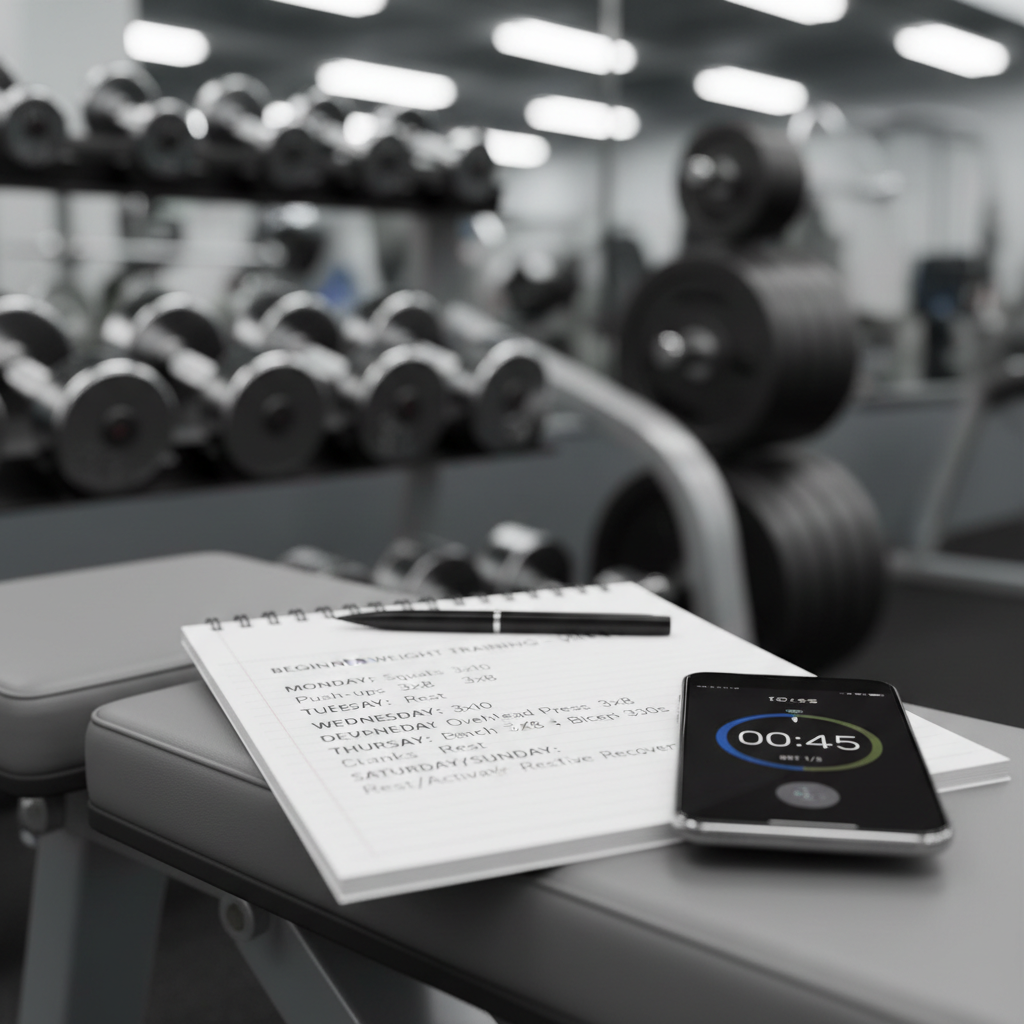
Practical Setup: Warm-Up, Rest Times, and Form Cues That Matter
You don’t need a 20-minute warm-up. You do need your joints and nervous system “online” before the first working set.
A warm-up that stays short
- 3–5 minutes easy cardio (walk, bike, row)
- 1–2 light sets of your first two exercises
- Optional: 5–8 reps of a mobility drill that feels relevant (hips, shoulders)
Rest times
- Big lifts (squat/hinge/push/pull): 90–150 seconds
- Accessories and core: 45–90 seconds
Form cues beginners actually remember
- Controlled reps: if you can’t control the lowering phase, the weight is probably too heavy.
- Stable spine: think “ribs down, belt buckle up” for bracing.
- Full foot pressure: on squats and split squats, keep pressure through heel and midfoot.
- Shoulders: for rows and pulldowns, move shoulder blades smoothly, don’t crank your neck forward.
If you’re unsure, filming one set from the side often reveals the big issues fast. Many gyms also offer an orientation session, and for beginner weight training that’s often worth it.
Common Mistakes (and What to Do Instead)
- Chasing soreness: soreness can happen, but it’s a poor scoreboard. Track reps and loads instead.
- Changing exercises weekly: keep main lifts for at least 4–8 weeks in many cases.
- Going to failure every set: save “all-out” efforts for later; beginners grow from practice plus moderate challenge.
- Ignoring sleep and protein: if recovery lags, training feels harder than it should.
- Bad pain vs training discomfort: burning muscles and general effort is normal; sharp joint pain or radiating symptoms is a stop sign.
According to NIH resources on physical activity and health, strength training supports overall function and long-term health, but it should be approached progressively. If something feels “off” every session, a small technique change or exercise swap usually beats pushing through.
Key Takeaways + Your Next 7 Days
If you want this to stick, treat beginner weight training like a repeatable weekly appointment, not a motivational project. Do fewer things, do them better, and let the numbers climb slowly.
- Pick 2–3 training days and write them on your calendar.
- Run Workout A and B with controlled reps and 1–3 reps in reserve.
- Progress only when ready: top of the rep range with stable form.
Action step: schedule your first two sessions, then decide one simple way to reduce friction, like packing gym clothes the night before or saving the workout in your notes app. Consistency beats intensity almost every time at the start.
FAQ
How many days a week should a beginner lift weights?
For most people, 2–3 days per week is enough to build strength without overwhelming recovery. If your schedule is messy, two solid full-body sessions usually beat three inconsistent ones.
How heavy should I lift for beginner weight training?
Use a load you can lift with control while keeping 1–3 reps in reserve. If your form changes a lot rep-to-rep, it’s probably too heavy for your current skill level.
Do I need a spotter or personal trainer to start?
Not always, especially if you begin with dumbbells and machines. But a single coaching session can be useful if you feel unsure about setup, bracing, or pain that keeps popping up.
Is it normal to be sore after lifting for the first time?
Mild to moderate soreness is common in the first 1–2 weeks, especially after new movements. If soreness is severe, lasts many days, or affects joints more than muscles, scale back volume and consider professional guidance.
Should beginners use machines or free weights?
Both can work. Machines reduce balance demands and help you learn effort; free weights build coordination. A mixed approach is practical for many gyms: machines for one pattern, dumbbells for another.
Can I do cardio and lifting on the same day?
Usually yes. If strength is your priority, lift first and keep cardio easy afterward. If you’re training for endurance, you may reverse that, but expect lifting performance to dip.
What if I only have dumbbells at home?
You can still progress by adding reps, slowing tempo, using single-leg versions, and shortening rest times. For beginner weight training at home, tracking reps and effort matters more than having endless weight options.
When should I change my program?
Change when progress stalls for a few weeks despite good sleep, nutrition, and consistent sessions, or when you’re bored enough that adherence drops. Otherwise, repeating the basics longer than you think is often the move.
If you’re trying to start lifting but want a more “plug-and-play” plan—exercise substitutions for crowded gyms, dumbbell-only options, and a simple way to track progression—building a small personalized template can save a lot of second-guessing without overcomplicating your week.