
HiiT for weight loss can work well when your sessions are hard enough to matter, short enough to recover from, and consistent enough to stack results week over week.
If you’ve tried “do more cardio” and ended up bored, sore, or stuck at the same scale number, HIIT is appealing for one reason: it’s efficient. You can finish in 15–30 minutes, feel like you actually did something, and still have time to live your life.
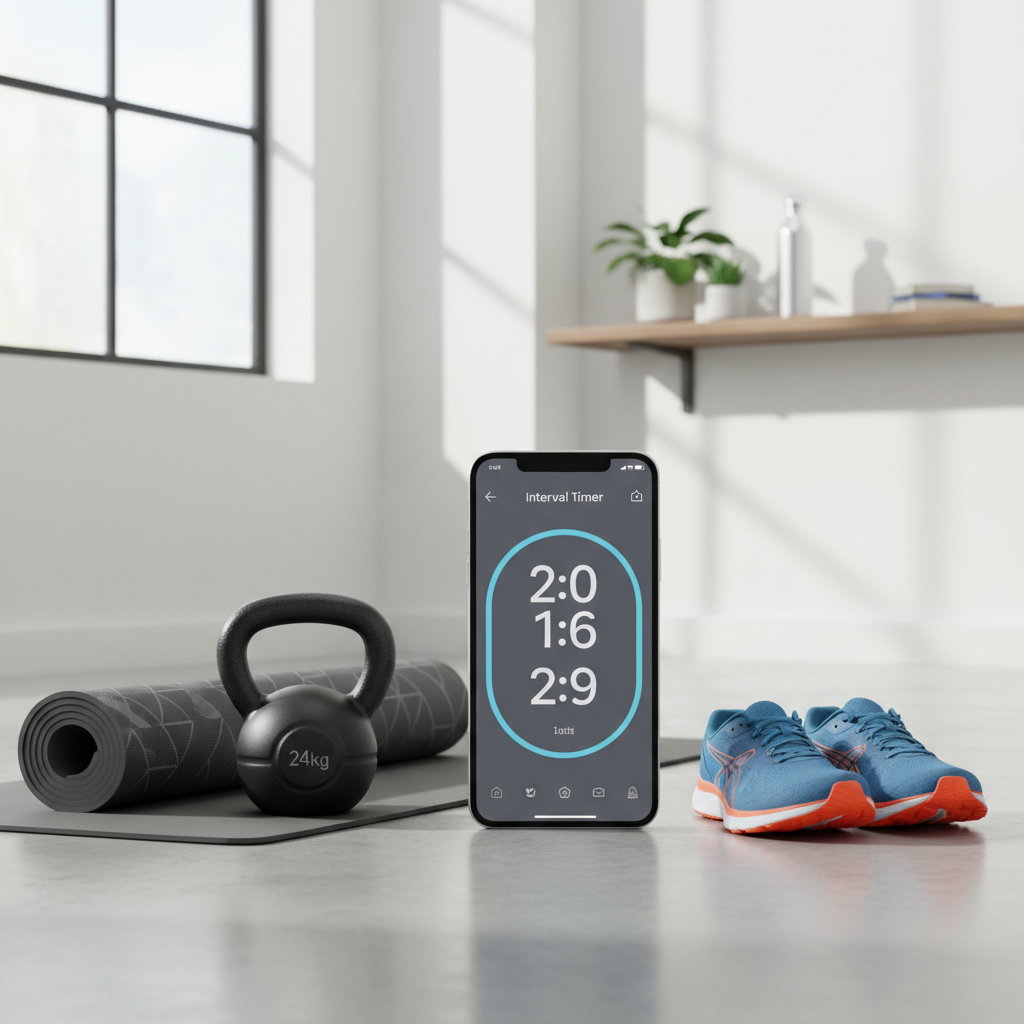
But HIIT also gets oversold. It’s not magic, and doing “all-out” every day usually backfires. This guide breaks down what HIIT really is, why it helps with fat loss for many people, how to choose the right workout style, and what to do if your body says “nope.”
What HIIT really is (and why it can help with fat loss)
HIIT stands for high-intensity interval training: short bursts of hard work, followed by planned recovery. The intensity is the point, the recovery is what makes it repeatable, and the structure keeps you honest.
According to ACSM (American College of Sports Medicine), interval training is a recognized method to improve cardiorespiratory fitness, and HIIT is commonly used in fitness programming when appropriate for the person.
For fat loss, HIIT tends to help through a few practical mechanisms:
- Higher effort in less time, which can raise total energy burn for people who struggle to “go easy for an hour.”
- Better training adherence for busy schedules, since shorter sessions are easier to repeat.
- Post-workout oxygen use (often called EPOC). The effect varies, but many people notice they feel “revved” after a solid session.
- Muscle-friendly options, especially when intervals use resistance moves rather than only long steady cardio.
One honest note: weight loss still depends on your overall calorie balance. HIIT can make that easier, but it won’t erase a consistent surplus.
Common reasons HIIT isn’t “working” for weight loss
If you’re doing HIIT and the scale won’t budge, it’s often not because HIIT is “bad.” It’s usually one of these real-world issues.
- Intervals aren’t intense enough: many sessions turn into medium-intensity circuits with short rests, which feel hard but don’t hit true interval effort.
- Too much HIIT: daily all-out work can push fatigue, cravings, poor sleep, and inconsistent training.
- Compensation eating: after tough workouts, people often snack more without noticing.
- NEAT drops: you train hard, then unconsciously move less the rest of the day.
- Water retention masks fat loss: new intensity can cause temporary inflammation and scale bumps, especially in the first 2–3 weeks.
- No strength foundation: for many bodies, a blend of lifting plus intervals is easier to recover from than intervals alone.
Quick self-check: are you a good candidate for HIIT right now?
Before you commit to hiit for weight loss, it helps to be blunt about readiness. You don’t need to be an athlete, but you do need basic tolerance for faster heart rates and joint loading.
You’re usually a good fit if:
- You can brisk-walk or easy-jog 20 minutes without pain.
- You recover reasonably well between workouts (sleep, soreness, energy feel manageable).
- You can keep good form on basic moves like squats, hinges, and planks.
Consider a gentler on-ramp if:
- You have chest pain, dizziness, fainting episodes, or unexplained shortness of breath.
- Joint pain flares with jumping or running.
- You’re postpartum, returning from injury, or managing uncontrolled blood pressure.
According to CDC guidance on physical activity, adults benefit from aerobic and muscle-strengthening activity, and people with health conditions may need tailored plans. If anything here concerns you, talk with a clinician or qualified trainer before pushing intensity.

HIIT formats: choose the one you’ll actually stick with
People argue about the “best” interval ratio, but in practice, the best plan is the one you can repeat without dreading it. Here are reliable formats, plus what they feel like.
| Format | Work : Rest | Best for | Notes |
|---|---|---|---|
| Classic intervals | 30s : 60–90s | Beginners to intermediate | Easier to keep work truly hard because rest is generous |
| Tabata-style | 20s : 10s (x8) | Conditioned athletes | Great on paper, brutal in reality, form breaks fast |
| Tempo intervals | 40s : 20s | Low-impact circuits | Often becomes “hard steady,” choose simpler moves |
| Hill/sprint repeats | 10–20s : walk back | Outdoor runners | High output, lower joint stress than flat sprints for many |
| Bike/rower intervals | 15–45s : 45–120s | Joint-friendly intensity | Great if jumping/running irritates knees or shins |
Editor’s bias: if you’re new, 30 seconds hard with 60–90 seconds easy is the sweet spot. It’s tough, but it leaves room for quality.
5 HIIT workouts for weight loss (with progressions)
Each session below includes a warm-up, a main set, and a quick cool-down. Keep intensity at about 8–9 out of 10 on work intervals, then truly ease off during recovery.
Workout A: Low-impact bodyweight (beginner-friendly)
- Warm-up (5 min): brisk march, arm circles, hip hinges, easy step-ups
- Main set (12–18 min): 30s work / 60s easy x 8–12 rounds
- Round 1: fast step-ups (or stair marching)
- Round 2: squat to chair
- Round 3: incline push-ups on counter
- Round 4: mountain climbers slow-to-fast (hands on couch if needed)
- Cool-down (3–5 min): slow walk, gentle calf and quad stretch
Workout B: Dumbbell strength intervals (fat-loss friendly)
- Warm-up (6 min): glute bridges, bodyweight squats, band pull-aparts
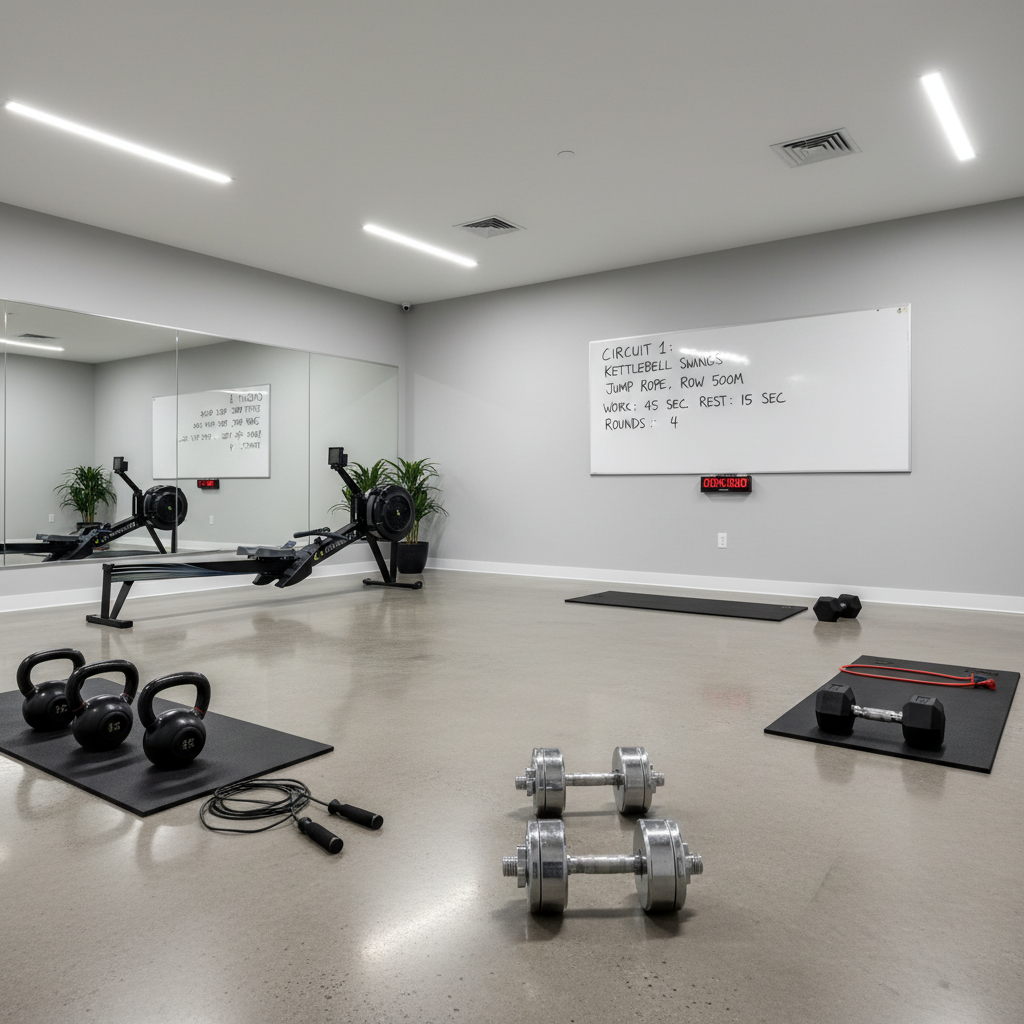
- Main set (16 min): 40s work / 20s rest x 2 rounds of 4 moves
- Dumbbell thrusters (or squat + press)
- One-arm dumbbell row
- Romanian deadlift
- Dead bug or plank
- Progression: add load before adding rounds
Workout C: Bike or rower intervals (joint-friendly hard)
- Warm-up (8 min): easy pace, add 2–3 short pickups
- Main set (10–20 min): 20s hard / 100s easy x 6–10 repeats
- Cool-down (5 min): easy spin/row
Workout D: Runner’s hill repeats (simple, effective)
- Warm-up (10 min): walk-jog + dynamic leg swings
- Main set: 10–15s uphill hard, then walk down and breathe until ready, repeat 6–12 times
- Cool-down (5–10 min): easy walk
This one looks almost too simple, but it hits. Stop a rep early if sprint form gets sloppy.
Workout E: Mixed cardio + core finisher (intermediate)
- Warm-up (5 min): jump rope practice or light jog
- Main set (15 min): 30s on / 30s off x 5 rounds
- Jump rope or jumping jacks
- Reverse lunge (bodyweight)
- Push-up variation
- High knees (or fast march)
- Side plank switch
How to program HIIT for weight loss without burning out
The mistake is treating HIIT like it’s your entire fitness identity. For most people, it’s a tool you place inside a week that also supports recovery and muscle.
- Start with 2 sessions/week, especially if you’re also lifting. Add a third only if sleep and soreness stay stable.
- Keep most sessions 15–25 minutes of intervals, not counting warm-up and cool-down.
- Pair with strength training 2–3 days/week if possible. Muscle helps with body composition and makes “weight loss” look like something.
- Alternate impact: if one day has running or jumping, make the next HIIT day bike/rower or low-impact.
A simple weekly layout (example)
- Mon: Strength
- Tue: HIIT (low-impact or bike)
- Wed: Easy walk + mobility
- Thu: Strength
- Fri: HIIT (dumbbell intervals or hills)
- Sat: Optional easy cardio (Zone 2 feel) or strength
- Sun: Rest
If you’re chasing hiit for weight loss, consistency beats heroic weeks followed by layoffs.
Key technique cues that make HIIT safer and more effective
Intensity is good, chaos is not. A few cues keep your output high while lowering the chance you tweak something.
- Use a “talk test” during recovery: you should be able to speak in short sentences before starting the next hard rep.
- Pick simple moves when tired: hinge, squat, row, bike, step-ups. Fancy combos tend to break under fatigue.
- Stop the set when form goes: ending early is not quitting, it’s quality control.
- Scale impact first: remove jumps, shorten stride, choose incline push-ups, switch to cycling.
According to American Heart Association, people new to vigorous activity may benefit from gradual progression and medical guidance when risk factors exist. If you have concerns, getting clearance can be a smart step, not a scary one.
Practical nutrition and recovery tips that support fat loss
HIIT can be the spark, but eating and recovery decide whether that spark turns into results or just more exhaustion.
- Protein at most meals: it supports satiety and helps preserve lean mass during a calorie deficit.
- Plan a post-workout meal: many people over-snack when they “wing it.”
- Hydrate and sleep: poor sleep often increases appetite and makes intervals feel harder than they should.
- Track one behavior: steps, protein, or training days. Pick one lever and pull it steadily.
If the scale stalls but workouts improve, check waist measurements, photos, and how clothes fit. Body recomposition can hide behind stable body weight.
Conclusion: make HIIT a repeatable habit, not a punishment
HiiT for weight loss works best when you treat it like a repeatable practice: a few hard efforts each week, enough recovery to stay sharp, and a plan that fits your joints and schedule.
If you want a clean next step, pick one workout from this page, run it twice a week for 3 weeks, and keep everything else boring and consistent, daily steps, protein-forward meals, and sleep. Then adjust one variable at a time.
FAQ
How many HIIT workouts per week are good for weight loss?
For many people, 2 sessions per week is a strong start, especially if you also lift. A third session can work if recovery stays good and you’re not constantly sore or drained.
How long should a HIIT workout be?
Often 15–25 minutes of intervals is enough, plus warm-up and cool-down. Longer sessions can slide into “hard steady” and become harder to recover from.
Is HIIT better than walking for fat loss?
It depends on what you can sustain. HIIT is time-efficient, walking is easy to repeat and easier on recovery. Many people get the best results from combining both.
Can beginners do hiit for weight loss at home?
Yes, if you keep it low-impact and use generous rest. Step-ups, chair squats, incline push-ups, and brisk marching intervals can still feel very challenging.
What should I eat before and after HIIT?
A light carb + protein snack beforehand may help performance, and a balanced meal after helps control cravings. Exact timing varies, and people with medical conditions should ask a professional.
Why am I gaining weight after starting HIIT?
Early water retention is common when intensity increases, and muscle soreness can temporarily raise scale weight. If it continues beyond a few weeks, look at total calories, snacks, and daily movement.
Is HIIT safe if I have knee pain?
Many times it can be modified: choose cycling or rowing, avoid jumping, and limit deep knee angles until you build tolerance. Persistent pain deserves an evaluation from a clinician or physical therapist.
If you’re trying to make hiit for weight loss fit your schedule and your body, but you keep bouncing between “too easy” and “too much,” it may help to follow a structured plan with built-in progressions and recovery days, so you’re not guessing every week.